
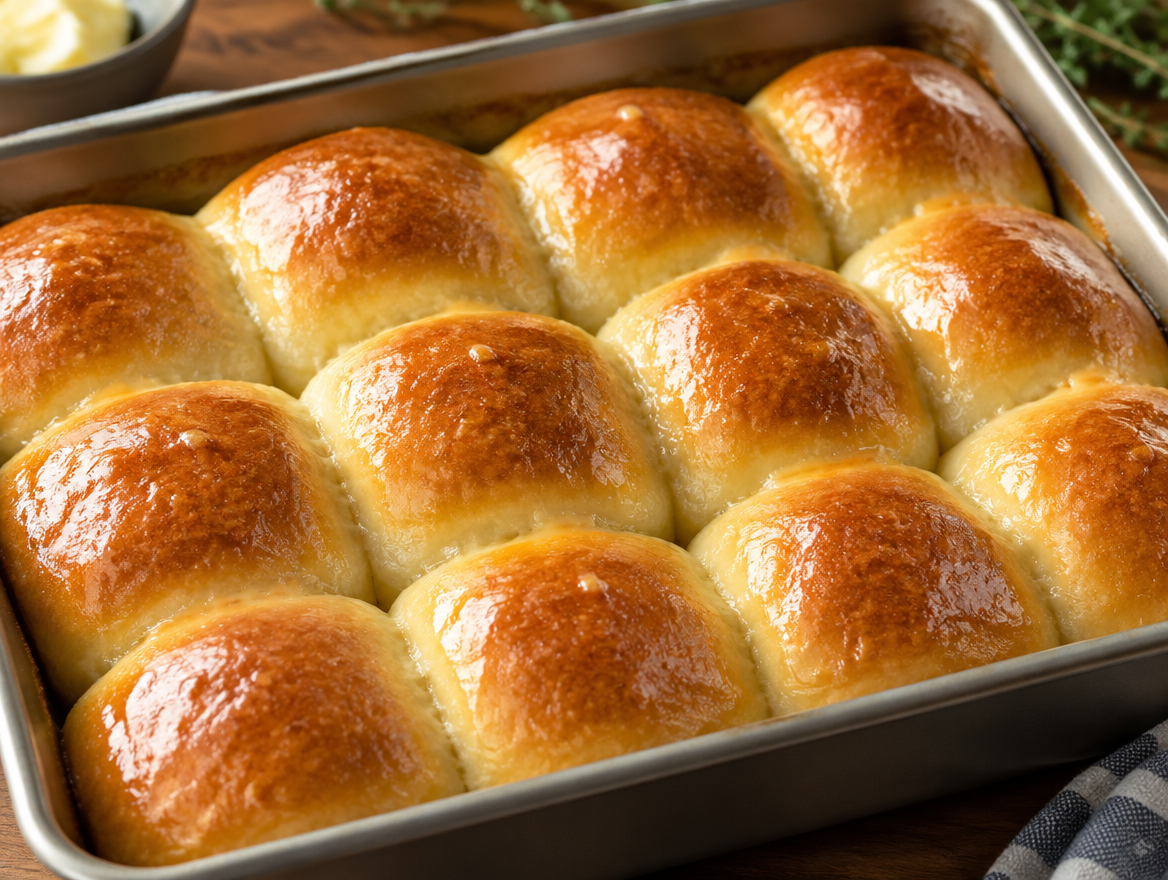
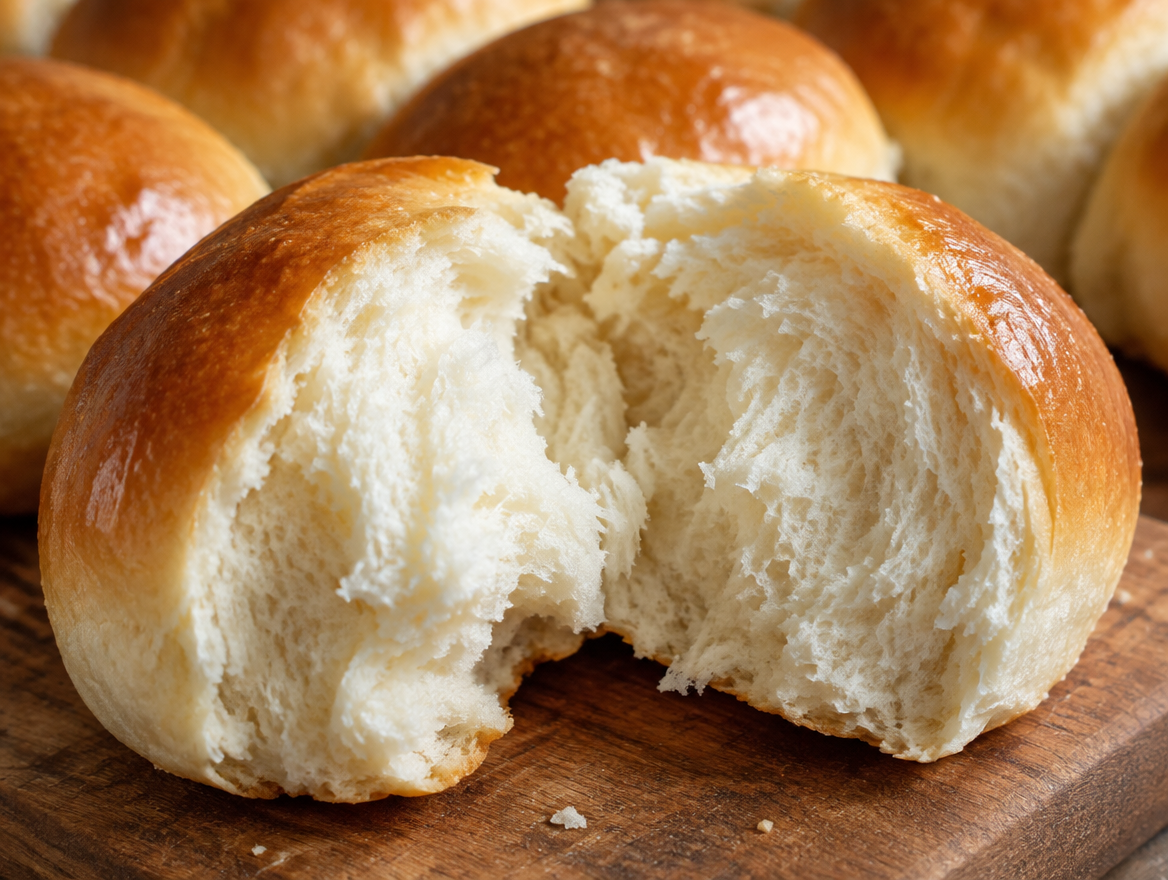
Soft, pillowy dinner rolls depend on properly developed gluten, and the fastest way to check it without guessing is the windowpane test: stretch a small piece of dough between your fingers, and if it thins out translucent without tearing, the gluten network is strong enough to trap the gas that makes the rolls rise light. A dough that rips is a dough that needs more kneading, not more time in a bowl.
The enriched dough here, with butter, egg, and milk, also rises more slowly than a lean bread dough, so patience during the two rises matters as much as the kneading does.
Soft Dinner Rolls
Serves 4, twelve rolls. Prep 25 minutes, rise 2 hours, cook 20 minutes.
Ingredients
- 3 and 1/2 cups all-purpose flour
- 1/4 cup granulated sugar
- 2 and 1/4 teaspoons instant yeast
- 1 teaspoon salt
- 3/4 cup warm milk
- 1/4 cup unsalted butter, melted, plus more for brushing
- 1 large egg
Method
- Whisk the flour, sugar, yeast, and salt together in a large bowl.
- Add the warm milk, melted butter, and egg. Mix until a shaggy dough forms.
- Knead 8 to 10 minutes by hand, or 5 to 6 minutes with a mixer's dough hook, until the dough passes the windowpane test, stretching thin and translucent without tearing.
- Place the dough in a greased bowl, cover, and let rise in a warm spot 1 hour, until roughly doubled.
- Punch down the dough and divide into twelve equal pieces. Shape each into a tight ball by rolling it against the counter under a cupped hand.
- Arrange the rolls in a greased 9x13 pan, cover, and let rise 45 minutes to 1 hour, until puffy and touching each other.
- Preheat the oven to 375 degrees Fahrenheit while the rolls finish rising.
- Bake 18 to 20 minutes, until deep golden on top. Brush with melted butter immediately after baking.
Nutrition (per serving, estimated)
Estimated for one of four servings, three rolls each, not lab verified.
| Calories | Protein | Carbohydrate | Fat | Fiber | Sodium |
|---|---|---|---|---|---|
| 430 | 11 g | 68 g | 12 g | 2 g | 460 mg |
Tips and Variations
- Test the windowpane before moving on: if the dough tears rather than stretching thin, knead another two minutes and test again.
- Warm spot for rising: a turned-off oven with the light on, or the top of a warm stove, both work if your kitchen runs cool.
- Make ahead: shape the rolls and refrigerate overnight before the second rise, let them come fully to room temperature and puff before baking.
- Herb butter finish: brush the hot rolls with butter mixed with a little garlic and chopped herbs for a savory finish.
Frequently Asked Questions
Why are my rolls dense instead of fluffy?
Usually underkneaded dough. Check with the windowpane test before the first rise, if it tears, keep kneading.
Why didn't my dough rise much?
Cool kitchens or old yeast are the usual causes. Confirm your yeast is active by proofing it in warm milk with a pinch of sugar before mixing if you're unsure.
Can I make the dough by hand without a mixer?
Yes, hand kneading takes a bit longer, 8 to 10 minutes of steady work, but gets to the same windowpane result.
Can I freeze baked rolls?
Yes, cool completely, freeze in an airtight bag, and reheat wrapped in foil in a warm oven.
Tools for the Job
An enriched dough this soft benefits from consistent kneading power more than any other single factor.
- Automatic Dough Kneader and Electric Egg Beater for consistent kneading to a true windowpane
- Baking Dessert and Pastry Essentials
More Baking and Dessert Recipes
These publish together as a set. The full hub lists all twenty in one place at Baking and Dessert Recipes.
Who Is Writing This
I'm Chef Alan. I have spent 35 years in professional kitchens, I have formal culinary education in New Hampshire, and I have been honored as a 6-Time 4-Diamond Chef. More about me here.
If a recipe is missing something you needed, or a step didn't make sense, tell me. Get in touch and I'll fix it.
Cook Bolder, Serve Wiser, Eat Better.