
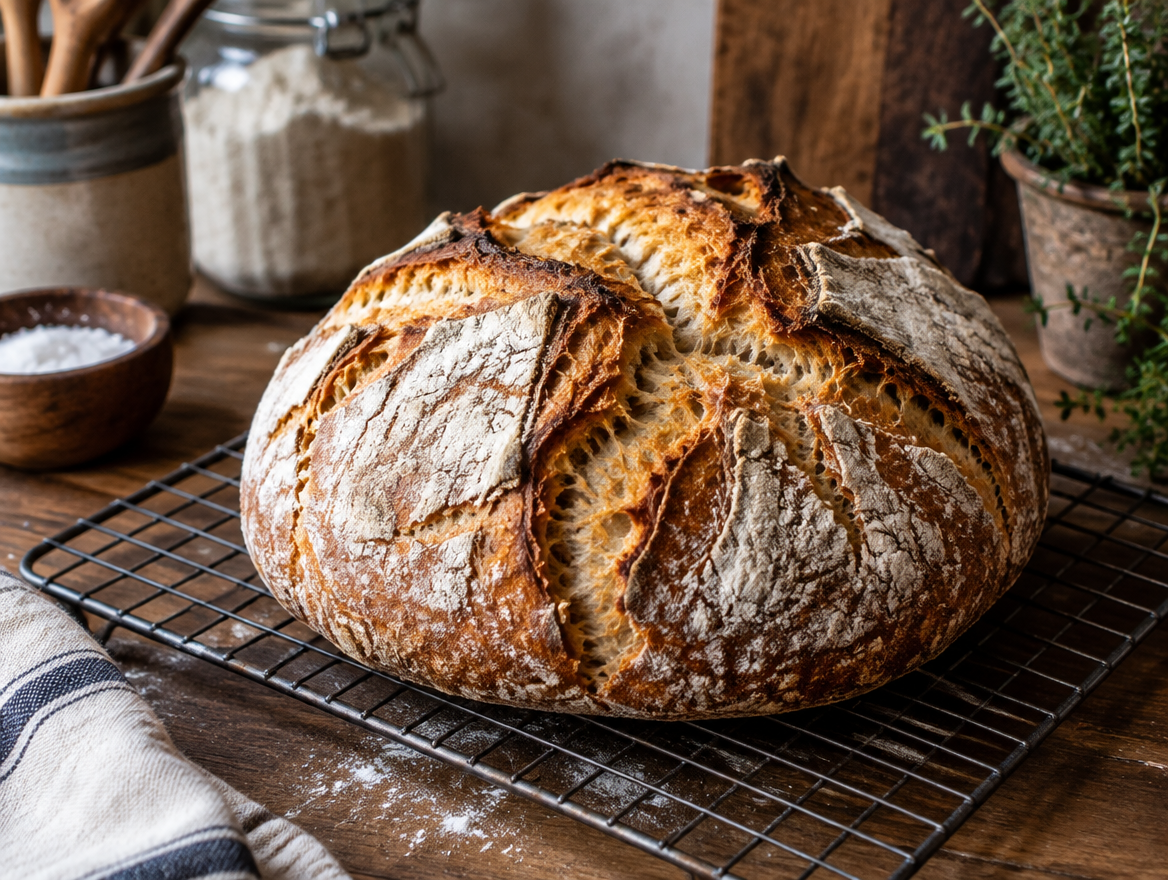
Kneading exists to develop gluten fast, by physically working the dough. No-knead bread gets the same structure a different way, by giving a very wet dough enough time, usually twelve to eighteen hours, for the flour's proteins to link up on their own with almost no effort. Time replaces labor entirely.
The other trick that gets home bakers a crackling, bakery-style crust is baking inside a covered pot. The lid traps the steam the dough releases as it bakes, which keeps the crust soft long enough for the loaf to fully expand before it hardens, the same effect a professional steam-injected oven creates.
No-Knead Artisan Bread
Serves 4, one round loaf. Prep 15 minutes, rise 12 to 18 hours, cook 45 minutes.
Ingredients
- 3 cups all-purpose flour, plus more for shaping
- 1 and 1/2 teaspoons salt
- 1/2 teaspoon instant yeast
- 1 and 1/2 cups cool water
Method
- Whisk the flour, salt, and yeast together in a large bowl.
- Add the water and stir with a wooden spoon until a shaggy, sticky dough forms, no kneading. It should look rough and wet.
- Cover the bowl with plastic wrap and let it sit at room temperature 12 to 18 hours, until the surface is dotted with bubbles and roughly doubled.
- Turn the dough onto a well-floured surface. Fold it over on itself a few times and shape into a rough ball. Let it rest, covered, 30 minutes.
- About 30 minutes before baking, place a covered Dutch oven or heavy pot in the oven and preheat to 450 degrees Fahrenheit with the pot inside.
- Carefully remove the hot pot, place the dough inside (parchment paper underneath makes this easier), and cover.
- Bake covered 30 minutes, then uncover and bake 12 to 15 minutes more, until the crust is deeply browned.
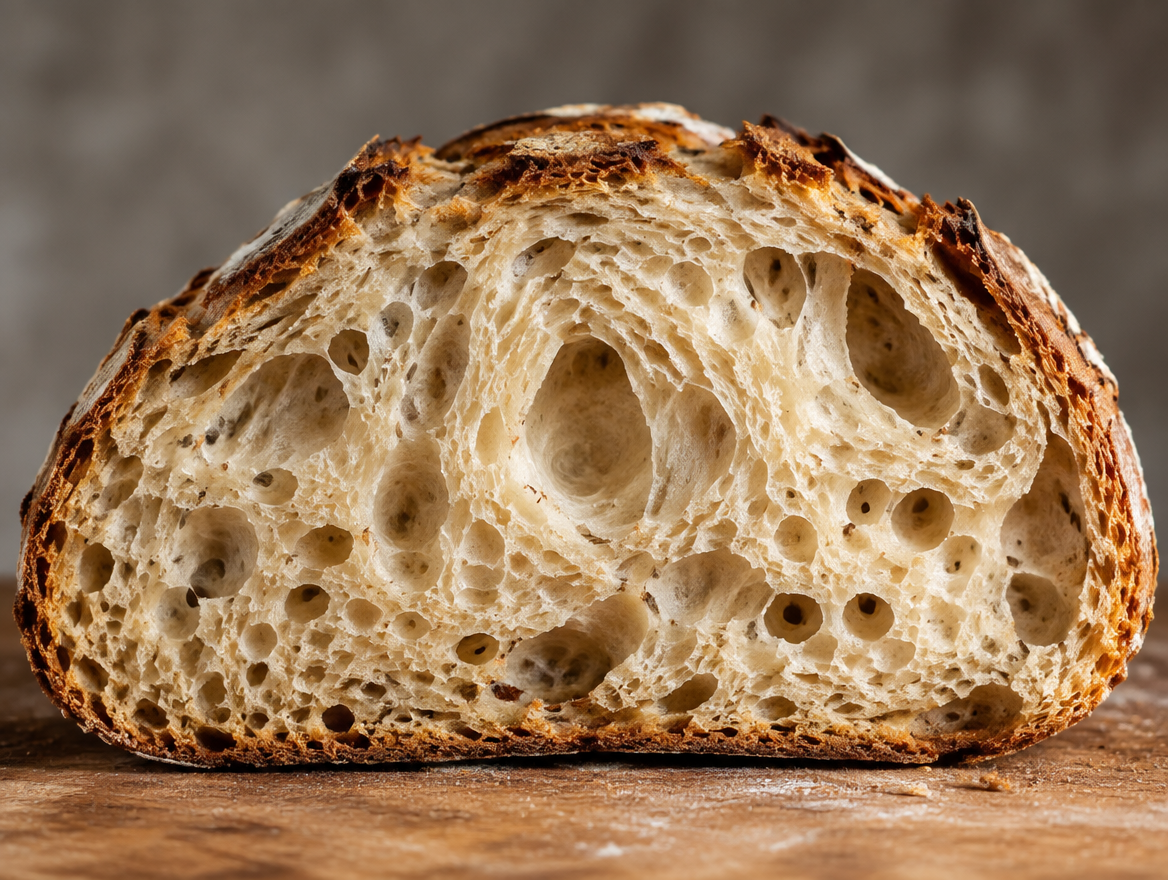
- Cool on a rack at least 30 minutes before slicing, the crumb is still setting while it cools.
Nutrition (per serving, estimated)
Estimated for one of four servings, a quarter of the loaf, not lab verified.
| Calories | Protein | Carbohydrate | Fat | Fiber | Sodium |
|---|---|---|---|---|---|
| 340 | 10 g | 70 g | 1 g | 3 g | 870 mg |
Tips and Variations
- Longer rise, more flavor: pushing the rise toward the full eighteen hours develops a more sour, complex flavor.
- No Dutch oven needed: any heavy, oven-safe pot with a tight lid works, the covered environment matters more than the brand.
- Add mix-ins: fold in a half cup of olives, herbs, or shredded cheese during the fold-and-shape step.
- Score the top: a quick slash with a sharp blade before baking lets steam escape in a controlled line instead of splitting the crust randomly.
Frequently Asked Questions
Why didn't my dough rise much overnight?
Cool kitchens slow fermentation significantly. A slightly warmer spot, or an extra few hours, usually fixes it, the yeast just needs more time.
Do I need a stand mixer or dough hook?
No, that's the entire point of this method. A wooden spoon and a bowl are all you need since there is no kneading step.
Can I use whole wheat flour?
You can replace up to half the flour with whole wheat, but add a couple tablespoons more water since whole wheat absorbs more liquid.
Why is my crust soft instead of crackling?
Usually baking uncovered the whole time, or not baking long enough uncovered at the end. The covered stage traps steam, the uncovered stage crisps the crust.
Tools for the Job
A covered pot and a mixer built for stiffer, low-hydration doughs both matter for bread at this scale.
- 15QT Commercial Dough Kneader Bakery Mixer Machine for larger batches and stiffer doughs
- Baking Dessert and Pastry Essentials
More Baking and Dessert Recipes
These publish together as a set. The full hub lists all twenty in one place at Baking and Dessert Recipes.
Who Is Writing This
I'm Chef Alan. I have spent 35 years in professional kitchens, I have formal culinary education in New Hampshire, and I have been honored as a 6-Time 4-Diamond Chef. More about me here.
If a recipe is missing something you needed, or a step didn't make sense, tell me. Get in touch and I'll fix it.
Cook Bolder, Serve Wiser, Eat Better.