
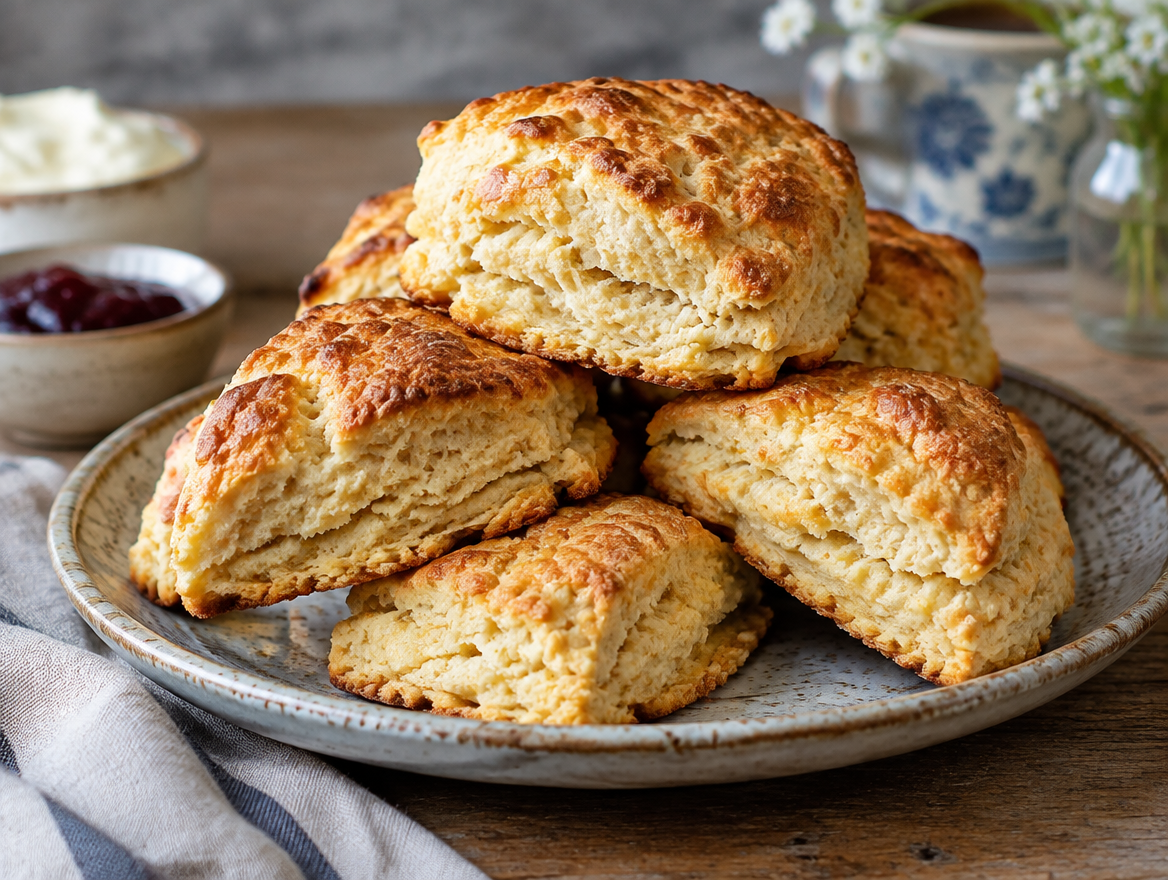
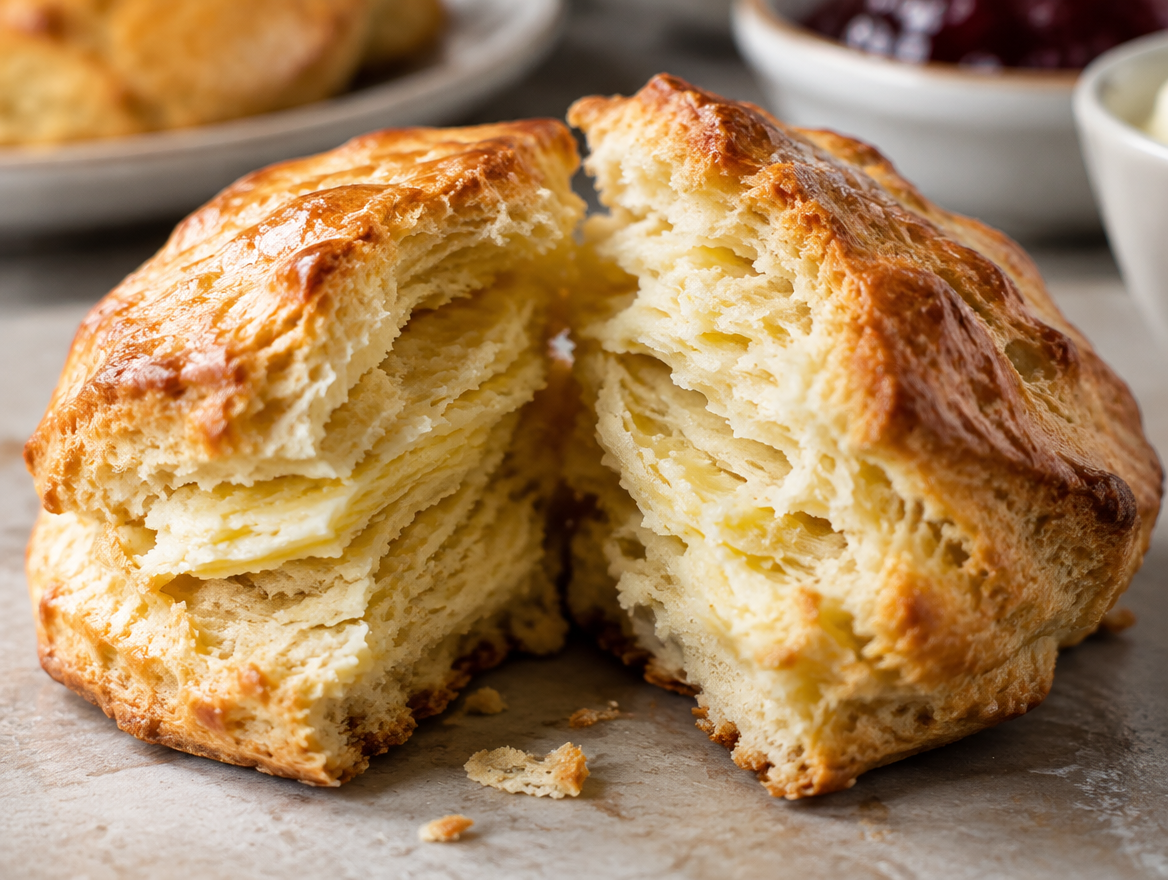
A scone's flake comes from small, distinct pieces of solid butter suspended in the dough, which melt in the oven and release steam that pushes the layers apart. The single biggest way home bakers lose that flake is body heat: cutting or rubbing butter into flour by hand warms it fast, and once it starts to soften, it coats the flour instead of staying in separate chunks.
The professional fix is simple. Freeze the butter and grate it on a box grater directly into the flour, it stays cold and distinct through mixing, and the whole process takes under a minute.
Buttermilk Scones
Serves 4, eight scones. Prep 20 minutes, chill 15 minutes, cook 18 minutes.
Ingredients
- 2 cups all-purpose flour
- 1/3 cup granulated sugar
- 1 tablespoon baking powder
- 1/2 teaspoon salt
- 1/2 cup unsalted butter, frozen
- 2/3 cup cold buttermilk
- 1 large egg
- 1 teaspoon vanilla extract
- Coarse sugar, for topping
Method
- Whisk the flour, sugar, baking powder, and salt together in a large bowl.
- Grate the frozen butter directly into the flour on a box grater, tossing occasionally to coat the shreds in flour and keep them separate.
- Whisk the buttermilk, egg, and vanilla together, then pour into the flour mixture and fold with a spatula just until a shaggy dough forms.
- Turn the dough onto a floured surface and pat into a circle about three-quarters inch thick. Cut into eight wedges.
- Transfer the wedges to a parchment-lined sheet, spacing them apart, and freeze 15 minutes, this resets any butter that softened while shaping.
- Preheat the oven to 400 degrees Fahrenheit while the scones chill.
- Brush the tops with buttermilk and sprinkle with coarse sugar.
- Bake 16 to 18 minutes, until the tops are golden and a toothpick comes out clean.
Nutrition (per serving, estimated)
Estimated for one of four servings, two scones each, not lab verified.
| Calories | Protein | Carbohydrate | Fat | Fiber | Sodium |
|---|---|---|---|---|---|
| 460 | 8 g | 58 g | 21 g | 1.5 g | 540 mg |
Tips and Variations
- Add-ins fold in easily: a half cup of dried currants or fresh berries folds in right after the wet and dry ingredients combine.
- Keep everything cold: chill the bowl and even the flour if your kitchen runs warm, the whole method depends on temperature discipline.
- Do not twist the cutter: if using a round cutter instead of wedges, press straight down and lift, twisting seals the edges and blunts the rise.
- Glaze after baking: a simple powdered sugar and milk glaze drizzled once cooled adds sweetness without weighing down the crumb.
Frequently Asked Questions
Why are my scones dense instead of flaky?
The butter likely softened before baking, either from warm hands or a warm kitchen. Grate it frozen and chill the shaped dough before it goes in the oven.
Can I make the dough ahead?
Shape and freeze the wedges solid, then bake straight from frozen, adding two to three minutes to the bake time.
Why did my scones spread instead of rising tall?
Warm butter or a dough that sat too long at room temperature before baking. The oven needs to hit cold butter for the steam-lift to work.
Can I substitute the buttermilk?
Stir a tablespoon of lemon juice or vinegar into two-thirds cup regular milk and let it sit five minutes as a substitute.
Tools for the Job
Clean, even wedges bake more evenly than hand-torn pieces.
- 8 Cavity Silicone Scone Baking Mold for evenly shaped, evenly baked scones
- Baking Dessert and Pastry Essentials
More Baking and Dessert Recipes
These publish together as a set. The full hub lists all twenty in one place at Baking and Dessert Recipes.
Who Is Writing This
I'm Chef Alan. I have spent 35 years in professional kitchens, I have formal culinary education in New Hampshire, and I have been honored as a 6-Time 4-Diamond Chef. More about me here.
If a recipe is missing something you needed, or a step didn't make sense, tell me. Get in touch and I'll fix it.
Cook Bolder, Serve Wiser, Eat Better.