

Start with four pots and you’ll cover most of what you cook at home. A compact core of high-quality vessels a 5–7 qt Dutch oven, a 6–8 qt stockpot, a 3–4 qt saucepan, and a 10–12" skillet gives you more cooking range than any 15-piece budget set, with far less cabinet clutter. Buy quality single pieces first, then add specialty items as your cooking grows.
Here’s what each workhorse actually does for you:
- Dutch oven (5–7 qt): Braises, stews, soups, and no-knead bread. The one pot that moves from stovetop to oven without complaint.
- Stockpot (6–8 qt): Pasta water, stock, chili, and large-batch cooking. Go up to 12 qt if you regularly cook for six or more.
- Saucepan (3–4 qt): Sauces, grains, oatmeal, reheating. A 2 qt is fine for solo cooks; families need the 4 qt.
- Skillet (10–12"): Searing, pan-frying, eggs, and stir-fries. A 10" handles most tasks; a 12" is better for family portions.
Skip large multi-piece sets unless you’re outfitting a brand-new kitchen from scratch.
Key Takeaways
A compact core of high-quality pots a Dutch oven, stockpot, saucepan, and skillet covers most home-cooking needs better than any oversized budget set.
| Point | Details |
|---|---|
| Buy four core pieces first | Dutch oven, stockpot, saucepan, and skillet cover most everyday cooking tasks. |
| Match material to cooktop | Use a magnet to confirm induction compatibility; flat, thick bases prevent warping on smooth-top ranges. |
| Tri-ply or 5-ply stainless wins | Fully clad construction distributes heat evenly and outlasts single-layer or disk-base pots. |
| Hand-wash nonstick and cast iron | Dishwasher cycles degrade coatings and strip seasoning; hand-washing extends useful life significantly. |
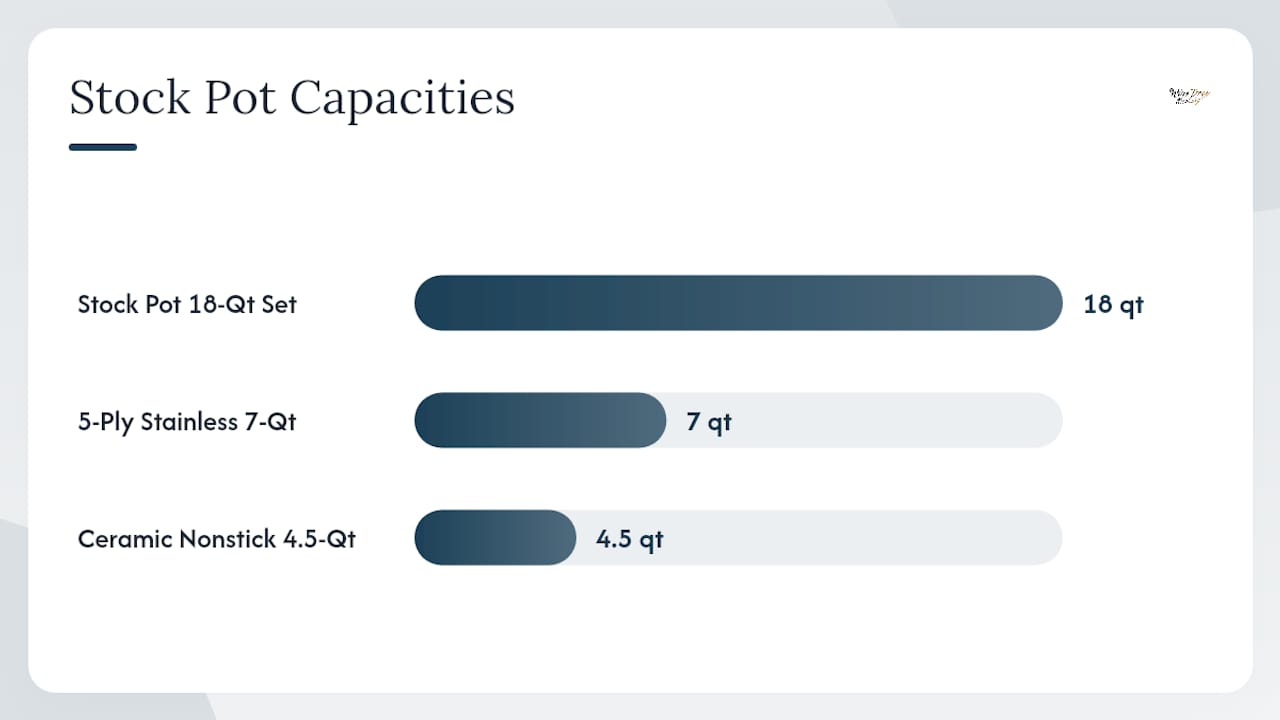
| Wine Drop Cookery core picks | The 5-Ply Stainless 7-Qt, 18-Qt Set, and Ceramic Nonstick 4.5-Qt cover volume, versatility, and low-fat cooking. |
Table of Contents
- What pots do you actually need for everyday cooking?
- Which material should your pots be made from?
- How do you decide what to buy first?
- How do you care for pots to make them last?
- What should you expect to pay for quality pots?
- Wine Drop Cookery pots that match what you actually need
- Why these picks make sense for most home cooks
- A practical take on buying pots over time
- Ready to build your kitchen with pots that last?
- Sources
- FAQ
What pots do you actually need for everyday cooking?
Bon Appétit’s test kitchen narrows the essential list to a cast-iron skillet, Dutch oven, sauté pan, saucier, nonstick skillet, and stockpot with a wok added for high-heat stir-frying. You don’t need all of them on day one. Start with the four core pieces above, then layer in specialty items as specific recipes demand them.
Sizing by household:
- 1–2 people: 5 qt Dutch oven, 6 qt stockpot, 2 qt saucepan, 10" skillet
- 3–4 people: 6–7 qt Dutch oven, 8 qt stockpot, 3–4 qt saucepan, 12" skillet
- 5+ people or entertainers: 7 qt Dutch oven, 12 qt stockpot, 4 qt saucepan, 12" skillet
| Pot type | Best for | Household size |
|---|---|---|
| Dutch oven (5–7 qt) | Braises, soups, bread | 2–6 people |
| Stockpot (6–12 qt) | Pasta, stock, large batches | All sizes; scale up for 5+ |
| Saucepan (2–4 qt) | Sauces, grains, reheating | Solo to family |
| Skillet (10–12") | Searing, frying, eggs | All sizes |
| Sauté pan (3–4 qt) | Pan sauces, shallow braises | 3+ people |
Specialty pieces to add later: a wok for stir-frying, a grill pan for indoor searing, and a roasting pan for holiday meals. None of these are urgent until you cook those dishes regularly.
Which material should your pots be made from?
Material choice shapes how your pots heat, how long they last, and how much work they take to maintain. Consumer Reports recommends matching cookware material to what you cook most and to your cooktop type.
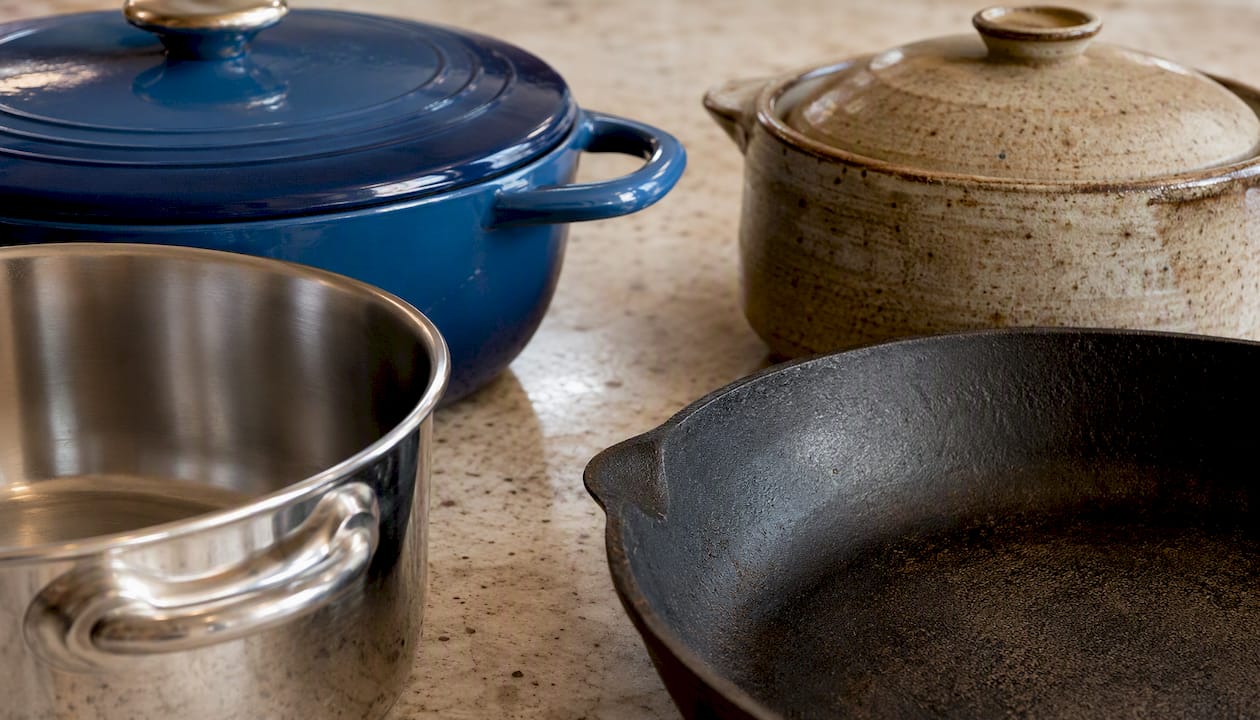
Copper is the most temperature-responsive material, ideal for precise sauces and candy-making. Nonstick excels at delicate foods like eggs and fish but has a shorter lifespan than other materials. Carbon steel is lighter than cast iron, takes a seasoning, and handles high heat well a favorite in professional kitchens. High-grade stainless, often labeled 18/10, is durable and nonreactive; fully clad constructions (tri-ply or 5-ply) with aluminum or copper cores distribute heat far more evenly than single-layer stainless.
| Material | Best for | Cooktop compatibility | Durability & care | Typical price/value |
|---|---|---|---|---|
| Tri-ply stainless | Searing, braising, versatility | All cooktops including induction | Very high; dishwasher-safe but hand-wash recommended | Mid to premium; long-term value |
| Enameled cast iron | Braises, soups, oven dishes | All cooktops including induction | Very high; avoid thermal shock | Mid to premium |
| Uncoated cast iron | High-heat searing, frying | All cooktops including induction | High; requires seasoning, no soaking | Budget to mid |
| Nonstick (ceramic or PTFE) | Eggs, fish, delicate foods | Most; check base for induction | Moderate; hand-wash only, replace when coating flakes | Budget to mid |
| Carbon steel | High-heat searing, wok cooking | All cooktops including induction | High; requires seasoning, dry storage | Mid |
| Copper | Precise sauces, candy | Gas and electric; not induction unless lined | Moderate; polishing required | Premium |
| Aluminum | Quick heating, baking | Gas and electric; not induction unless clad | Moderate; reactive with acidic foods | Budget |
Cooktop compatibility matters more than most buyers realize. For induction, you need a magnetic base run a refrigerator magnet along the bottom of any pot you’re considering. Flat, thick bases reduce warping on smooth-top electric ranges, where a warped bottom creates uneven contact and hot spots.
Pro Tip: If you want two materials that cover nearly every cooking task, choose tri-ply stainless for your stockpot and saucepan, and an enameled cast-iron Dutch oven for braises and oven work. That pairing handles everything from boiling pasta to slow-cooking short ribs.
How do you decide what to buy first?
It is advisable to buy one excellent workhorse piece before adding several mediocre ones. Consumer Reports advises taking inventory of what you already own, then buying open-stock pieces to fill specific gaps rather than replacing everything at once.
Purchase sequence:
- Assess what you own. Do you already have a working skillet or saucepan? Start with the gap, not the full list.
- Identify what you cook most. Soups and braises every week? The Dutch oven is your first buy. Mostly eggs and quick sautés? A good skillet comes first.
- Check cooktop compatibility. Confirm induction-readiness or flat-base requirements before ordering.
- Set a realistic budget. Mid-range, fully clad stainless or enameled cast iron gives you the best long-term return.
- Verify oven-safety and lid fit. A pot that goes from stovetop to oven at 450°F doubles its usefulness.
Buyer checklist before you add to cart:
- Capacity matches your household size
- Oven-safe temperature rating (400°F minimum; 500°F preferred)
- Tight-fitting lid included
- Riveted stainless handles (not screwed-in)
- Manufacturer warranty clearly stated
When a set makes sense: moving into a new kitchen, gifting a new cook, or outfitting a second home quickly. Wirecutter’s recommended sets include specific saucepans, a sauté pan, 10" and 12" skillets, and an 8 qt stockpot — a balanced lineup that avoids redundant pieces. For most established cooks, open-stock buying wins every time.
How do you care for pots to make them last?
The single biggest mistake home cooks make is putting nonstick and cast iron in the dishwasher. Hand-washing both materials even when the label says dishwasher-safe extends nonstick life and preserves cast-iron seasoning. Dishwasher detergents and high-heat cycles degrade coatings and strip the polymerized oil layer that makes cast iron perform.
Maintenance checklist by material:
- Nonstick: Wash by hand with warm soapy water. Use silicone or wooden utensils only. Never heat an empty nonstick pan on high; the coating degrades above 500°F.
- Cast iron (uncoated): Dry immediately after washing, apply a thin layer of neutral oil, and store in a dry place. Re-season in the oven when the surface looks dull or patchy.
- Carbon steel: Same routine as cast iron. Wipe dry after every use and apply a light oil coat to prevent rust.
- Stainless steel: Dishwasher-safe, but hand-washing keeps the finish cleaner longer. Bar Keepers Friend removes stubborn staining without scratching.
- Enameled cast iron: Avoid sudden temperature changes (cold water into a hot pot). Gentle dish soap is fine; no abrasive scrubbers.
Signs it’s time to replace a pot: a warped bottom that rocks on a flat surface, nonstick coating that flakes or peels, persistent rust that won’t respond to re-seasoning, or a lid that no longer seals properly.
Pro Tip: Store cast iron and carbon steel with a paper towel inside to absorb any residual moisture, a simple habit that prevents rust between uses.
A well-made stainless or cast-iron pot, cared for properly, can last decades. Nonstick coatings, even high-quality ceramic ones, typically need replacing every 3–5 years depending on use frequency and heat exposure. Budget accordingly: buy nonstick at a price you’re comfortable replacing, and invest more in the pieces you expect to keep for life.
What should you expect to pay for quality pots?
Price tiers in cookware are fairly predictable once you know what to look for.
Budget (under $50 per piece): Single-layer aluminum or thin stainless. Heats unevenly, warps faster, and typically carries no meaningful warranty. Fine for a first apartment; not a long-term investment.
Mid-range ($50–$150 per piece): Tri-ply stainless or enameled cast iron from established brands. This is where most home cooks get the best value. Construction quality jumps significantly, and most pieces in this range carry a limited lifetime warranty.
Premium ($150+ per piece): 5-ply or 7-ply stainless, copper-core constructions, or heirloom-grade enameled cast iron. Marginal performance gains over good mid-range tri-ply for most home cooking tasks, but exceptional durability.
Value signals worth paying for:
- Fully clad (tri-ply or 5-ply) construction, not just a disk base
- Riveted stainless handles, not screwed-in
- Oven-safe to at least 400°F
- Manufacturer warranty of at least one year (lifetime preferred)
- Tight-fitting lid included in the price
Wine Drop Cookery pots that match what you actually need
These three picks from Wine Drop Cookery cover the core workhorses this guide recommends and are available directly from the pots, pans, and cookware collection.
5-Ply Stainless Stock Pot with Lid, 7-Qt
- Best for: Soups, stocks, pasta, and large-batch sauces
- Material: 5-ply stainless steel with bonded aluminum core layers
- Cooktop compatibility: All cooktops including induction
- Care: Hand-wash recommended; oven-safe
- Notable: 5-ply construction delivers even heat across the full base — the construction standard Wirecutter highlights for durability and consistent results
Stock Pot with Lid 18 Quart Set
- Best for: Large families, entertaining, batch cooking, canning
- Material: Stainless steel
- Cooktop compatibility: Gas, electric, and induction-compatible base
- Care: Hand-wash for longevity
- Notable: At 18 qt, this is the right pick when you’re feeding a crowd or making stock from a whole chicken carcass
Ceramic Nonstick Stock Pot with Lid, 4.5-Qt
- Best for: Low-fat cooking, delicate sauces, everyday family meals
- Material: Ceramic nonstick coating
- Cooktop compatibility: Gas and electric; check product page for induction
- Care: Hand-wash only; use silicone or wooden utensils
- Notable: Ceramic coating avoids PTFE concerns and cleans up faster than uncoated stainless
Quick buying cues: Mostly making soups and stocks? The 5-Ply 7-Qt is your anchor piece. Cooking for a large group or hosting holidays? The 18 Qt Set handles volume no standard pot can. Focused on lighter, lower-fat weeknight cooking? The Ceramic Nonstick 4.5-Qt is the practical daily driver.
Pro Tip: Pair the 5-Ply Stainless Stock Pot with a 5-qt enameled cast-iron Dutch oven and you’ll cover braises, soups, pasta, and sauces without needing anything else for the first year.
Why these picks make sense for most home cooks
These Wine Drop Cookery selections were chosen for cooking versatility, material durability, cooktop compatibility, and value across household sizes.
Selection criteria applied to each pick:
- Workhorse coverage: each pot addresses a distinct cooking task (high-volume boiling, everyday saucing, low-fat cooking)
- Material quality: 5-ply construction in the stainless pot; ceramic coating in the nonstick for PTFE-free performance
- Capacity range: 4.5 qt through 18 qt covers solo cooks to large entertaining needs
- Oven-safety and lid fit confirmed on product pages
- Warranty and return policy details are listed on each individual product page at Wine Drop Cookery
A practical take on buying pots over time
Buy the Dutch oven and a good skillet first if you cook for a family. If your weekday cooking is mostly eggs, pancakes, and quick sautés, a quality nonstick skillet is the smarter first purchase. Either way, resist buying everything at once.
A simple timeline:
- Now: Dutch oven (or stockpot if soups dominate your cooking) plus a 10–12" skillet
- 6–12 months in: Add a 3–4 qt saucepan and a nonstick skillet once you know what you’re actually missing
- For holidays and entertaining: A large stockpot (12–18 qt), a roasting pan, and a sauté pan round out the collection
Ready to build your kitchen with pots that last?
Wine Drop Cookery’s kitchen essentials collection brings together the cookware this guide recommends from the 5-Ply Stainless Stock Pot to the Ceramic Nonstick option in one place, so you’re not hunting across multiple sites. Every product page lists oven-safety ratings, cooktop compatibility, and warranty details upfront. Shipping, return, and warranty information is available directly on each product page.
Browse the full pots, pans, and cookware collection at Wine Drop Cookery and pick the one or two pieces that match your cooking style today.
Sources
These sources informed the material comparisons, sizing guidance, and buying recommendations throughout this guide.
- Essential Pots and Pans: The Cookware Every Kitchen Needs
- Best Cookware Buying Guide - Consumer Reports
- Pots & Pans Guide — Bon Appétit
- Cookware guide: types of pans and how to use them — MasterClass
- The 3 Best Cookware Sets of 2026, According to Our Testing | Reviews by Wirecutter
- Stainless steel, cast iron, or non-stick? Choosing the best cookware surface - ABC News
For deeper dives, the Consumer Reports buying guide and Wirecutter’s set reviews include hands-on test data across dozens of cookware lines.
FAQ
What pots should a beginner buy first?
Start with a 5–7 qt Dutch oven and a 10–12" skillet. Those two pieces cover braises, soups, searing, and pan-frying the techniques that appear most in everyday home cooking.
Are nonstick pots safe to use?
Ceramic nonstick coatings are PTFE-free and considered safe for everyday cooking. Avoid overheating any nonstick surface above 500°F, and replace the pot when the coating begins to flake or peel.
Do I need induction-compatible pots?
Only if your cooktop is induction. A simple magnet test confirms compatibility: if a magnet sticks firmly to the base, the pot works on induction. Flat, thick bases also reduce warping on smooth-top electric ranges.
How long do quality pots last?
Well-maintained stainless steel and cast iron can last decades. Nonstick coatings, including ceramic, typically need replacing every 3–5 years depending on use and heat exposure.
Is a cookware set worth buying?
A set makes sense when outfitting a new kitchen quickly or buying as a gift. For established cooks, open-stock buying choosing single high-quality pieces to fill specific gaps usually delivers better value and avoids redundant pieces.
0 comments