

A pot is a deep, round container. In the kitchen, it holds and cooks food overheat. In the garden, it holds soil and lets a plant grow above ground instead of in it. Slang uses it to mean cannabis, a pot belly, or a big prize of money. Every version of the word relates to one idea: a vessel that holds something. This guide walks through cooking pots, planter pots, how to pick the right one, and how to keep either kind working for years.
TL;DR:
- Most everyday cooking and gardening pots are best chosen based on function, size, and material, rather than appearance or trend.
- For cooking, a six to eight-quart stainless steel stock pot is versatile for soups, pasta, and stocks, while smaller pans suit sauces and reheating.
- Garden planters should have drainage holes; undrilled pots can be modified, and size should be increased gradually as plant roots grow.
- Durable materials like cast iron and stainless steel last for decades, making them more environmentally friendly over time compared to cheaper, disposable options.
- Proper maintenance, such as seasoning cast iron and avoiding abrasives on delicate surfaces, extends pots’ lifespan and reduces waste.
Table of Contents
- What Does “Pot” Actually Mean?
- Cooking Pots: Types, Materials, and Sizing
- Planter Pots: Materials, Drainage, and Sizing
- How to Choose the Right Pot for Cooking or Gardening
- Cleaning and Maintaining Your Pots
- How Wine Drop Cookery’s Cookware Fits This Guide
- Where Pots Fit in Human History
- Beyond Cooking and Growing: Other Everyday Uses for Pots
- Are Pots Environmentally Friendly? Materials and Disposal
- A Practical Take on Choosing Pots
- Ready to Upgrade Your Cookware?
- Sources
- FAQ
What Does “Pot” Actually Mean?
The Cambridge English Dictionary defines a pot as a deep, typically round container used for cooking, growing plants, or holding liquids. That single definition covers almost every physical object you’ll see called a pot, from a soup pot on your stove to a terracotta planter on your porch.
The slang side of the word branches out further. According to Oxford Learner’s Dictionaries, “pot” commonly refers to cannabis, and it can also mean a pot belly (a rounded stomach) or a large sum of money, as in “the pot” in a card game. You’ll also hear it in phrases like “go to pot,” meaning something has fallen apart, or “sweeten the pot,” meaning to make an offer more appealing.
What ties all of this together is containment. Whether it’s holding stew, soil, smoke, or stakes in a poker game, a pot is always something that gathers or holds a quantity of something else. Here’s how the main senses break down:
- Cooking pot: a metal or ceramic vessel used to boil, simmer, or braise food on a stovetop or in an oven.
- Planter pot: a container, often with drainage, that holds soil and a growing plant.
- Slang for cannabis: informal, dating back decades in American English.
- Pot belly: a rounded midsection, usually used descriptively rather than clinically.
- Money pot: the total stakes or prize in a wager or fundraiser.
Cooking Pots: Types, Materials, and Sizing
A stock pot, a saucepan, and a Dutch oven all fall under “pot,” but they’re built for different jobs. A stock pot is tall and wide, made for large batches of soup, stock, or pasta water. A saucepan is smaller, with a single handle, made for sauces, grains, and quick reheating. A Dutch oven is heavy and thick walled, built to move from stovetop to oven for braises and stews. Sauté pots have straight sides and are wider and shallower than a stock pot, meant for searing before a braised.
Material changes how a pot performs. Multi-ply stainless steel distributes heat evenly and works on gas, electric, and induction stovetops, which makes it the most versatile everyday choice. Cast iron holds heat exceptionally well and suits slow, low-temperature cooking, but it’s heavy and needs seasoning. Aluminum heats up fast and is lightweight, though uncoated versions can react with acidic foods. Ceramic and enamel-coated pots look great and resist reacting with food, but they conduct heat unevenly, making them better for gentle, longer cooking than a hard sear.
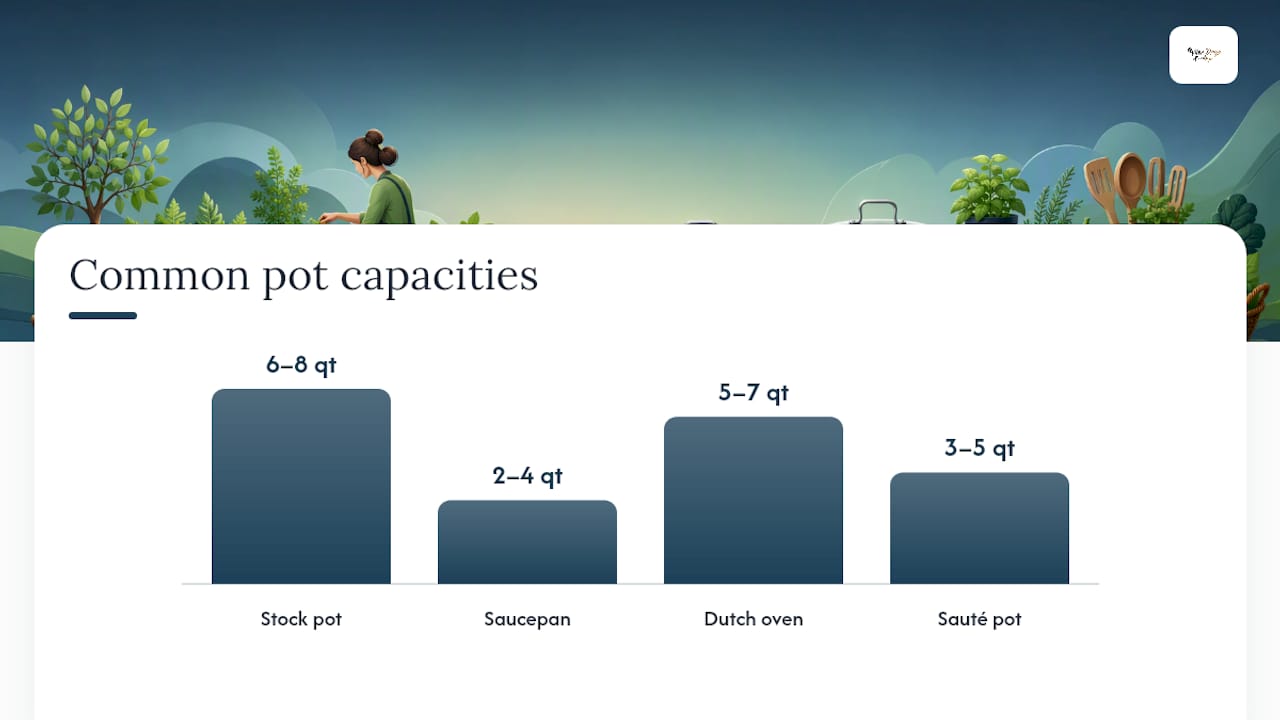
Sizing runs by volume, in quarts or liters. Stock pots commonly run 6 to 8 quarts, enough for a big batch of soup or a pound of pasta with room to spare. For everyday cooking, a 3 to 4 quart saucepan handles most sauces, grains, and side dishes for a family of four. Larger households or serious batch cooking often need an 8 to 12 quart pot.
- Stock pot: 6 to 8 quarts, for soups, stocks, and boiling pasta.
- Saucepan: 2 to 4 quarts, for sauces, rice, and reheating.
- Dutch oven: 5 to 7 quarts, for braises, stews, and bread.
- Sauté pot: 3 to 5 quarts, for searing and pan sauces.
Before buying, check whether a pot is oven-safe and induction-compatible if that’s your stovetop. Not every handle or lid can take high oven heat, and not every metal responds to an induction burner’s magnetic field.
Pro Tip: If you only own one pot, make it a 6-quart stainless steel pot with a lid. It handles soup, pasta, blanching vegetables, and small batches of stock without ever feeling too big or too small.
Planter Pots: Materials, Drainage, and Sizing
Terracotta is porous, which means it breathes and lets excess moisture evaporate through the walls, according to Wikipedia’s entry on flower pots. That makes it a strong choice for plants that hate wet roots, like succulents and herbs. Plastic pots are lightweight and retain moisture longer, useful for plants that like consistent dampness but risky for anything prone to root rot. Glazed ceramic pots look polished and hold color well, but the glaze seals the surface, so they drain slower than raw terracotta. Metal pots conduct heat, which can cook roots in direct sun, and biodegradable pots (coconut coir, rice husk) work well for seed starting since you can plant them directly into soil.
Drainage matters more than almost any other feature. A pot without a drainage hole traps water around the roots, starving them of oxygen and inviting rot. If you’ve fallen for a pot that has no hole, Wirecutter’s testing suggests drilling one yourself or setting a plastic nursery pot with drainage inside the decorative outer pot. Saucers catch runoff and protect floors and furniture; just don’t let a plant sit in standing water for days.
Sizing works differently than cookware. Planters are measured by top diameter in inches, and nurseries also use trade sizes, like a “4-inch pot” or a “1-gallon” container, that describe volume more than exact measurements. As a rule, move a plant up one or two pot sizes when its roots start circling the bottom, rather than jumping straight to something much larger.
- Terracotta: breathable, dries fast, best for succulents and herbs.
- Plastic: lightweight, retains moisture, good for ferns and tropicals.
- Glazed ceramic: decorative, slower drainage, needs a hole or careful watering.
- Metal: stylish but heats up fast in direct sun.
Indoors, weight and floor protection matter more than weather. Outdoors, frost can crack terracotta and UV can fade plastic over a few seasons, so consider your climate before committing to a material.
How to Choose the Right Pot for Cooking or Gardening
Whether you’re standing in a kitchen aisle or a garden center, the decision process is nearly the same. Work through it in order, and you’ll rarely end up with the wrong size or the wrong material.
- Define the use. Are you boiling pasta weekly, braising short ribs, or potting a fern?
- Estimate the size you need. For cooking, think in quarts (a family of four usually needs a 6 to 8 quart pot for big-batch meals). For plants, size up gradually as roots fill the current pot.
- Match the material to the job. Stainless steel for versatility, cast iron for slow cooking, terracotta for breathable soil, plastic for moisture retention.
- Check drainage or heat compatibility. A planter without a hole needs modification; a pot without induction compatibility won’t work on some stovetops.
- Set a budget and think about upkeep. Cast iron and unglazed terracotta need more maintenance than stainless steel or glazed ceramic.
A Serious Eats guide to essential cookware points to a small core set, a stainless skillet, a cast iron skillet, a stock pot, a nonstick pan, and a Dutch oven, as enough to cover nearly all home cooking. If you’re just starting out, a single 6 to 8 quart stock pot covers soups, pasta, and stocks in one purchase. A new plant owner is usually better served by a 6-inch plastic nursery pot with drainage, set inside a decorative pot for looks.
| Common Mistake | Better Approach |
|---|---|
| Buying a pot too small for batch cooking | Size up to 6 to 8 quarts for soups and stocks |
| Choosing a decorative pot with no drainage hole | Drill a hole or use a nursery pot insert |
| Using cast iron for every task | Reserve it for slow, low-heat cooking |
| Repotting a plant into a pot far too large | Move up one or two sizes at a time |
Cleaning and Maintaining Your Pots
Cast iron needs seasoning: a thin coat of oil baked on after washing keeps it rust-free and nonstick over time. Stainless steel handles stuck-on food well with a soak and a nonabrasive scrub pad, plus a splash of vinegar for stubborn stains. Enamel and ceramic surfaces do best with mild dish soap and a soft sponge, since harsh abrasives can chip the coating.
Planter pots need their own care. Reused pots should get scrubbed with a diluted bleach solution to kill off fungus or pests left from a previous plant. White, crusty buildup on terracotta usually means mineral salts from tap water or fertilizer, and a vinegar rinse breaks it down. When a plant outgrows its pot and roots circle tightly, loosen the root ball before repotting so it doesn’t keep spiraling.
- Season cast iron after every wash with a light coat of oil.
- Scrub stainless steel with vinegar for burnt-on residue.
- Rinse terracotta pots with diluted vinegar to clear mineral buildup.
- Store pots stacked with a cloth between them to prevent scratching.
Pro Tip: Dry cast iron completely and add a light oil coat before storing it, even if you’re not using it again for weeks. Moisture left behind is the fastest way to invite rust.
How Wine Drop Cookery’s Cookware Fits This Guide
Some cookware brands build their lineup around principles like even heat, durable materials, and sizing that matches how people actually cook. The 5-ply stainless stock pot at 7 quarts sits right in the sweet spot for soups and stocks discussed above. The brand’s multifunctional electric grill pot and ceramic nonstick stock pots round out options for cooks who want versatility without juggling five different pans.
Where Pots Fit in Human History
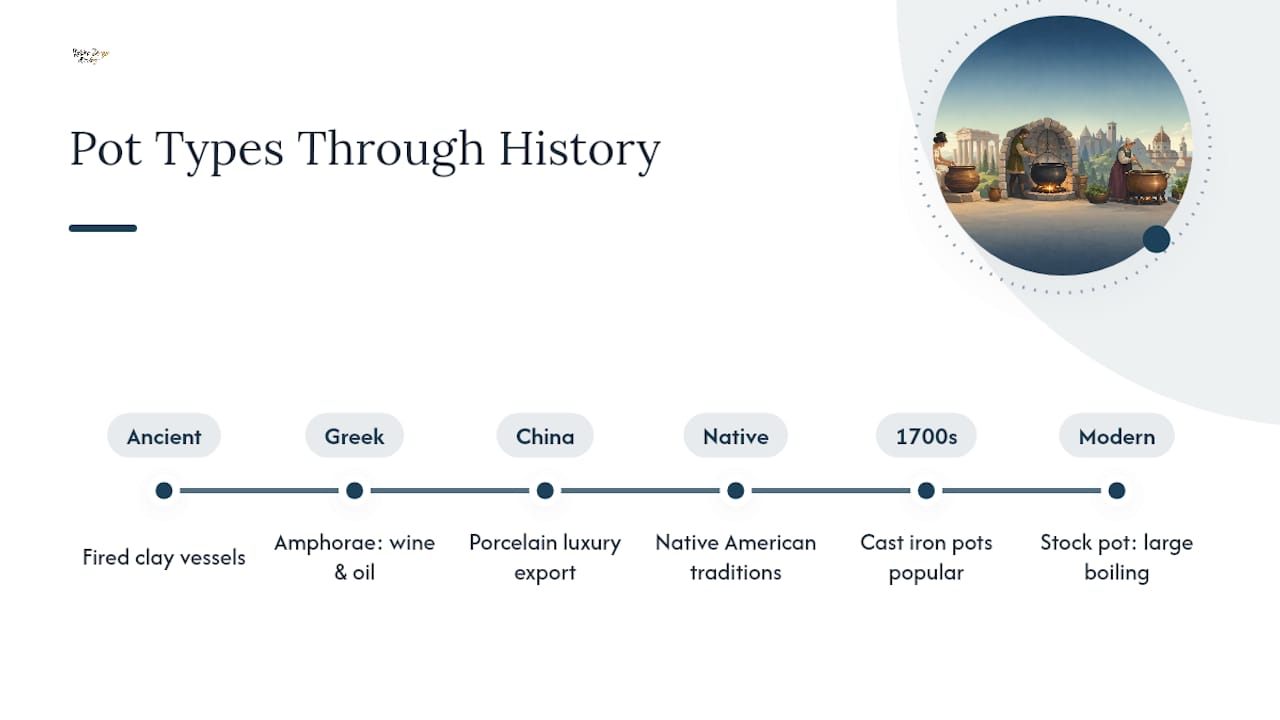
Pottery is one of the oldest technologies humans ever developed, with fired clay vessels appearing across ancient civilizations from Mesopotamia to China, long before metal cookware existed. Early pots weren’t just kitchen tools. They stored grain, carried water, held ceremonial offerings, and even served as burial containers for ashes or personal belongings.
The shape and decoration of ancient pots tell historians about trade routes, diets, and social status, since a well-fired, painted pot took skill and resources that not every household had. Greek amphorae carried wine and olive oil across the Mediterranean. Chinese porcelain, refined over centuries, became a luxury export that shaped global trade for hundreds of years. Native American pottery traditions, still practiced today in communities across the Southwest, carry patterns and techniques passed down through generations.
Cast iron cooking pots became a household staple in Europe and colonial America by the 1700s, prized for durability over open fire cooking. The stock pot as we know it today, tall, wide, and built for boiling large quantities, grew out of the need to feed big households and, later, restaurant kitchens efficiently.
Even the language reflects this history. Cultures that relied on cooking pots for daily survival often built proverbs and idioms around them, “a watched pot never boils” being a familiar example in American English. The pot, in nearly every culture that developed settled agriculture, became a marker of domestic life itself.
Beyond Cooking and Growing: Other Everyday Uses for Pots
Pots show up far outside the kitchen and garden. Decorative pots hold potpourri, candles, or dried arrangements as centerpieces on tables and mantels. Ceremonial pots play roles in religious and cultural practices worldwide, from incense burners in temples to ceremonial vessels used in weddings and funerals across many traditions.
Storage pots, often called crocks, once held pickled vegetables, fermented foods, or preserved meats before refrigeration existed, and fermentation crocks are still popular today among home cooks making sauerkraut or kimchi. Specialty pots like cast iron teapots serve a singular purpose: brewing and holding tea at a steady temperature, a category where dedicated teaware makers focus entirely on heat retention and pour quality.
Chamber pots served a practical, if less glamorous, function for centuries before indoor plumbing became standard. Melting pots, honey pots, and even the phrase “pot of gold” show how deeply the container concept has worked its way into figurative language. Artists and potters also treat pots as sculptural objects in their own right, displayed in galleries with no functional use at all beyond form and craftsmanship.
Even sports and games borrow the word: a “pot” in billiards means sinking a ball, and “the pot” in poker refers to the pooled bets on the table. The common thread across all these uses is still containment, whether that’s holding tea, ashes, savings, or a game’s stakes.
Are Pots Environmentally Friendly? Materials and Disposal
Material choice determines most of a pot’s environmental footprint. Cast iron and stainless steel cooking pots last for decades, sometimes generations, which makes them a lower-waste option over time despite a higher upfront energy cost to manufacture. Cheap nonstick or thin aluminum pots wear out faster and typically end up in landfills within a few years.
For planters, terracotta and unglazed ceramic are biodegradable in the sense that they break down eventually and don’t leach synthetic chemicals into soil, though they can crack and end up as landfill shards. Plastic pots are the most common source of garden waste, since most nursery pots are made from polypropylene that isn’t accepted in many curbside recycling programs. Biodegradable pots made from coconut coir, rice husk, or compressed peat solve this by breaking down directly in the garden bed, cutting down on plastic waste at the nursery and retail level.
Disposal matters as much as material. A cracked ceramic or terracotta pot can often be repurposed as drainage material at the bottom of another planter rather than thrown away. Metal cooking pots that are damaged beyond use are usually accepted at scrap metal recyclers, which keeps steel and aluminum out of landfills entirely. Buying fewer, longer-lasting pots, whether for the stove or the windowsill, remains one of the simplest ways to reduce kitchen and garden waste over the long run.
A Practical Take on Choosing Pots
Most buying guides overcomplicate this. People get talked into fancy pot sets with pieces they’ll never touch, or trendy planters that look great online but have no drainage and quietly kill every plant put in them.
My own approach has always been function first. A pot that heats evenly or drains well will outperform a beautiful pot that fights you every time you use it. If you’re only going to own a few pots in your life, make them the boring, reliable ones. The pretty ones can wait until you know exactly what you’ll use them for.
Alan
Ready to Upgrade Your Cookware?
Skip the trial-and-error of testing mediocre pots before finding one that actually distributes heat evenly. Some cookware is curated around durable materials, practical sizing, and stovetop versatility, helping avoid pots that warp after a year of regular use.
Browse the full lineup of pots, pans, and cookware to find a stock pot, sauté pot, or ceramic nonstick set sized for how you actually cook. If you’re stocking a kitchen from scratch, the kitchen essentials collection bundles the cookware and tools most home cooks reach for daily. Pick your size, check the material against what you cook most, and add it to your cart.
Sources
- POT | definition in the Cambridge English Dictionary
- pot - Oxford Learner’s Dictionaries
- Cooking pot - Wikipedia
- Our Favorite Plant Pots and Stands - Wirecutter
FAQ
What Does “Pot” Mean in Slang?
In slang, “pot” most commonly refers to cannabis, but it can also mean a pot belly or a large sum of money staked in a game, depending on context.
What Is a Pot, Exactly?
A pot is a deep, typically round container used for cooking food, growing plants, or holding liquids, spanning kitchen cookware, garden planters, and storage vessels.
What Other Meanings Does “Pot” Have?
Beyond cooking and gardening, “pot” can mean cannabis, a rounded stomach, a pooled sum of money in gambling, or a decorative and ceremonial vessel used in cultural and religious practices.
What Is the Strongest Type of Cooking Pot?
Cast iron holds up the longest under heavy use and retains heat exceptionally well, making it the sturdiest choice for slow braises and stews, though multi-ply stainless steel offers more everyday durability across different stovetops.
How Do I Know What Size Pot to Buy?
For cooking, match volume to your typical batch size, 6 to 8 quarts for soups and stocks, 3 to 4 quarts for everyday sauces; for planters, size by top diameter and move up one or two sizes as roots fill the current pot.
0 comments