

Extra virgin olive oil typically smokes within a range often cited around mid-350s to just over 400°F, while refined olive oil can withstand higher temperatures often approaching the mid-460s, and both are suitable for most common cooking methods. You can sauté, sear, roast, and even deep-fry with extra virgin olive oil at standard home temperatures without worry. The number you see on a chart matters less than a quality most labels skip: oxidative stability, which is a better predictor of how an oil behaves under real heat.
TL;DR:
- Extra virgin olive oil’s smoke point typically ranges from mid-350s°F to just over 400°F, but its oxidative stability often surpasses that of higher smoke point oils.
- Factors like free fatty acid content, filtration, age, and storage conditions significantly influence an oil’s actual stability and smoke point.
- Higher smoke point alone does not indicate better performance, as extra virgin olive oil can produce fewer harmful compounds during frying than oils with higher labeled smoke points.
- For sautéing, extra virgin olive oil is suitable below 350°F, while refined olive oil or blends are better for searing at temperatures up to 460°F.
- Proper tools like instant read thermometers and controlled pouring devices help manage oil temperature and avoid overheating.
Table of Contents
- Extra Virgin, Virgin, and Refined Olive Oil Smoke Points Compared
- What Actually Changes an Oil’s Smoke Point
- Why Oxidative Stability Matters More Than the Number on the Bottle
- Which Olive Oil to Use for Sautéing, Searing, Roasting, and Frying
- What to Do the Moment Oil Starts Smoking
- Why the Right Tools Make This Guidance Easier to Follow
- The Extra Virgin Olive Oil Myths Worth Retiring
- Storing Olive Oil to Protect Its Smoke Point and Quality
- What Happens When You Reuse or Overheat Olive Oil
- How Olive Oil Stacks Up Against Other Cooking Oils
- Stop Chasing the Number, Start Watching the Oil
- Tools That Take the Guesswork Out of Cooking With Oil
- Sources
- FAQ
Extra Virgin, Virgin, and Refined Olive Oil Smoke Points Compared
The smoke point ranges you’ll find across reference sources vary a bit, and that’s not a red flag. It’s just how the chemistry works. Here’s a quick-reference breakdown:
| Olive Oil Type | Typical Smoke Point Range |
|---|---|
| Extra virgin olive oil | generally between about mid-350s°F and just over 400°F |
| Virgin olive oil | typically ranges near the mid-460s°F |
| Refined olive oil | up to approximately 465°F |
These figures come from smoke point comparisons across cooking oils and from industry testing data on olive oil. Why the spread? Testing method plays a role. Some labs heat oil in small batches over minutes, others run longer trials that better mimic a home stovetop. Free fatty acid content, filtration level, and even how old the bottle is all shift the number a few degrees in either direction. A fresh, well filtered extra virgin olive oil will smoke later than a cloudy, high acid batch, even if both wear the same label.
What Actually Changes an Oil’s Smoke Point
Smoke point isn’t fixed. It moves based on what’s actually in the bottle, and the biggest factor is free fatty acid content. Higher acidity means a lower smoke point, which is one reason extra virgin olive oil’s compositional profile behaves differently than a heavily processed oil, even from the same olives. Refining strips out particulates, water, and some flavor compounds, which raises the temperature an oil can reach before it visibly smokes. That’s the whole reason refined olive oil tolerates more heat than extra virgin.
A few practical signals tell you what you’re working with:
- Cloudiness or visible sediment usually signals unfiltered oil with a lower smoke point.
- A pungent, peppery taste often means higher polyphenol content, a hallmark of fresher extra virgin olive oil.
- Bottles stored near a stove or in direct sunlight degrade faster, dropping their effective smoke point over time.
- Any oil that’s been opened for more than a few months loses stability, regardless of grade.
None of this means extra virgin olive oil is fragile. It means the number on a chart is a starting point, not a guarantee.
Why Oxidative Stability Matters More Than the Number on the Bottle
Smoke point tells you when oil starts visibly smoking. It doesn’t tell you how much damage is happening to the oil, or to you, during the cooking itself. That distinction is the whole reason the “just use a high smoke point oil” advice misses the point.
A comprehensive review of frying oils found that smoke point is a poor indicator of an oil’s resistance to thermal breakdown, and that oxidative stability, how well an oil resists forming harmful polar compounds under sustained heat, is the more meaningful measure. Antioxidants and a favorable monounsaturated fat profile slow that breakdown, and extra virgin olive oil tends to score well on both counts.
Laboratory frying trials have found extra virgin olive oil producing fewer polar compounds than several refined seed oils over hours of continuous frying, even though those seed oils carry higher published smoke points.
That finding comes from lab comparisons on olive oil’s frying performance, and it flips the conventional wisdom on its head. A higher number on a chart doesn’t mean an oil holds up better once it’s actually working in your pan.
The practical takeaway: buy a good quality oil, watch for visible smoke as your real-time signal, and stop treating the printed smoke point as the final word on safety.
Which Olive Oil to Use for Sautéing, Searing, Roasting, and Frying
Match the oil to the task, not the other way around. Here’s how that plays out at the stove:
- Sautéing (300°F to 350°F): Extra virgin olive oil is a strong fit here. This range sits comfortably below its smoke point, and you get the flavor along with it.
- Searing (400°F to 450°F): This is where a refined olive oil or a blend earns its place, since you’re pushing past extra virgin’s comfort zone, especially on a screaming hot cast iron pan.
- Roasting (375°F to 425°F): Extra virgin olive oil works for most vegetables and proteins here, particularly if the oven temperature sits toward the lower end of that band.
- Deep-frying (350°F to 375°F): This falls within extra virgin olive oil’s stable working range according to comparative frying research, though the cost of using it in volume leads many cooks to reach for refined olive oil or a milder oil instead.
A cheap thermometer solves more kitchen problems than almost any other tool, and knowing your oil’s actual temperature beats guessing every time. Preheat your pan before adding oil, since an empty pan can overshoot its target temperature fast, and add the oil once the pan has come up to heat rather than heating oil and pan together from a cold start.
Pro Tip: Save your most fragrant, expensive extra virgin olive oil for lower heat applications and finishing drizzles, and reach for a milder refined olive oil when you’re frying in volume. You’ll spend less and waste less flavor.
What to Do the Moment Oil Starts Smoking
Visible smoke means the oil has crossed its threshold, and it’s a clear signal to act, not panic.
- Turn off the heat immediately and slide the pan off the burner if it’s a stovetop.
- Ventilate the kitchen. Open a window or turn on the exhaust fan. Never add water to hot oil.
- Assess the oil. A faint haze that clears once heat drops is a minor overshoot. A strong burnt smell, dark color, or acrid taste means the oil has broken down and should be discarded.
- Decide on reuse. If the oil looks and smells fine after cooling, straining it through a fine mesh removes food particles for one more use. If it’s dark, thick, or foamy, toss it.
Why the Right Tools Make This Guidance Easier to Follow
We built Wine Drop Cookery on the idea that reliable results start with reliable tools, and smoke point management is a perfect example. An instant read thermometer takes the guesswork out of “is this hot enough.” A silicone oil bottle with a basting brush helps you control exactly how much oil hits the pan. Heatproof utensils round out the setup so nothing melts or scorches while you work.
The Extra Virgin Olive Oil Myths Worth Retiring
The idea that extra virgin olive oil “can’t handle heat” is probably the most repeated myth in home cooking, and it doesn’t hold up. It’s true that its smoke point sits lower than many refined oils, but lower doesn’t mean unsafe. Most home cooking tasks, sautéing, roasting, even a quick sear, never come close to pushing extra virgin olive oil past its working range.
Another common claim is that heating extra virgin olive oil destroys its health benefits entirely. Some sensitive compounds do degrade with heat, but the oil doesn’t become harmful, and much of its monounsaturated fat content and flavor survive normal cooking. A practical review of cooking with olive oil found no clear evidence that cooking with extra virgin olive oil at typical home temperatures produces worse outcomes than switching to a higher smoke point oil.
There’s also a persistent belief that pricier, more peppery extra virgin olive oil is somehow more fragile under heat. In practice, the opposite is often closer to true. Fresher oils with higher polyphenol content tend to carry more antioxidant protection, which supports better performance under sustained heat, not worse.
Finally, plenty of cooks assume frying with extra virgin olive oil ruins the dish’s flavor with bitterness. Real world testing suggests the taste impact of heating extra virgin olive oil is often minimal, especially in dishes with other bold flavors competing for attention.
Storing Olive Oil to Protect Its Smoke Point and Quality
Every bottle starts losing stability the moment it’s opened, and how you store it either slows that clock or speeds it up. Heat, light, and air are the three things working against your oil, and a kitchen counter next to the stove hits all three at once.
Keep bottles in a cool, dark cupboard away from direct sunlight and away from the oven’s residual heat. A pantry shelf beats a spot on the windowsill every time, even if the windowsill looks nicer. Glass bottles with a dark tint or tin containers block light better than clear glass, which is worth considering if you’re decanting oil into a decorative bottle for the counter.
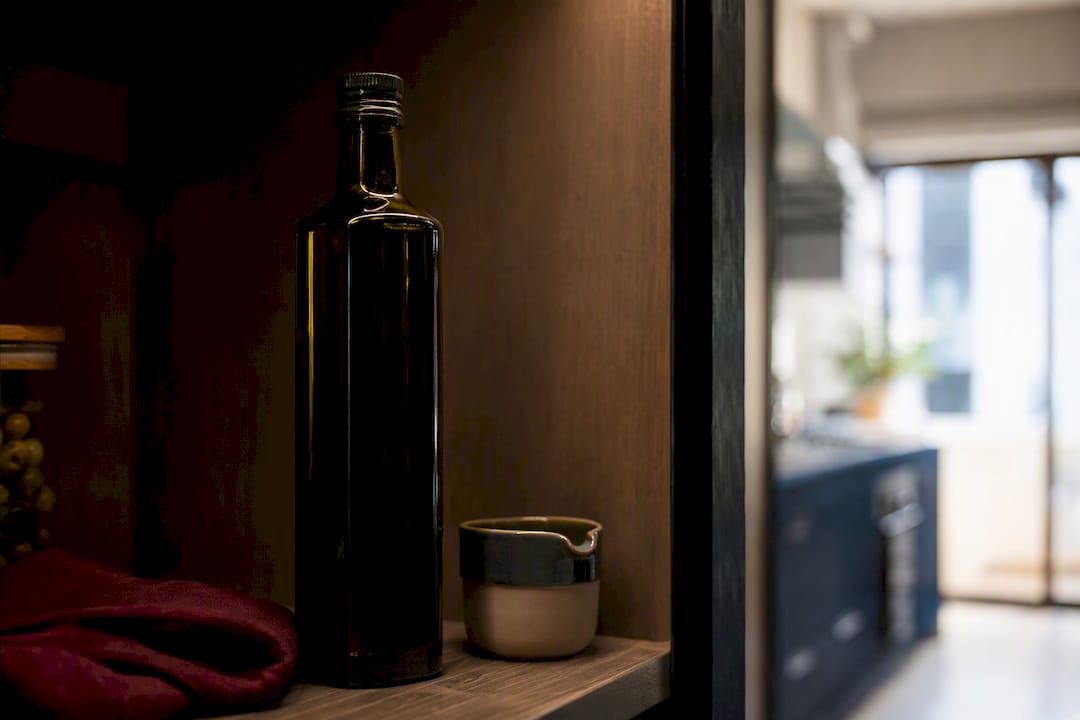
Always reseal the cap tightly after each use. Oxygen exposure is one of the fastest ways to degrade an oil’s antioxidant content, which is exactly what supports its resistance to breakdown under heat in the first place. Buy oil in a size you’ll actually use within a couple of months rather than a giant tin that sits open on the counter for half a year.
Temperature swings matter too. Don’t store oil near a dishwasher vent or above a warm refrigerator motor. A consistent, moderate temperature keeps the oil’s chemistry stable far longer than a spot that heats and cools throughout the day. Treat a good bottle of extra virgin olive oil the way you’d treat a bottle of wine you actually care about, and it will keep performing the way you expect.
What Happens When You Reuse or Overheat Olive Oil
Every time oil gets reheated, it loses a little more of its structural integrity, and the smoke point drops along with it. This is true of every cooking oil, not just olive oil, but it’s worth understanding because reused frying oil is common in home kitchens trying to stretch a good batch further.
Repeated heating breaks down the oil’s fatty acids and depletes the antioxidants that gave it stability in the first place. That’s why oil that smoked easily at 375°F the first time might start smoking at a noticeably lower temperature on its second or third use. The visible signal, faster smoking, darker color, thicker texture, is your body’s early warning system doing exactly what it should.
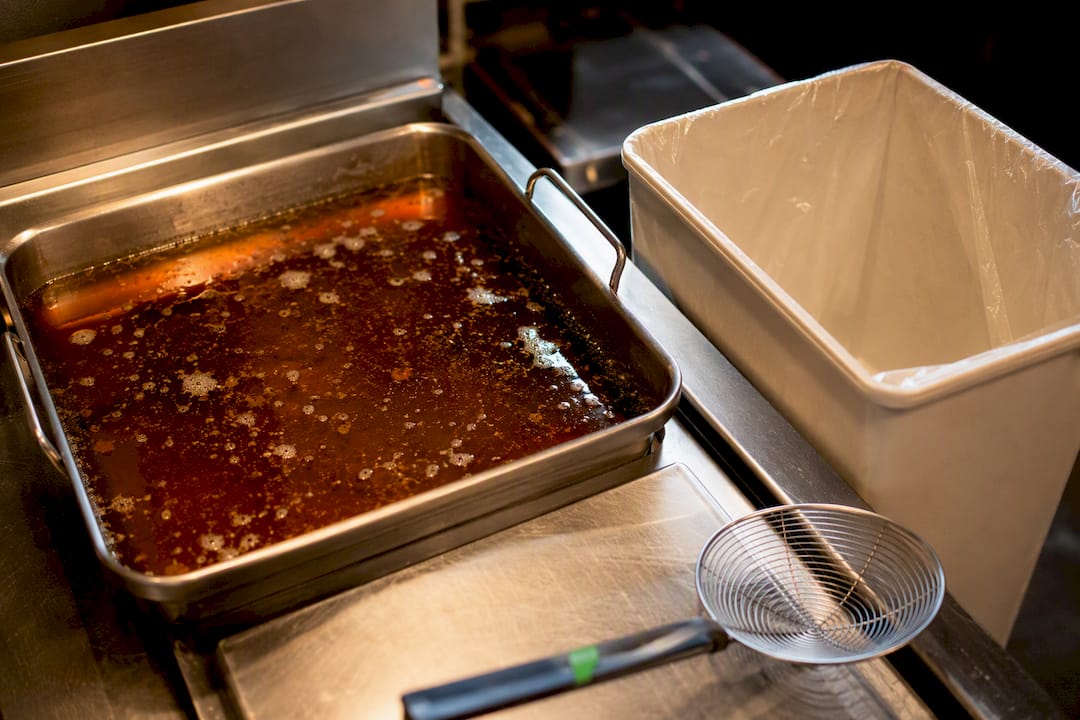
Overheating past the smoke point repeatedly accelerates the formation of polar compounds, the same compounds researchers use as a marker of oil degradation in lab testing. A review of frying oil composition points to these compounds building up faster in oil that’s been pushed past its stability threshold multiple times, regardless of the type of oil.
The practical rule: if oil smells burnt, looks noticeably darker than when you started, or has thickened up, don’t reuse it, no matter how much is left in the pan. One or two careful reuses of clean, lightly used frying oil is reasonable. Beyond that, you’re cooking with something chemically different from what you started with.
How Olive Oil Stacks Up Against Other Cooking Oils
Placed next to other common kitchen oils, olive oil sits in the middle of the smoke point range, not at the bottom, and definitely not at the top.
Refined avocado oil and refined peanut oil post some of the highest smoke points among common cooking oils, often cited well above 450°F, which is why they show up so often in deep-frying recommendations. Butter and unrefined coconut oil sit near the bottom, smoking at noticeably lower temperatures than even extra virgin olive oil. Canola and vegetable oil blends land in a middle range that overlaps closely with refined olive oil.
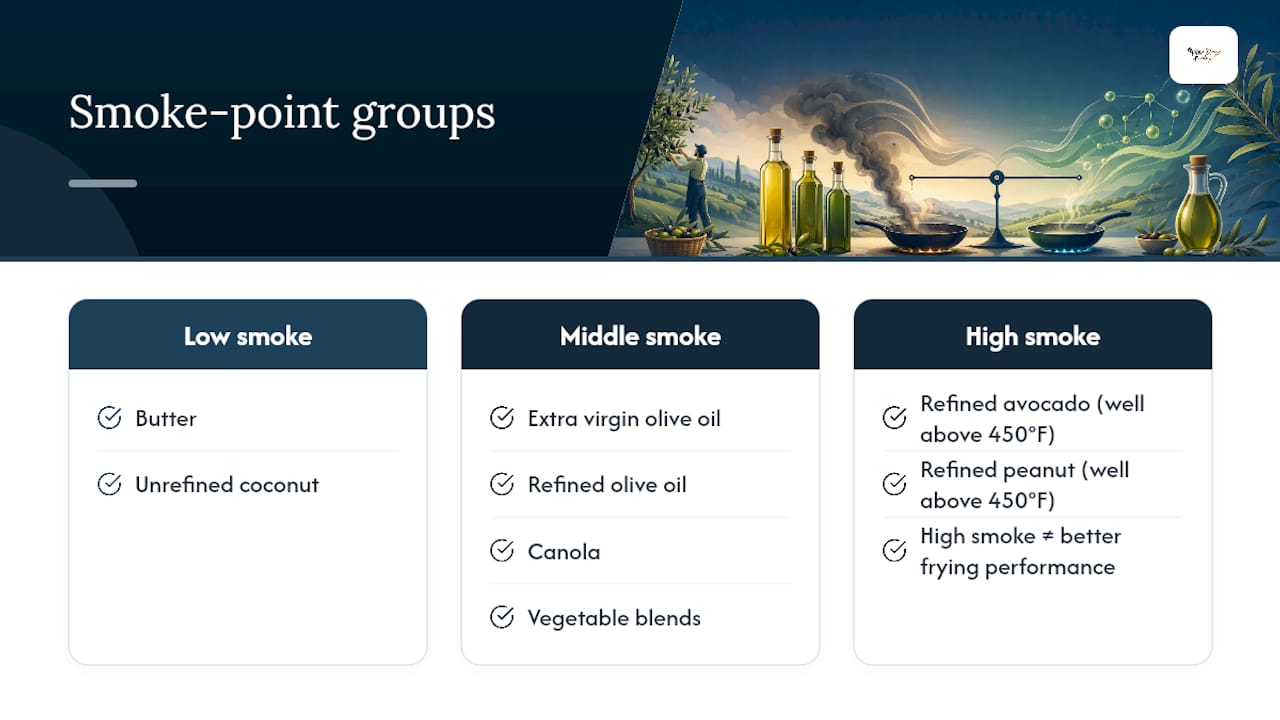
But smoke point ranking and real world performance under heat are two different stories, and that’s the point worth remembering. In frying trials referenced by comparative oil research, extra virgin olive oil held up longer against harmful compound formation than some oils with higher published smoke points, canola among them. A higher number on the chart doesn’t automatically mean a tougher performance in the pan.
If you’re choosing an oil for a specific job, let the task guide you: neutral flavor and very high heat point toward refined oils, while flavor and moderate to high heat point toward a good extra virgin olive oil.
Stop Chasing the Number, Start Watching the Oil
The conventional advice to “just use a high smoke point oil” sounds reasonable, but it’s solving the wrong problem. The evidence points somewhere more useful: an oil’s resistance to breaking down under sustained heat matters far more than the single temperature at which it starts smoking. That’s why a good extra virgin olive oil can outlast a refined seed oil with a flashier number on the label, even in a straight frying comparison.
Where most kitchen advice falls short is treating smoke point like a pass or fail test. It’s not. It’s one data point among several, and it tells you almost nothing about oil quality, freshness, or how the oil behaves after twenty minutes in a hot pan. What actually predicts a good outcome is buying quality oil, storing it properly, and paying attention to what’s happening in front of you.
Prioritize the visible cues, color, smell, whether the oil is actively smoking, over the printed number every time. Your eyes and nose are better real time instruments than any chart, and they’ll never let you down at the exact moment it counts.
— Alan
Tools That Take the Guesswork Out of Cooking With Oil
Knowing the safe range for your oil only helps if you can actually track what’s happening in the pan, and that’s where the right tools change the outcome. Wine Drop Cookery’s Essential Kitchen Tools collection covers exactly the gear this guide points to: precise heat control, better pour accuracy, and utensils that hold up to real stovetop temperatures.

A silicone oil bottle with a basting brush gives you control over exactly how much oil hits a hot pan, which matters when you’re trying to avoid overheating an empty surface. Pair that with a heat resistant stainless steel utensil set so nothing warps or melts while you’re working near frying temperatures. If your current stovetop runs hot and unpredictable, a portable double burner gives you a second, more controllable heat source for precise frying and searing work. Browse the full kitchen essentials collection and build a setup that matches the guidance in this piece.
Sources
This article draws on peer-reviewed frying research, industry testing data, and practical kitchen journalism, including a scientific review of frying oil composition and degradation, BBC’s reporting on cooking oil choices, SeriousEats’ guide to cooking with olive oil, and lab comparisons of olive oil versus other frying oils. Readers who want the full methodology behind these findings should consult the original studies directly.
- Vegetable Oils and Their Use for Frying: A Review of Their Compositional Differences and Degradation
- Cooking With Olive Oil: A guide to safety and flavor - SeriousEats
- Olive Oil Smoke Point: The Myth vs. What Research Shows – Olivea
FAQ
Is Olive Oil Safe for High Heat Cooking?
Yes, refined olive oil handles high heat cooking well up to around 465°F, and extra virgin olive oil performs reliably for sautéing, roasting, and even deep-frying within its 350°F to 405°F range.
Is 425°F Too Hot for Olive Oil?
It depends on the type. Refined olive oil tolerates 425°F comfortably, but extra virgin olive oil is at or near its smoke point at that temperature and may begin smoking.
Will Olive Oil Smoke at 400°F?
Extra virgin olive oil can start smoking near the top of its 350°F to 405°F range, so 400°F is right at the edge, while refined olive oil still has significant headroom left.
Why Is It Not Good to Cook With Extra Virgin Olive Oil?
The concern is often overstated. Research shows extra virgin olive oil can outperform some higher smoke point oils in oxidative stability, meaning the “it’s not good for cooking” claim doesn’t hold up for most home cooking tasks.
0 comments