

Choose light roast when you want to taste where your coffee actually came from. Choose dark roast when you want a bold, roast-forward cup that stands up to milk. That’s the whole decision in one sentence, and if you only remember one thing from this guide, let it be that.
Here’s how it breaks down by goal:
- Origin clarity, fruity or floral notes, pour-over or Aeropress: go light roast.
- Bold flavor, low acidity, espresso and milk-based drinks: go dark roast.
- Not sure yet, or brewing for a crowd with mixed preferences: start with a medium roast or grab a sampler pack and run your own side-by-side.
One caveat before you dig in: light roast does contain marginally more caffeine by weight, but the difference is so small that how you measure your coffee matters more than which roast you buy. We’ll unpack that fully later on, because it trips up more home brewers than any other coffee myth.
Key Takeaways
Light roast delivers more origin clarity and acidity, while dark roast delivers bolder, more roast-driven flavor with lower acidity and a heavier body.
| Point | Details |
|---|---|
| Flavor direction | Light roasts taste fruity, floral, and bright; dark roasts taste chocolatey, caramelized, and smoky. |
| Acidity and body | Light roasts carry higher acidity and lighter body; dark roasts carry lower acidity and heavier body. |
| Brewing adjustments | Dark roasts need coarser grind and cooler water; light roasts need finer grind and hotter water for full extraction. |
| Caffeine caveat | Light roast has marginally more caffeine by weight, but scoop measuring can flip that result since dark beans take up more volume per gram. |
| Where to start exploring | Wine Drop Cookery’s coffee makers and beans collection pairs brewing gear with beans across the roast spectrum for easy side-by-side tasting. |
Table of Contents
- Light Roast vs Dark Roast: What Roast Levels Actually Mean
- How Roasting Chemistry Creates Two Different Coffees
- Flavor Profiles: What You Should Actually Taste
- Matching Brewing Methods to Roast Level
- Caffeine, Weight, and Why Your Measuring Method Matters More Than Roast
- Freshness and Storage: Why Roast Level Changes the Clock
- How to Choose Your Roast: A Practical Decision Guide
- Why We Lean Light for Discovery, Dark for Everyday Comfort
- Try Both Roasts the Right Way, With Gear That Doesn’t Get in the Way
- Sources
- FAQ
Light Roast vs Dark Roast: What Roast Levels Actually Mean
A roast level is a stopping point on a temperature curve, not a flavor category with fixed borders. Roasters pull beans out of the drum at a specific internal temperature, and that single decision determines almost everything about how the coffee will taste in your cup.
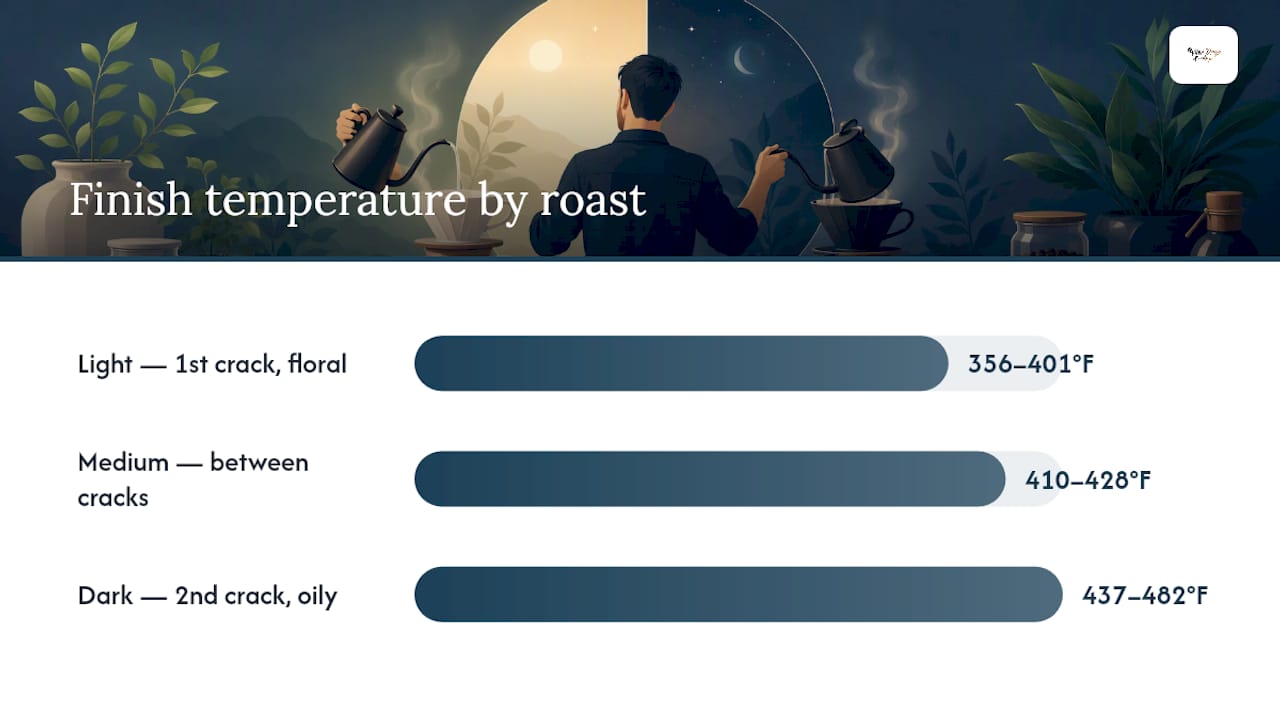
Light roasts typically finish once beans hit somewhere between 356°F and 401°F, right around or just after “first crack,” the audible pop that happens as trapped moisture and gas rupture the bean’s cell structure. Medium roasts push further, landing between roughly 410°F and 428°F. Dark roasts go further still, commonly finishing between 437°F and 482°F, often carried well past “second crack,” a quieter, snappier sound that signals the bean’s oils are migrating to the surface.
| Roast Level | Finish Temp Range | Roast Stage Marker | Typical Duration |
|---|---|---|---|
| Light | Typical range around 356°F to 401°F | At or shortly after first crack | Shorter overall roast time |
| Medium | Typical range around 410°F to 428°F | Between first and second crack | Moderate roast time |
| Dark | Typical range around 437°F to 482°F | At or past second crack | Longest overall roast time |
A few visual and tactile cues will tell you where a bag of beans falls on that spectrum without ever reading the label:
- Color: light roasts look tan to light brown; dark roasts look nearly black with a visible sheen.
- Surface oils: light and medium roasts stay mostly dry and matte; dark roasts develop a glossy oil layer as cell walls break down.
- Bean size and density: dark roasted beans are larger and less dense because extended heat drives out moisture and causes the bean to expand.
- Aroma at the bag: light roasts smell brighter and more floral; dark roasts smell smokier, almost like toasted nuts or charred wood.
A quick glossary helps here too. First crack marks the point where a bean is minimally “roasted” and technically drinkable, though most light roasts get pulled a bit past it for balance. Second crack is a deeper structural break that signals heavy caramelization and, eventually, carbonization. Development time refers to how long a batch stays in the roaster after first crack. That window is where a roaster fine-tunes sweetness, and it’s more responsible for flavor differences than most home brewers realize.
How Roasting Chemistry Creates Two Different Coffees
Roasting is a controlled chemical transformation, and the reactions that happen inside that drum are the real reason light and dark roasts taste like different beverages entirely. Two processes do most of the work: the Maillard reaction, which browns the bean and builds complex, savory flavor compounds, and caramelization, which breaks down sugars into the sweet, toasty notes you associate with a good roast. Push the heat further and you get pyrolysis, the breakdown of plant fibers that produces smoky, bittersweet melanoidins, the dark pigments responsible for a dark roast’s deep color and heavier flavor.
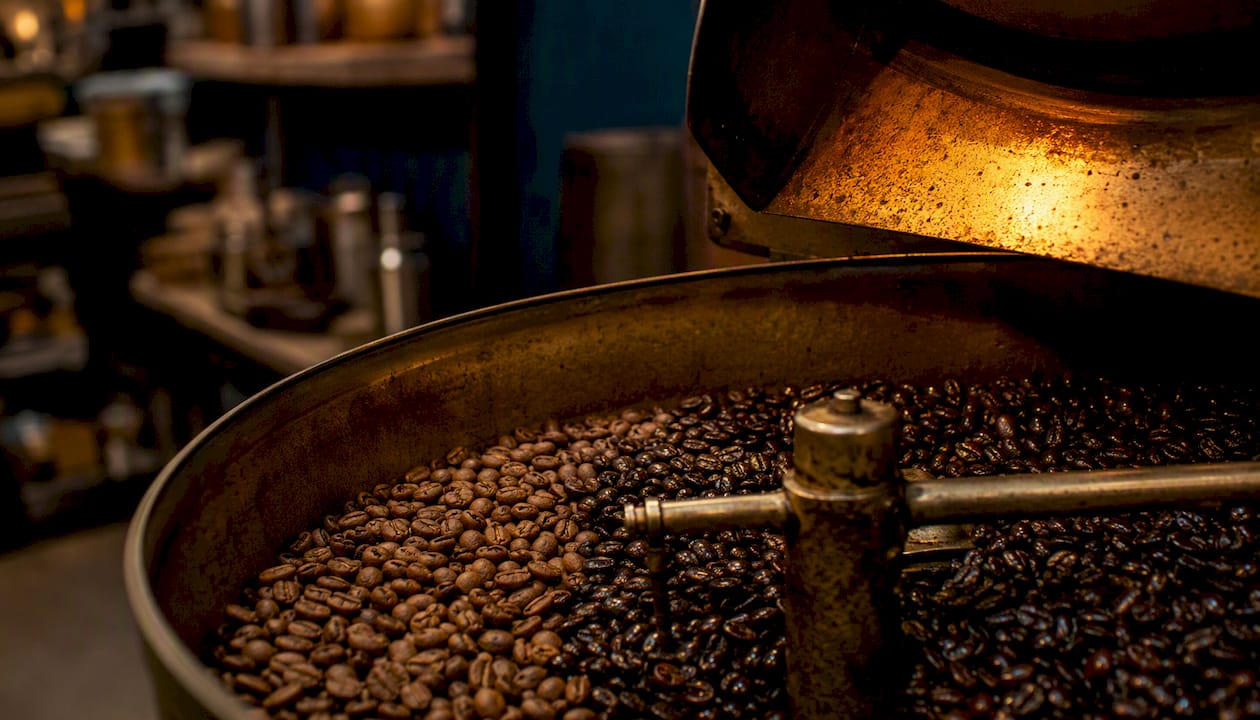
Those reactions don’t happen in isolation from the bean’s physical structure. As roasting continues, beans lose moisture, become less dense, and push oils toward the surface, which is why a dark roast bean feels lighter in your hand and looks noticeably shinier than a light roast bean of the same original size. That oil migration and reduced density also change how the bean interacts with water. Dark roasts are more porous and more soluble, meaning they release flavor compounds faster during brewing. Light roasts, denser and less broken down structurally, resist extraction and need more heat or contact time to give up their flavor.
There’s a nutritional wrinkle worth knowing, though it shouldn’t drive your buying decision on its own. Some research suggests light roasts may retain slightly more antioxidants, while other findings point to dark roasts running lower in acrylamide, a compound formed at high roasting heat. The practical differences are small either way, and neither roast level has emerged as the clear health winner.
Pro Tip: If you’re roasting at home or dialing in a subscription’s medium roast, pay attention to development time after first crack rather than just the drop temperature. An extra 30 to 60 seconds post-crack can push a cup from bright and citrusy to noticeably rounder and roastier, even if your final temperature barely changes.
Flavor Profiles: What You Should Actually Taste
Light roasts taste like the farm; dark roasts taste like the roaster. That’s the simplest way to frame the sensory contrast, and it holds up cup after cup. Light roasts preserve the origin-driven character of the green coffee: fruity, floral, or tea-like notes, higher acidity, and a lighter body that lets those delicate flavors come through clean. Dark roasts flatten a lot of that origin nuance in favor of roast-driven flavors: chocolate, caramel, toasted nut, sometimes a smoky or charred edge, paired with lower acidity and a heavier, syrupy body.
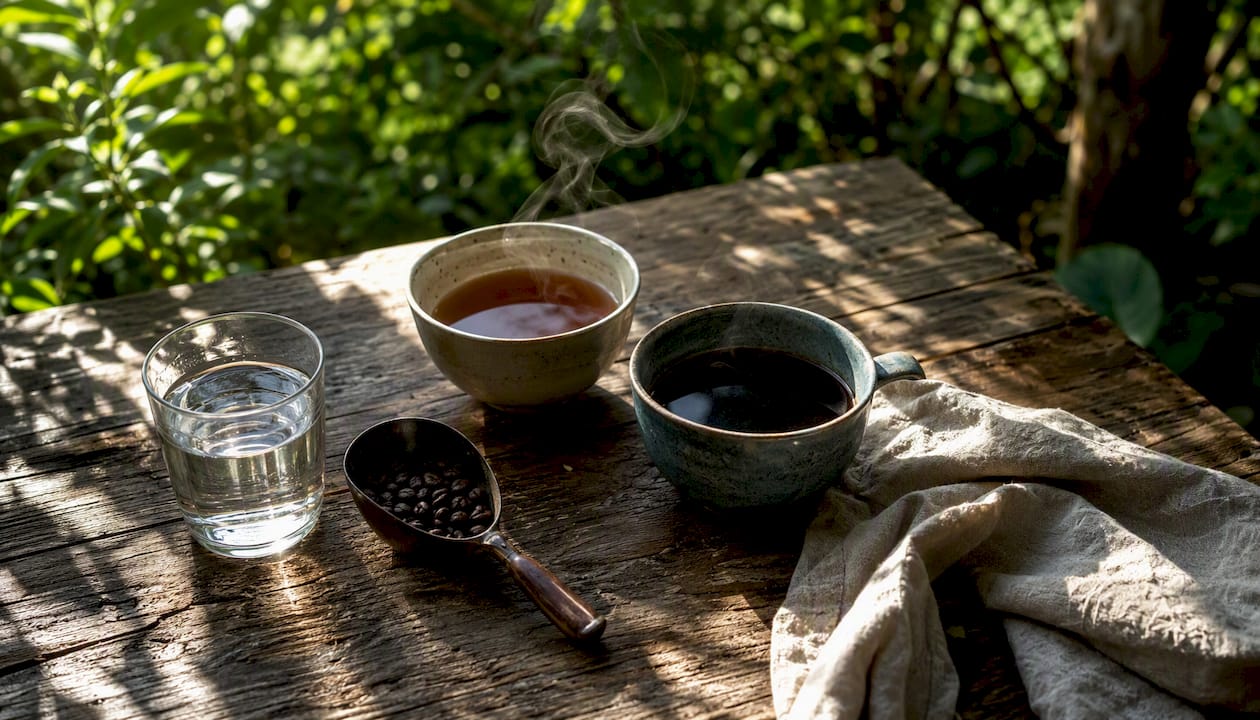
A green coffee buyer’s perspective on this is worth repeating: light roasts show off notes like fruit or flowers, while dark roasts lean into bittersweet chocolate and caramel that come from the roast itself rather than the bean’s origin.
Run your own side-by-side and you’ll notice these contrasts quickly:
- Acidity: light roasts taste brighter and tangier; dark roasts taste smoother and flatter.
- Body: light roasts feel lighter and tea-like on the tongue; dark roasts feel heavier and more coating.
- Bitterness: light roasts have little to none; dark roasts carry a deliberate, often pleasant, bitterness.
- Aftertaste: light roasts finish clean and short; dark roasts linger longer, often with a smoky or charred note.
Origin plays into this heavily. Ethiopian and Kenyan coffees are frequently roasted light because their fruit and floral character is exactly what specialty roasters want to preserve. Sumatran and many Brazilian coffees, on the other hand, are commonly roasted medium to dark because their naturally heavier, earthier body holds up well to (and sometimes benefits from) roast-driven sweetness.
Pro Tip: Run a simple home cupping: brew the same bean at two roast levels using identical grind size, water temperature, and ratio. Smell each cup before tasting, sip both side by side rather than one after the other, and note where your attention goes first, acidity or body. That instinct tells you more about your preference than any tasting wheel.
Matching Brewing Methods to Roast Level
Your brew method should follow your roast choice, not fight it. Pour-over, Aeropress, and other manual methods reward light roasts because they let you control temperature and contact time precisely enough to coax out delicate acidity. French press and drip machines work well across the spectrum but tend to flatter medium and dark roasts thanks to their fuller immersion. Espresso and milk-based drinks are where dark roasts genuinely shine, since their bold, roast-forward flavor cuts through steamed milk in a way that a delicate light roast simply can’t.
Because dark roasts are more soluble, they extract faster, which is exactly why they punish a fine grind or scalding water with harsh bitterness. If your dark roast tastes burnt or ashy, that’s usually overextraction talking, not a bad bean. If your light roast tastes sour or thin, you’re likely underextracting.
- If a cup tastes sour or sharp, grind finer, raise the water temperature slightly, or extend contact time.
- If a cup tastes bitter or harsh, grind coarser, lower the water temperature slightly, or shorten contact time.
- If a cup tastes flat or muddy, check your ratio first before touching grind or temperature.
Pro Tip: For a dark roast that’s tasting rough, try a coarser grind and water a few degrees cooler than you’d use for a light roast, since dark beans give up their flavor fast and don’t need aggressive extraction. For a light roast that tastes weak or sour, go the opposite direction: hotter water, a finer grind, and a slightly longer contact time to pull out its full sweetness.
Caffeine, Weight, and Why Your Measuring Method Matters More Than Roast
Light roast has slightly more caffeine per gram than dark roast, but that fact alone will mislead you if you’re not measuring correctly. Roasting drives off moisture and mass, which means a gram of dark roast coffee represents less original green coffee than a gram of light roast. Weight for weight, light wins, but only barely, and the gap rarely changes how a cup actually feels.
Here’s where it gets interesting for home brewers: dark roast beans are larger and less dense, so they take up more space per gram. If you’re scooping coffee by volume instead of weighing it, a scoop of dark roast contains fewer beans, and therefore less actual coffee mass, than the same scoop of light roast. That means measuring “by the scoop” can flip the caffeine outcome entirely, giving you a stronger light roast cup and a weaker dark roast cup even though you used the “same amount” by volume.
- Weighing beans in grams (with a kitchen scale) is the only reliable way to compare caffeine content across roasts.
- A standard scoop of dark roast typically holds less coffee mass than the same scoop of light roast, since density drops as roasting progresses.
- If caffeine strength matters to you, weigh your dose rather than trusting a scoop, no matter which roast you buy.
The takeaway isn’t that one roast is a stronger jolt. It’s that your scale, not your roast preference, decides how much caffeine actually ends up in your mug.
Freshness and Storage: Why Roast Level Changes the Clock
Dark roasts degas faster and go stale sooner than light roasts, which changes how you should store and brew each one. Degassing is the release of carbon dioxide trapped inside the bean during roasting, and it’s what causes that satisfying bloom when hot water first hits fresh grounds. Because dark roasts are more porous, they release that gas more quickly, meaning they hit peak flavor sooner after roasting but also fade sooner. Light roasts, denser and less broken down, degas more slowly and hold their flavor over a longer window.
A rough timeline: most roasts benefit from resting one to three days after roast date before brewing, since beans straight off the roaster can taste flat or overly gassy. Light roasts tend to stay in their flavor sweet spot for several weeks past that rest period. Dark roasts, because their oils are already exposed to air, start losing brightness and turning stale or rancid noticeably faster, sometimes within one to two weeks of opening the bag.
Storage habits that actually protect your beans:
- Do store beans in an airtight, opaque container away from heat and direct light.
- Do buy whole bean and grind right before brewing, especially for dark roasts, since their exposed oils oxidize faster once ground.
- Don’t store beans in the fridge or freezer for daily use; condensation introduces moisture that accelerates staleness.
- Don’t buy more than two to three weeks’ worth of beans at a time, particularly if you favor dark roast.
How to Choose Your Roast: A Practical Decision Guide
Run through this checklist before your next bean purchase, and you’ll land on the right roast almost every time:
- What’s your flavor goal? Bright and complex points toward light roast; bold and smooth points toward dark roast.
- What’s your primary brew method? Pour-over and Aeropress favor light to medium; espresso and drip favor medium to dark.
- Are you adding milk regularly? If yes, lean dark. Milk mutes acidity, so a light roast’s delicate notes often disappear under steamed milk.
- Does acid sensitivity affect you? Dark roast’s lower acidity is easier on a sensitive stomach for many drinkers.
- Is caffeine strength a top priority? Weigh your dose either way; roast choice alone won’t move the needle much.
Once you’ve narrowed your answer, try this simple tasting protocol at home: brew two coffees, one light and one dark, using the same ratio (roughly 1:16, coffee to water), similar brew times, and water just off boiling. Taste blind if you can, ideally with a friend pouring so you don’t know which cup is which. Note acidity first, then body, then aftertaste. Most people are surprised by which one they actually prefer once labels are removed.
When talking to a roaster or retailer, a few good questions separate a transparent seller from one hiding flaws. Ask for the roast date, not just a “best by” date. Ask where the beans originated, since vague or missing origin information is often a sign the coffee isn’t being roasted to highlight quality. And if every bag in the lineup is roasted dark regardless of origin, that’s sometimes a signal the roaster is using heavy roasting to mask lower-grade green coffee rather than to make a deliberate flavor choice.
Why We Lean Light for Discovery, Dark for Everyday Comfort
Roast level isn’t a hierarchy, it’s a toolkit, and the best home brewers treat it that way instead of picking a permanent side. When we’re evaluating a new single-origin bean or trying to understand what makes a specific growing region distinct, light roast is the only honest way to taste it. Dark roasting is fantastic, but it sands down exactly the details that make single-origin coffee worth exploring in the first place.
That said, dark and medium-dark roasts earn their place in daily rotation, especially for espresso and milk drinks where boldness and consistency matter more than nuance. If you’re building a home roast rotation, keep one light roast on hand for slow weekend pour-overs and one dark roast on hand for quick weekday espresso. That combination covers nearly every mood a coffee drinker has.
A practical tip from building out sampler kits: start with three origins at the same roast level before comparing roast levels within one origin. It’s easier to isolate what roast does to flavor once you’ve calibrated your palate to what origin does on its own.
Wine Drop Cookery’s own coffee lineup, from medium roast Colombian beans to darker roasted options, reflects this same philosophy: no single roast level is the “correct” one, just the one that matches what you’re brewing and drinking that day.
Try Both Roasts the Right Way, With Gear That Doesn’t Get in the Way
The fastest way to settle your own light roast vs dark roast debate is to brew both properly, side by side, with equipment built for the job rather than fighting a mediocre setup. Wine Drop Cookery’s coffee makers and beans collection is built exactly for that kind of comparison, pairing dependable brewing gear with bean options across the roast spectrum so you’re not guessing at variables while you taste.
If pour-over clarity is your goal with a light roast, the 8-cup drip coffee brewer gives you consistent extraction without babysitting a kettle. If milk drinks and dark roast espresso are more your speed, a home setup like the 15-bar espresso machine with grinder and milk frother handles both the grind and the froth in one unit, which matters when dark roast beans need fresh grinding right before the shot. And for anyone still narrowing down a favorite bean, the Colombian Supremo medium roast is a smart middle ground while you run your own tasting protocol.
Pick your brewing gear, grab a bag on each end of the roast spectrum, and run the side-by-side comparison this guide walked you through. Your palate will tell you the rest.
Sources
- Light Roast Vs Dark Roast Coffee
- Light Roast vs Dark Roast: A Complete Comparison | Roastopedia
- Light Roast vs Dark Roast Coffee: Full Comparison (with Medium Roast) | Barista At Home
- Light Roast vs Dark Roast Coffee: Nutrition and Caffeine | Healthline
FAQ
Which Is Stronger, Light or Dark Roast?
Neither is “stronger” in caffeine by a meaningful margin. Light roast has slightly more caffeine by weight, but dark roast tastes bolder because of its roast-driven flavor, not because it has more caffeine.
Does Dark Roast Have Less Caffeine Than Light Roast?
Dark roast has marginally less caffeine per gram than light roast because roasting reduces bean mass over time, but the difference is small enough that it rarely changes how a cup feels.
What’s the Difference Between Washed and Natural Process Coffee?
Washed process removes the fruit from the coffee cherry before drying, producing a cleaner, more acidic cup, while natural process dries the whole cherry around the bean, producing a fruitier, heavier body. Both processes can be roasted light, medium, or dark, though washed coffees are more commonly roasted light to showcase their clarity.
Is Light Roast or Dark Roast Better for Espresso?
Dark roast is the traditional choice for espresso and milk-based drinks because its bold, roast-forward flavor holds up under pressure and cuts through steamed milk. Some specialty shops use medium or medium-dark roasts for espresso to preserve more origin character while still getting body.
How Do I Know If a Coffee Is Light, Medium, or Dark Roast?
Check the bean color and surface. Light roasts are tan to light brown with dry, matte surfaces; dark roasts are nearly black with a visible oily sheen, and medium roasts fall in between on both counts.
0 comments