
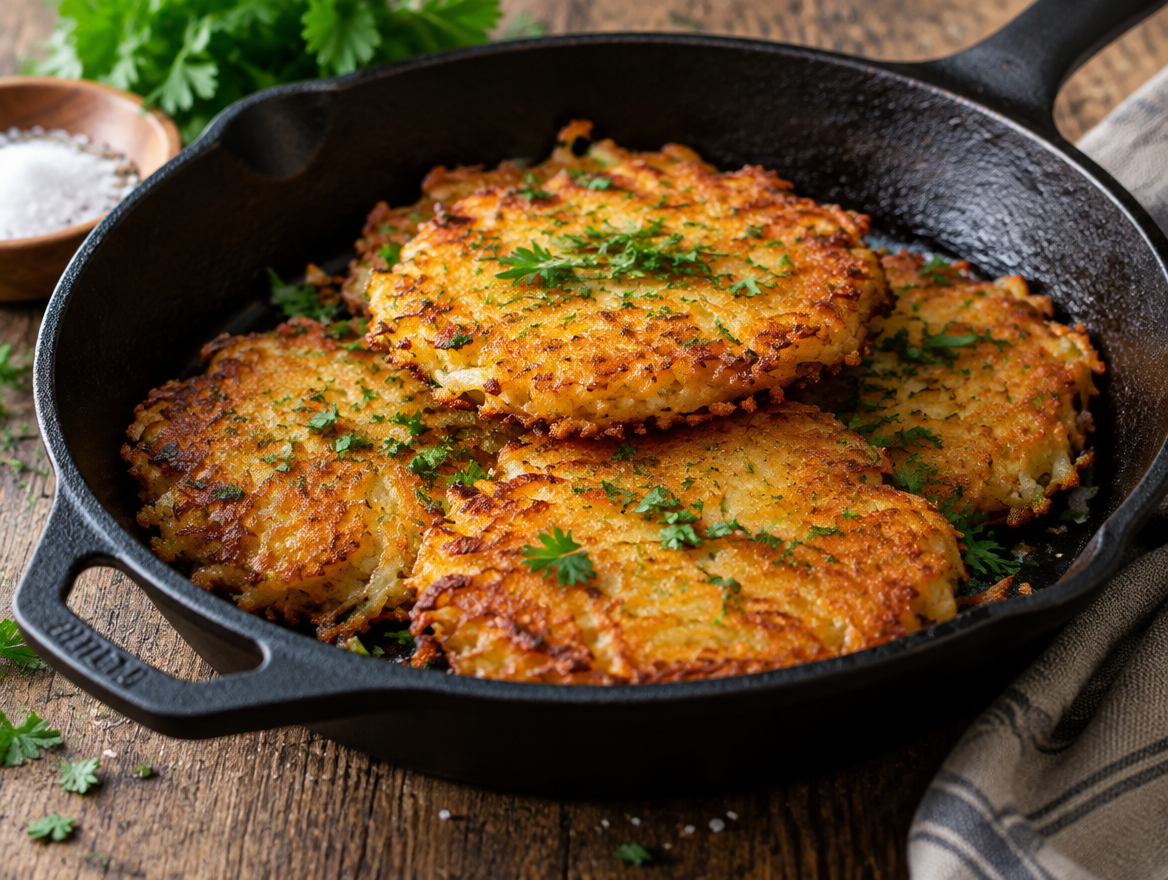
Shredded raw potato holds a surprising amount of water and surface starch, and both work against you at the stove. Water turns to steam in a hot pan and steam keeps the surface from ever getting past 212F, the temperature ceiling that blocks real browning. Rinse the starch off and wring the water out first, and the same potato that used to steam and stick will shatter-crisp instead.
This is the single biggest difference between a home hash brown that goes soft and gray and a diner-style hash brown with a dark, lacy crust.
Crispy Hash Browns
Serves 4. Prep 15 minutes, cook 15 minutes.
Ingredients
- 2 pounds russet potatoes, peeled
- 1 teaspoon salt, plus more to taste
- 1/2 teaspoon black pepper
- 3 tablespoons clarified butter, ghee, or a neutral oil with a high smoke point
- 1 tablespoon unsalted butter
Method
- Shred the potatoes on the large holes of a box grater, straight into a bowl of cold water. This starts rinsing surface starch immediately.
- Drain and rinse the shreds two or three more times in fresh cold water, swishing by hand each time, until the water runs mostly clear instead of cloudy.
- Working in batches, wrap the shreds tightly in a clean kitchen towel and wring firmly over the sink until no more water comes out. This step matters more than any other in the recipe.
- Toss the dried shreds with the salt and pepper.
- Heat the clarified butter or oil in a large cast iron or heavy skillet over medium-high heat until shimmering.
- Add the potatoes in an even layer, pressing down firmly with a spatula. Do not stir. Let it cook undisturbed for 5 to 6 minutes until the underside is deeply golden.
- Add the tablespoon of butter around the edges, then flip the hash browns in sections (or in one confident motion if your pan and nerve allow) and press flat again. Cook 5 to 6 minutes more until the second side matches the first.
- Season with a final pinch of salt and serve immediately, while the crust is still shattering-crisp.
Nutrition (per serving, estimated)
Estimated for one of four servings, not lab verified.
| Calories | Protein | Carbohydrate | Fat | Fiber | Sodium |
|---|---|---|---|---|---|
| 240 | 3 g | 32 g | 11 g | 2.5 g | 420 mg |
Tips and Variations
- Loaded hash browns: fold in cooked bacon bits and shredded cheddar in the last two minutes of the second side.
- One big cake vs. individual patties: a single large cake gets the best crust-to-interior ratio; smaller patties cook faster but brown less evenly.
- Cast iron is not required but it holds heat more evenly than thin nonstick, which matters for that undisturbed 5 to 6 minute sear.
- If they stick: the pan was not hot enough, or there was not enough fat. A well-preheated pan with a real fat layer releases cleanly.
Frequently Asked Questions
Do I really need to rinse the potatoes?
Yes. Rinsing removes surface starch that would otherwise gum up and steam instead of crisp. It is the single most important step in this recipe.
Can I shred the potatoes ahead of time?
Keep shredded raw potatoes submerged in cold water in the refrigerator for up to a few hours to prevent browning, then drain and wring dry right before cooking.
Why did my hash browns turn gray instead of white?
Exposed potato shreds oxidize quickly. Keep them in cold water until you are ready to dry and cook them.
What is the best potato for hash browns?
Russets, for their high starch and low moisture relative to waxy potatoes like red or Yukon gold, which hold together less well when shredded and fried.
Tools for the Job
- Signature Skillet Collection for consistent, even heat retention
- Two-Tone XL Cutting Board
- Kitchen Essentials
More Breakfast Recipes
These publish together as a set. The full breakfast index lists all nine in one place.
Who Is Writing This
I am Chef Alan. I have spent 35 years in professional kitchens, I have formal culinary training in New Hampshire, and I have been honored as a 6-time 4-Diamond chef. More about me here. If a step did not make sense, get in touch and I will fix it.
Thank you for cooking this one with us. From all of us at Wine Drop Cookery.
Potato starch and browning background from Washington State University's potato research and extension program.