
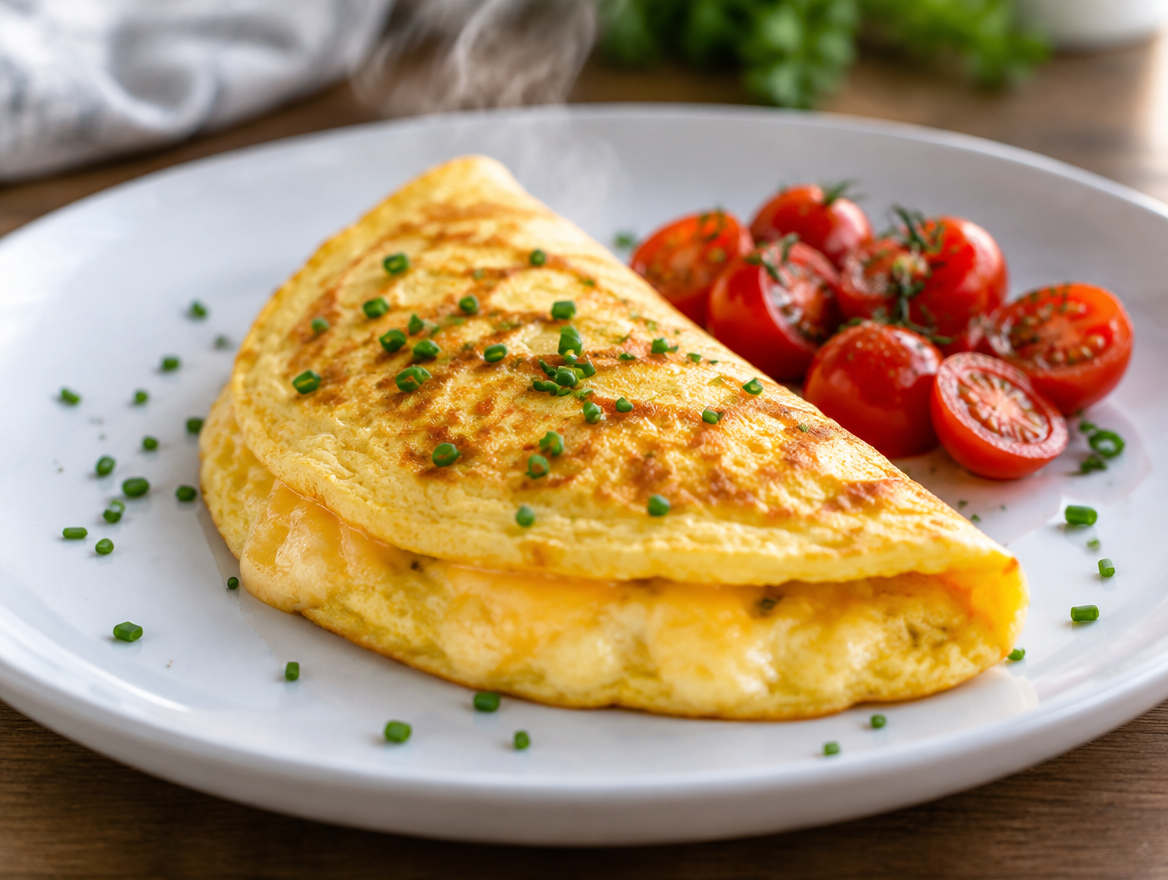
A diner omelet is browned, folded in half, and often a little rubbery. A French omelet is pale, glossy, and rolled into a soft cylinder with a creamy interior. The difference is not the eggs, it is heat and motion: French technique keeps the pan cooler and never stops moving the eggs until the very last second, so the curds stay small and the texture stays soft.
The whole process takes under a minute once the pan is hot. Have your filling warm and ready before you crack an egg, because there is no time to go looking for it once you start.
Classic Cheese Omelet
Serves 4, four individual omelets. Prep 10 minutes, cook 1 minute per omelet.
Ingredients
- 8 large eggs
- 2 tablespoons water
- 1/2 teaspoon salt
- Pinch of black pepper
- 4 tablespoons unsalted butter, divided
- 1 cup shredded gruyere or sharp cheddar, divided
- Fresh chives, chopped, for serving
Method
- Whisk 2 eggs, 1/2 tablespoon water, and a pinch of salt and pepper together until fully blended and slightly frothy, about 20 seconds. Repeat for each omelet or whisk each portion separately right before cooking.
- Heat a 8-inch nonstick skillet over medium-low heat. Add 1 tablespoon butter and swirl until foaming subsides but before it browns.
- Pour in the eggs. Immediately start stirring with a rubber spatula in small circles, keeping the pan moving, for about 15 seconds.
- Stop stirring and let the eggs sit for 5 seconds to form a thin skin on the bottom, then tilt the pan and use the spatula to push any loose egg toward the center, letting uncooked egg run into the gap.
- When the surface looks mostly set but still glossy and slightly underdone, sprinkle 1/4 cup cheese down the center third.
- Tilt the pan away from you and use the spatula to fold the near edge over the filling, then roll the omelet the rest of the way using the pan's edge, ending seam-side down.
- Slide onto a plate. The residual heat finishes cooking the center. Repeat for the remaining three omelets.
- Top with chives and serve immediately.
Nutrition (per serving, estimated)
Estimated for one omelet using 2 eggs, not lab verified.
| Calories | Protein | Carbohydrate | Fat | Fiber | Sodium |
|---|---|---|---|---|---|
| 320 | 19 g | 2 g | 26 g | 0 g | 560 mg |
Tips and Variations
- Herb omelet: whisk a tablespoon of finely chopped chives, parsley, and tarragon into the eggs before cooking, the classic fines herbes version.
- Vegetable filling: saute mushrooms, spinach, or bell peppers ahead of time and keep them warm; never add raw wet vegetables straight to the eggs, they release water and split the curd.
- If it browns: the pan was too hot. Lower the heat and let it recover for a minute before the next one; a browned French omelet has gone too far.
- No nonstick pan: a well-seasoned skillet works, just use a slightly higher ratio of butter and make sure it is fully preheated.
Frequently Asked Questions
Why does my omelet keep sticking?
Either the pan was not hot enough when the eggs went in, or there was not enough fat. Preheat properly and use a generous swirl of butter before pouring.
How do I keep the inside creamy instead of dry?
Pull the omelet off the heat while the top still looks slightly underdone and glossy. Carryover heat finishes it on the plate; a fully set omelet in the pan is already overcooked.
Is it safe to eat if the center looks a little soft?
A properly cooked omelet reaches a safe internal temperature even with a soft-looking, creamy curd; USDA guidance sets 160F as the safe minimum for egg dishes, and a well-executed French omelet clears that while still looking glossy, not wet.
Can I make one big omelet for everyone instead of four small ones?
You can, in a 10 to 12-inch pan with double the egg quantity, but it takes real practice to keep a large one from tearing on the fold. Individual omelets are more forgiving for a first attempt.
Tools for the Job
- Signature Skillet Collection, the even heat here matters more than in almost any other breakfast dish
- Two-Tone XL Cutting Board for prepping fillings ahead of time
- Kitchen Essentials
More Breakfast Recipes
These publish together as a set. The full breakfast index lists all nine in one place.
Who Is Writing This
I am Chef Alan. I have spent 35 years in professional kitchens, I have formal culinary training in New Hampshire, and I have been honored as a 6-time 4-Diamond chef. More about me here. If a step did not make sense, get in touch and I will fix it.
Thank you for cooking this one with us. From all of us at Wine Drop Cookery.
Safe minimum internal temperature guidance for egg dishes from USDA FSIS, Shell Eggs from Farm to Table.