
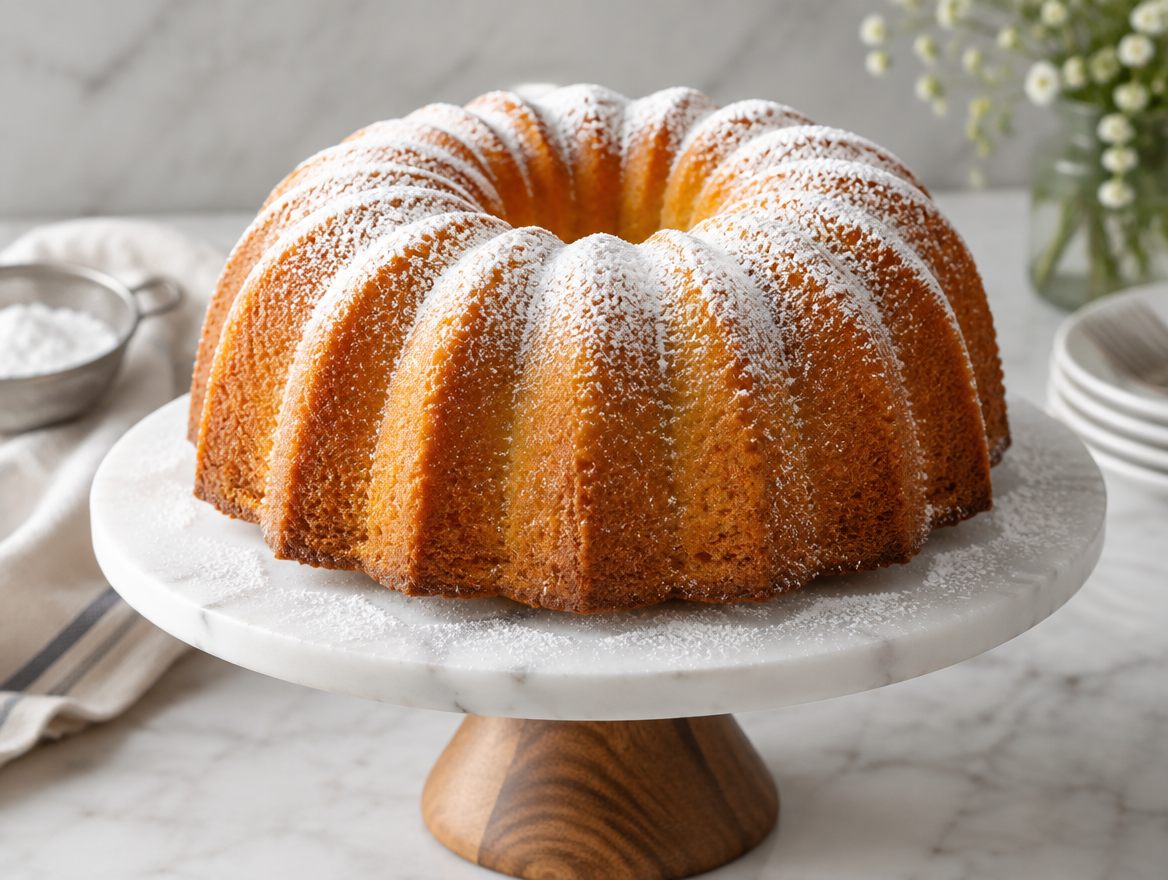
Bundt pans fail more cakes at the release than at the mixing bowl. Every fluted groove and center tube is a surface the batter has to let go of cleanly, and a quick spray or a swipe of butter around just the top edge leaves the detailed parts of the pan bare, which is exactly where a cake tears apart on unmolding.
A thorough coating of softened butter worked into every groove with a pastry brush, followed by a dusting of flour tapped out until no dry patches remain, gives the batter a uniform barrier everywhere it touches metal, not just where it's easy to reach.
Classic Bundt Cake
Serves 4, quarter slices. Prep 20 minutes, cook 55 minutes.
Ingredients
- 3 cups all-purpose flour
- 1 tablespoon baking powder
- 1/2 teaspoon salt
- 1 cup unsalted butter, softened, plus more for the pan
- 2 cups granulated sugar
- 4 large eggs
- 1 cup whole milk
- 2 teaspoons vanilla extract
Method
- Preheat the oven to 350 degrees Fahrenheit. Brush softened butter into every groove of the bundt pan with a pastry brush, then dust with flour and tap out the excess.
- Whisk the flour, baking powder, and salt together and set aside.
- Cream the butter and sugar until pale and fluffy, about three minutes.
- Add the eggs one at a time, beating well after each.
- Add the dry ingredients in three additions, alternating with the milk in two additions, starting and ending with the flour. Mix just until combined after each addition.
- Stir in the vanilla.
- Pour the batter into the prepared pan and smooth the top.
- Bake 50 to 55 minutes, until a skewer inserted in the center comes out clean.
- Cool in the pan on a rack 15 minutes, then invert onto the rack and let the pan lift away on its own, do not force it.
Nutrition (per serving, estimated)
Estimated for one of four servings, a quarter of the cake, not lab verified.
| Calories | Protein | Carbohydrate | Fat | Fiber | Sodium |
|---|---|---|---|---|---|
| 920 | 13 g | 128 g | 41 g | 2 g | 640 mg |
Tips and Variations
- Room temperature eggs and milk: cold ingredients can cause the batter to look curdled when the eggs go in, room temperature keeps it smooth.
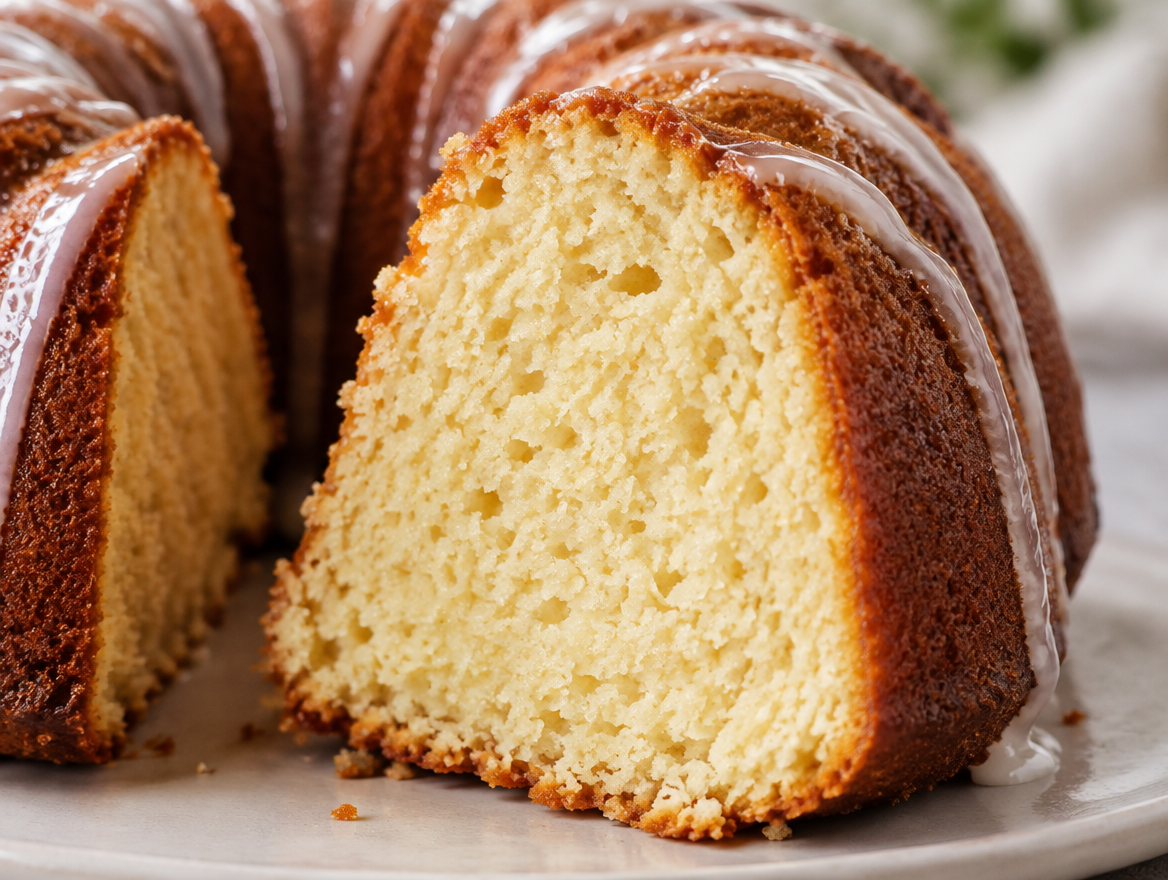
- Citrus glaze: a simple powdered sugar and lemon juice glaze poured over the cooled cake follows the fluted shape nicely.
- Do not rush the release: let the pan sit inverted a minute or two, the cake often drops free on its own once it has cooled slightly.
- Check for doneness in multiple spots: the thick center tube bakes differently than the outer ring, test a skewer in a couple of places.
Frequently Asked Questions
Why does my cake always stick to the pan?
Incomplete greasing is the most common cause. Get butter and flour into every groove, not just the visible top surface.
Why did part of my cake tear out when unmolding?
That section of the pan likely wasn't coated as thoroughly. Go slowly with the pastry brush and check for bare spots before pouring the batter.
Can I use a cake mix instead?
You can, though a from-scratch batter like this one holds up better to a bundt pan's dense, detailed shape and slices more cleanly.
How do I store a bundt cake?
Covered at room temperature up to three days, or wrapped tightly and frozen up to two months.
Tools for the Job
The fluted detail that makes a bundt cake look impressive is also exactly what makes releasing it hard without the right pan.
- Large Silicone Fluted Tube Cake Pan for a clean release from every groove
- Baking Dessert and Pastry Essentials
More Baking and Dessert Recipes
These publish together as a set. The full hub lists all twenty in one place at Baking and Dessert Recipes.
Who Is Writing This
I'm Chef Alan. I have spent 35 years in professional kitchens, I have formal culinary education in New Hampshire, and I have been honored as a 6-Time 4-Diamond Chef. More about me here.
If a recipe is missing something you needed, or a step didn't make sense, tell me. Get in touch and I'll fix it.
Cook Bolder, Serve Wiser, Eat Better.