

If your daily habit is a filling breakfast drink, buy a blender. If you crave clear, concentrated vegetable and fruit shots, get a juicer. Most home cooks land on the blender first because it handles far more recipes with far less cleanup, and only add a juicer once they’ve settled into a real juicing habit. A combo model or owning both makes sense once you regularly want both textures.
TL;DR:
- A high-power blender is essential for daily smoothies and versatile cooking tasks, while a juicer is better suited for clear juice and concentrated shots.
- Juicers discard most pulp, making their output thin and clear, whereas blenders retain fiber, producing thicker textures that can even be strained into juice.
- Cleaning a blender is generally simpler and faster, with dishwasher-safe parts, while juicers require scrubbing mesh filters and pulp catchers, demanding more maintenance.
- Budget models around $99 handle soft ingredients well, but processing fibrous greens or ice benefits from higher-power units, which also occupy more counter space.
- For most home cooks, starting with a blender is wiser, and a combination unit is recommended only if both textures are regularly needed without cluttering the kitchen.
Table of Contents
- Smoothie vs Juice Benefits: What Each Appliance Actually Does
- How Texture and Fiber Change What You Cook
- What Cleanup and Maintenance Really Look Like
- Power, Price, and Countertop Space: What the Specs Actually Mean
- Your First-Week Decision Plan
- Why I’d Buy a Blender First, Every Time
- Ready to Set Up Your Counter
- Sources
- FAQ
Smoothie vs Juice Benefits: What Each Appliance Actually Does
The smoothie vs juice benefits question really comes down to what you’re cooking on a random Tuesday night, not what sounds healthiest on paper. A blender is the workhorse of the kitchen. It handles the widest range of jobs, which is exactly why experts describe blenders as more versatile everyday tools while juicers stay in a narrower, specialist lane.
Here’s what actually lands on your counter for regular use:
- Blender jobs: smoothies, blended soups like gazpacho, salad dressings, pan sauces, homemade nut milks, frozen margaritas, purees for baby food or baking, and rough chopping for prep.
- Juicer jobs: clear apple or celery juice, concentrated carrot-ginger shots, and cold-press style extraction if you own a masticating model.
- Where they cross over: a blender can approximate juice if you strain the pulp out afterward, but a juicer cannot puree, emulsify, or thicken anything. It only extracts liquid.
That last point trips up a lot of new buyers. A juicer will never make you a smoothie, a soup, or a batch of pesto. It does one job, and it does that job well. A blender, meanwhile, can fake a juicer’s output with an extra step, which is worth knowing before you commit counter space to a second machine. This mirrors what a lot of shoppers get wrong going in: juicers look more capable in the store than they turn out to be at home, since their entire skill set is narrower than most people expect.
How Texture and Fiber Change What You Cook
Texture is the real dividing line, and it shapes everything from how a drink feels in your mouth to how you serve it. Blending keeps the whole fruit or vegetable intact, fiber, pulp, skins, and all, while juicing physically separates and discards most of that pulp to produce a thin, clear liquid.
That difference changes how you use each drink in the kitchen:
- Smoothies are thick enough to eat with a spoon, work as a base for smoothie bowls, and can double as a light dressing when thinned with citrus juice.
- Juices pour thin and clean, which makes them better for sipping over ice, mixing into cocktails, or serving as a small concentrated flavor shot.
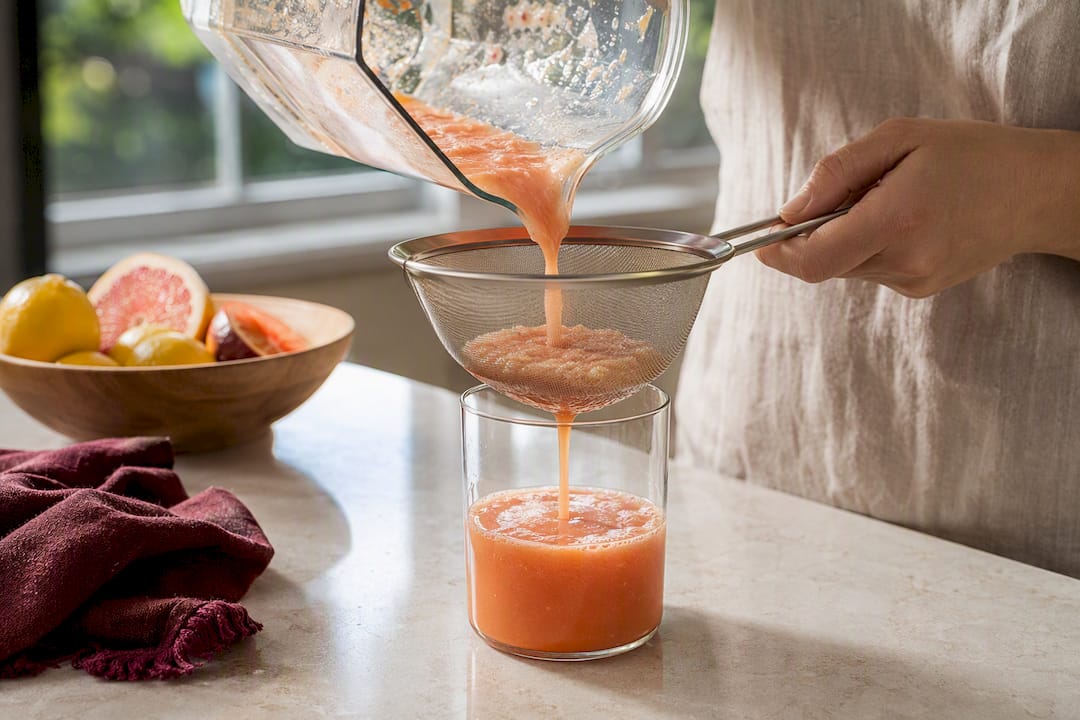
- Straining a blended batch turns a smoothie into juice, but it takes a fine mesh sieve or cheesecloth and several minutes of pressing, which most people skip after the first attempt.
Dietitians point out that the thicker, fiber-retaining texture of a smoothie makes it more practical for daily meals, while a clear vegetable juice works better as an occasional, concentrated add-on rather than a meal replacement. Set your expectations before you buy: if you want something you can chew through with a straw and call breakfast, that’s a blender’s job. If you want something that pours like water and tastes intensely of whatever you juiced, that’s what a juicer delivers.
Pro Tip: Keep a fine mesh strainer near your blender if you’re not ready to commit to a juicer. You’ll get 80 percent of the juice texture with none of the extra appliance to store.
What Cleanup and Maintenance Really Look Like
This is where a lot of buyer’s remorse starts. Juicers come with mesh filters, pulp catchers, feed tubes, and multiple parts that all need scrubbing, and those intricate mesh screens can trap pulp fibers that dry into a stubborn film if you let them sit. Blenders, by comparison, usually break down into just a jar, lid, and blade assembly, and many of those parts go straight into the dishwasher.
A few habits make the difference between a machine you use daily and one that ends up in a cabinet:
- Rinse both machines immediately after use. Dried pulp and fruit residue are far harder to remove once they set.
- Run a quick blend cycle with warm water and a drop of dish soap for a fast blender clean, no disassembly needed.
- Soak juicer mesh filters for a few minutes before brushing, and use the cleaning brush that came with the unit rather than a sponge.
- Save usable pulp for baking, stock, or compost instead of treating cleanup as pure waste disposal.
Look for dishwasher-safe jars, removable blade bases, and an included cleaning brush when you shop. Those small design choices save real time every single day you use the machine.
Power, Price, and Countertop Space: What the Specs Actually Mean
Motor power decides whether your smoothie comes out silky or chunky. Entry-level blenders handle soft fruit and liquids fine, but models priced around $99 and above typically process fibrous greens and ice far more consistently than budget options. If kale, celery, or frozen mango are regulars in your routine, that price threshold matters more than any marketing claim on the box.
Juicers split into two main types, and the difference shows up in your kitchen every time you use one:
- Centrifugal juicers spin fast, work quickly, and cost less, but they’re louder and generate slightly more heat and foam.
- Masticating (cold-press) juicers grind slowly, run quiet, extract more juice per pound of produce, and cost noticeably more.
High-performance blenders can turn fibrous greens and frozen fruit into a genuinely smooth result, which cuts down on the pre-chopping and straining a cheaper machine demands. On the storage side, blenders are generally more compact and easier to tuck under a cabinet, while juicers with wide hoppers and pulp bins take up more permanent counter real estate. If you’re blending fibrous greens or frozen fruit more than a couple of times a week, budget for the higher-power tier now rather than replacing a starter blender in six months.
Your First-Week Decision Plan
Answer these before you buy anything:
- What do you actually cook most, smoothies, soups, and sauces, or clear juices and shots?
- How much cleanup are you willing to do after every single use?
- How much counter or cabinet space can you realistically spare?
- What’s your budget, and how often will you actually use this machine?
If most answers point to smoothies, soups, or sauces, buy a blender. If you want daily concentrated juice and don’t mind extra parts to wash, get a juicer. If you want both without two machines competing for outlet space, a juicer-blender combo covers both jobs.
| Your Priority | Best Fit |
|---|---|
| Everyday smoothies, soups, sauces | Blender |
| Daily clear juice or shots | Juicer |
| Both, without two appliances | Combo unit |
Try a green smoothie, a chilled gazpacho, and a carrot-ginger shot in your first week to see which one you actually reach for again.
Why I’d Buy a Blender First, Every Time
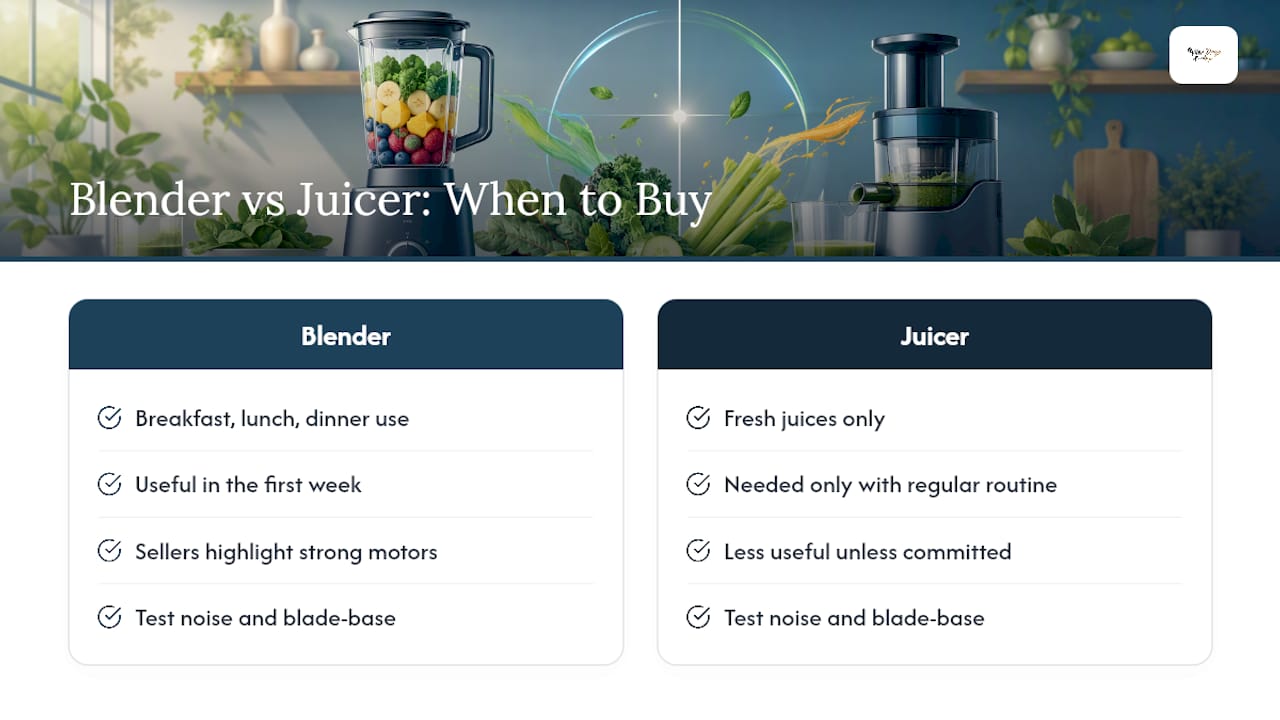
Most home cooks overbuy on juicing capacity before they’ve built the habit to justify it. A blender earns its space in the first week because it touches breakfast, lunch prep, and dinner sauces alike, while a juicer only earns its keep if you’re genuinely committed to a regular juice routine. That’s not a knock on juicers, it’s just math on how often each machine actually gets used.
Some sellers curate their blender and combo lineup around that reality: real motor power for fibrous greens, jars that survive the dishwasher, and combo units for cooks who want both textures without cluttering the counter. Before you buy, test the noise level and how easily the blade base comes apart for cleaning. Those two details predict daily use far better than any spec sheet.
Alan
Ready to Set Up Your Counter
Once you know whether you’re a blender household, a juicer household, or both, the next step is picking hardware that won’t let you down at 7 a.m. on a Tuesday. Wine Drop Cookery’s Essential Kitchen Tools collection is the fastest starting point if you’re outfitting a kitchen from scratch, and it’s built around the same performance and cleanup priorities covered above.

If your answer keeps landing on “I want both,” the Sharper Image Juicer-Blender Combo solves that without asking you to find storage for two separate machines. Pick based on your priority list: go combo if counter space or budget is tight, go dedicated blender if smoothies and cooking dominate your week, and add a standalone juicer only once a clear-juice habit is already sticking. Pair either choice with a solid knife set for prep work, since fiber-rich breakfast recipes that lean on smoothies often call for produce prep before it ever hits the blender. Browse the collection, check the motor specs against your usual recipes, and add what actually matches how you cook.
Sources
- Juicer vs. Blender: What’s the Difference?
- Juicer versus blender, and which one you need
- Juicing vs. smoothies: Which is better for you?
FAQ
Is a Smoothie Healthier Than Juice?
That depends on your nutrition goals rather than appliance performance, but from a culinary standpoint, smoothies retain fiber and pulp while juices remove it, which changes texture, fullness, and how you use the drink in recipes.
Can a Blender Replace a Juicer?
A blender can approximate juice if you strain the blended mixture through a fine sieve or cheesecloth afterward, but it takes extra time and never matches a juicer’s clarity.
Which Machine Is Easier to Clean?
Blenders are generally faster to clean since most break down into just a jar, lid, and blade assembly, while juicers have mesh screens and multiple parts that need detailed scrubbing.
How Much Should I Spend on a Blender?
Basic blenders handle simple liquids fine, but models priced around $99 and above typically process fibrous greens and ice more consistently, which matters if smoothies are a daily habit.
Do I Need Both a Blender and a Juicer?
Only if you regularly want both thick, meal-like smoothies and clear, concentrated juices; otherwise a single blender or a juicer-blender combo covers most home kitchens.
0 comments