

Shrimp are swimming decapod crustaceans that belong primarily to two infraorders, Caridea and Dendrobranchiata, and they rank among the most consumed seafoods in the United States. The word “shrimp” covers dozens of species in commerce, from Gulf-caught white shrimp to cold-water northern pinks from Alaska, and the term is used loosely enough that biology and the fish counter rarely agree on the same definition. Here is what you actually need to know before you buy, cook, or eat them.
Three quick facts to orient you:
- The four species you will encounter most in U.S. retail and restaurants are white shrimp (Litopenaeus setiferus), brown shrimp (Farfantepenaeus aztecus), pink shrimp (Farfantepenaeus duorarum), and northern shrimp (Pandalus spp.).
- Per USDA FoodData Central, a 3-oz cooked serving delivers roughly 20 grams of protein at under 85 calories, though shrimp carry significant dietary cholesterol and are one of the most common shellfish allergens.
- At the market, look for third-party certification logos such as ASC, BAP, or MSC, and check Seafood Watch ratings from the Monterey Bay Aquarium rather than relying on vague labels like “local” or “wild-caught.”
The home cook’s bottom line: Shrimp cook in under five minutes, pack serious protein into a small calorie budget, and reward you for paying attention to source and food-safety basics. Get those two things right and you have one of the most versatile proteins in your kitchen.
Key Takeaways
Shrimp are a high-protein, low-calorie seafood that reward careful sourcing, proper food-safety handling, and quick, high-heat cooking for the best results.
| Point | Details |
|---|---|
| Know your species | White, brown, pink, and northern shrimp are the main U.S. species; whiteleg shrimp dominates retail imports. |
| Buy certified | Look for ASC, BAP, or MSC logos and check Seafood Watch ratings; “local” or “wild” alone is not a sustainability guarantee. |
| Follow the two-hour rule | Never leave raw or cooked shrimp at room temperature for more than two hours (one hour above 90°F). |
| Cook to opaque, C-shape | Pull shrimp off heat the moment they turn pink and opaque; an O-shape means overcooked. |
| Choose IQF over block-frozen | IQF shrimp thaw evenly, portion easily, and hold texture better than block-frozen product. |
Table of Contents
- What exactly are shrimp, biologically speaking?
- How shrimp are built: anatomy, life stages, and size
- Which shrimp species do you find in U.S. markets?
- Where do shrimp live in U.S. waters?
- How shrimp reproduce and why it matters for fisheries
- How shrimp are caught, farmed, and traded in the U.S.
- Are shrimp actually good for you? Nutrition and health facts
- How to buy, store, thaw, and cook shrimp safely
- How to choose shrimp that support healthy fisheries
- Practical cooking tips and two quick shrimp recipes
- What I have learned from cooking shrimp at home
- Sources
- FAQ
What exactly are shrimp, biologically speaking?
Shrimp sit within the order Decapoda, the large crustacean group that also includes crabs, lobsters, and crayfish. Within Decapoda, the species most people call “shrimp” fall into two main infraorders. Caridea contains the true shrimp, including many freshwater and cold-water marine species. Dendrobranchiata, particularly the superfamily Penaeoidea, covers the commercially dominant warm-water species like white, brown, and pink shrimp from the Gulf of Mexico.
The distinction between “shrimp” and “prawn” is one of the most persistent sources of confusion in seafood, and it matters more in biology than at the fish counter. According to Wikipedia’s overview of shrimp and prawn as food, the two terms are used interchangeably in commerce and regional speech across much of the world. In the United States, “shrimp” is the standard term regardless of size. In the United Kingdom and Australia, larger specimens are often called “prawns” even when they are biologically the same species.
Biological differences that actually separate shrimp from prawns:
- Gill structure: True shrimp (Caridea) have lamellar (plate-like) gills; prawns (Dendrobranchiata) have branching, tree-like gills.
- Egg brooding: Caridean shrimp carry fertilized eggs attached to their pleopods (swimmerets) until hatching. Dendrobranchiata release eggs directly into the water column.
- Claw structure: Prawns typically have claws on the first three pairs of legs; shrimp have claws only on the first two pairs.
- Body segmentation: Prawns have overlapping body segments where the second overlaps both the first and third; in shrimp, the second segment overlaps only the third.
- Commercial usage: In U.S. markets, size and habitat drive colloquial naming more than biology does. A large Gulf white shrimp and a small freshwater prawn might both appear on a menu as “shrimp.”
The practical takeaway: when you are shopping in the U.S., “shrimp” and “prawn” on a label tell you almost nothing about the biology. Focus on the species name or country of origin instead.
How shrimp are built: anatomy, life stages, and size
A shrimp’s body divides into two main sections. The cephalothorax fuses the head and thorax under a hard shell called the carapace, which protects the vital organs and gives shrimp stock its deep, savory flavor when simmered. Extending forward from the carapace is the rostrum, a pointed projection between the eyes that varies in length by species and is one of the features taxonomists use to tell species apart. The abdomen runs behind the carapace in six segments and is the part you eat; it ends in a fan-shaped tail made up of the telson and uropods.
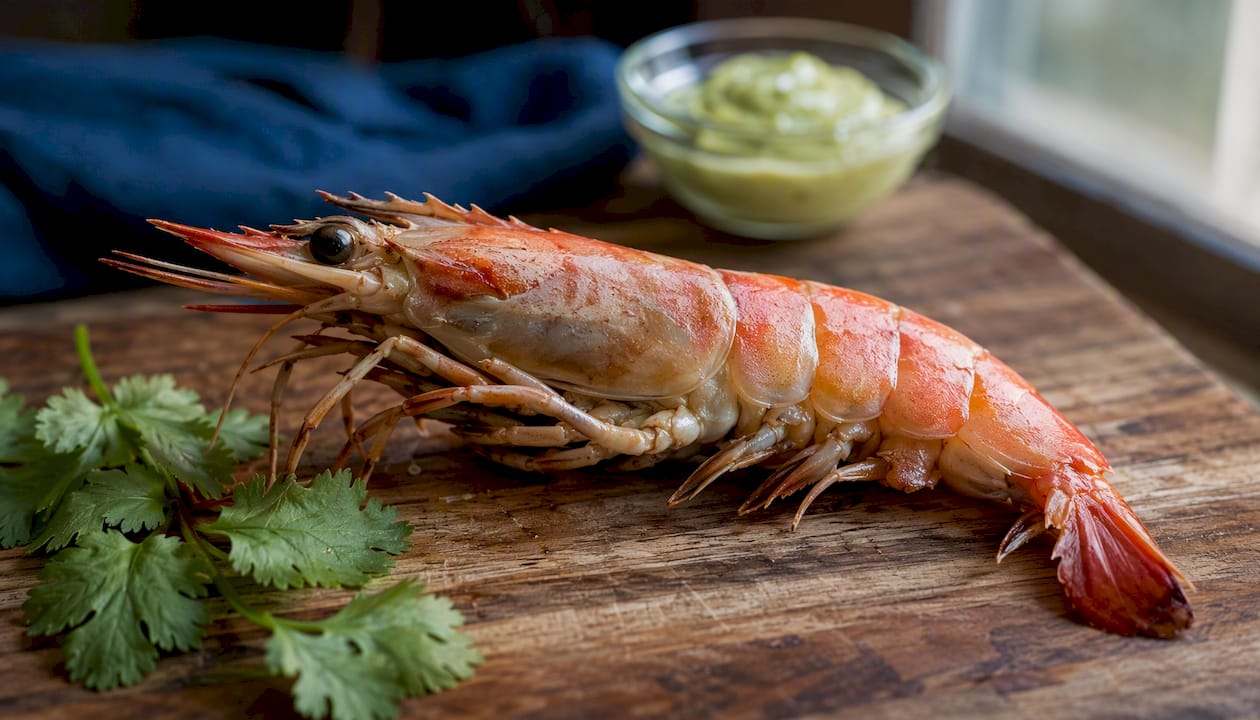
Along the underside of the abdomen, five pairs of pleopods (swimmerets) serve both locomotion and, in females, egg attachment. The antennae are sensory organs that can be longer than the body itself in some species. When you devein a shrimp, you are removing the digestive tract that runs along the dorsal (top) side of the abdomen. It is not harmful to eat, but it can carry grit and has a slightly bitter flavor in larger specimens.
Life-stage timeline for penaeoid shrimp (Gulf species):
- Eggs: Spawned into open water; hatch within hours to a day.
- Nauplius: First free-swimming larval stage; does not feed, lives on yolk reserves.
- Zoea (Protozoea): Begins filter-feeding; undergoes several molts.
- Mysis: Develops more adult-like features; still planktonic.
- Postlarva: Settles into estuarine nursery habitat; begins benthic (bottom-dwelling) life.
- Juvenile to adult: Grows through successive molts; reaches market size in weeks to months depending on species and water temperature.
Size at market is expressed as a count per pound, which tells you how many shrimp fit in one pound. A count of 16/20 means 16 to 20 shrimp per pound, which is a large shrimp. U/10 means under 10 per pound, which is colossal. Counts above 51/60 are small or salad shrimp. Larger counts (smaller shrimp) cook faster and suit pasta, soups, and tacos; lower counts (larger shrimp) hold up to grilling and searing.
Which shrimp species do you find in U.S. markets?
Four species dominate U.S. retail and restaurant menus, and one imported species has become so common it deserves its own note. Here is a compact breakdown.
| Common name | Scientific name | Typical size / count | Habitat / U.S. range | Culinary use / taste | Availability / market form |
|---|---|---|---|---|---|
| White shrimp | Litopenaeus setiferus | 21/25 to 31/32 | Gulf of Mexico, southeastern Atlantic coast | Mild, sweet; versatile for sautéing, grilling, boiling | Wild-caught; peak late summer to fall |
| Brown shrimp | Farfantepenaeus aztecus | 26/30 to 36/38 | Gulf of Mexico, mid-Atlantic | Slightly stronger, earthy flavor; excellent in gumbo, étouffée | Wild-caught; peak spring and early summer |
| Pink shrimp | Farfantepenaeus duorarum | 21/25 to 31/32 | Gulf of Mexico (Florida), southeastern Atlantic | Sweet, delicate; good for ceviche, cocktail shrimp | Wild-caught; year-round in Florida |
| Northern (spot) shrimp | Pandalus borealis and related spp. | 61/70 to 90/100 | Gulf of Maine, North Atlantic, Pacific Northwest, Alaska | Sweet, tender; used in salads, sushi, cocktail | Wild-caught; cold-water, year-round frozen |
| Whiteleg shrimp | Litopenaeus vannamei | Varies widely | Farmed globally; imported | Mild, neutral; most common in U.S. retail | Farmed; available year-round, IQF frozen |
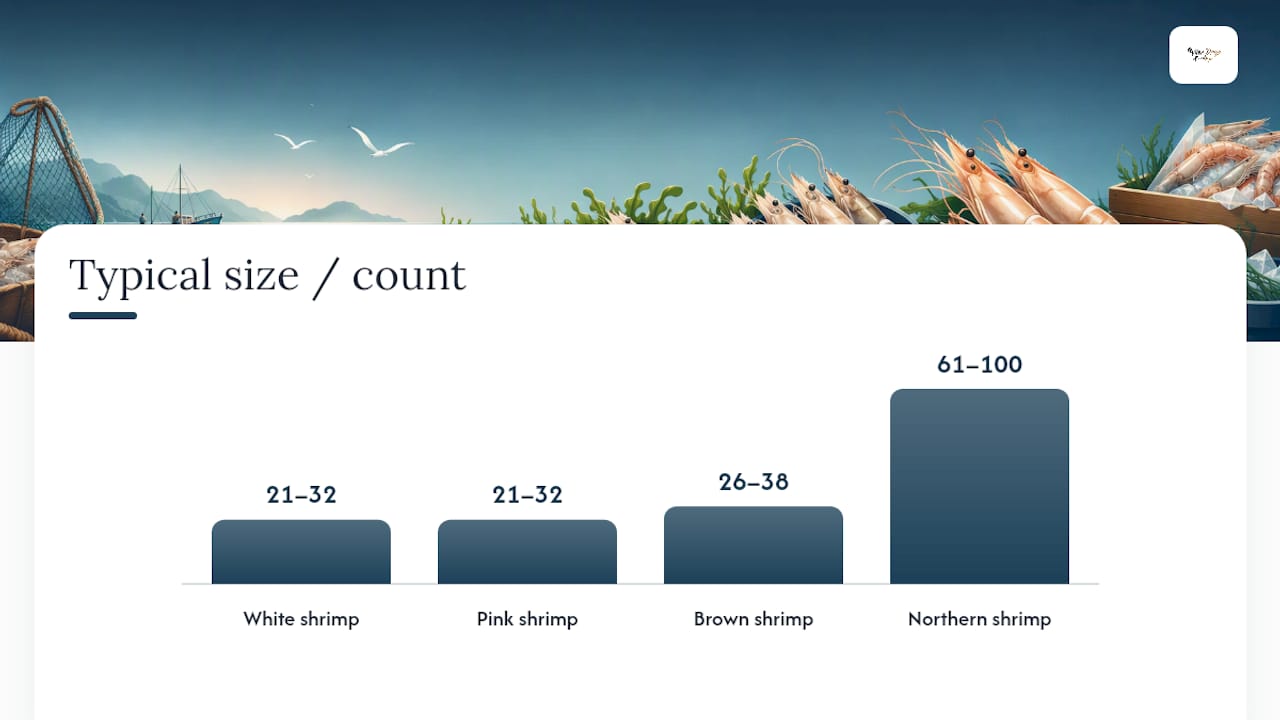
The NOAA Fisheries species page for white shrimp provides detailed distribution and management information for L. setiferus, the most commercially significant wild-caught species in the Gulf.
A few species worth knowing beyond the main four:
- Spot shrimp (Pandalus platyceros): The largest North American shrimp by size; prized on the West Coast for their sweet, lobster-like flavor. Often sold live at dockside markets in California, Oregon, and Washington.
- Rock shrimp (Sicyonia brevirostris): Hard-shelled Gulf species with a flavor closer to lobster than standard shrimp; requires a specialized cracking machine to process, which is why it is sold pre-split.
- Whiteleg shrimp (L. vannamei): Farmed in Asia and Latin America, this species accounts for the majority of shrimp sold in U.S. supermarkets. Quality varies widely by farm; certification matters here more than anywhere else.
Where do shrimp live in U.S. waters?
Shrimp occupy a wide range of coastal and offshore habitats, from warm, shallow estuaries to cold, deep ocean floors. The species and the habitat are closely linked, and knowing where a shrimp comes from tells you a lot about its flavor, texture, and the fishery behind it.
Habitat types and the species that prefer them:
- Estuaries and coastal marshes: White and brown shrimp spend their juvenile stages in estuarine nursery habitat along the Gulf Coast and southeastern Atlantic. Healthy estuaries are essential to Gulf shrimp populations; habitat loss from coastal development directly affects recruitment.
- Offshore sandy or muddy bottoms: Adult white, brown, and pink shrimp migrate offshore to spawn, living on soft-bottom habitat at depths ranging from the surf zone to roughly 300 feet.
- Cold, deep northern waters: Northern shrimp (Pandalus borealis) live in cold Atlantic and Pacific waters, typically at depths of 150 to 500 meters. They are found in the Gulf of Maine, off northern New England, and in Alaskan waters.
- Rocky Pacific coast: Spot shrimp (P. platyceros) favor rocky reef and kelp habitat along the Pacific coast from California to Alaska.
Seasonality and what it means for your shopping:
- Gulf white shrimp: The primary season runs from late summer through fall (roughly August to December), when shrimp have grown large enough to harvest after spending the spring and summer in estuarine nurseries.
- Gulf brown shrimp: Peak season is spring and early summer (May through July), slightly ahead of white shrimp.
- Gulf pink shrimp: Available year-round in Florida, with stronger runs in fall and winter.
- Northern shrimp: Harvested in cold months; much of the supply reaches consumers as IQF frozen product, making it available year-round regardless of season.
NOAA/NMFS sets management seasons and closure periods based on stock assessments conducted by the Southeast Fisheries Science Center and other regional offices. NMFS stock data for Gulf white shrimp is publicly available and updated as new assessments are completed.
How shrimp reproduce and why it matters for fisheries
Reproduction strategy differs sharply between the two main infraorders, and those differences shape how fisheries are managed and how aquaculture broodstock programs work.
Penaeoid shrimp (white, brown, pink) are broadcast spawners: females release eggs directly into the water column, where they are fertilized externally and develop as plankton before settling into estuarine nurseries. A single female can release hundreds of thousands of eggs in one spawning event. This strategy produces enormous numbers of offspring but makes early survival highly dependent on ocean conditions, water temperature, and estuarine habitat quality.
Caridean shrimp, by contrast, brood their eggs on the pleopods under the abdomen until hatching. Females carry a smaller clutch but provide more protection to developing embryos. Northern shrimp (Pandalus borealis) are carideans and brood their eggs through the winter, releasing larvae in spring when food availability is higher.
Behavioral notes relevant to fishing and farming:
- Most Gulf shrimp are nocturnal feeders, which is why trawling at night tends to produce better catches.
- White and brown shrimp are strongly associated with soft-bottom sediment, where they burrow during the day and forage at night.
- Seasonal offshore migration for spawning is what drives the timing of Gulf fishing seasons. Shrimp move from estuarine nurseries to offshore spawning grounds as water temperatures drop in fall.
- Pandalus borealis is a protandric hermaphrodite: individuals function as males early in life and transition to females as they grow larger. This has direct implications for managing harvest pressure on larger, older females.
Management implication: Because Gulf penaeoids grow fast and live only one to two years, stock recovery after a poor season can happen quickly, but overharvest of spawning adults in a single season can still cause a measurable recruitment drop the following year. NOAA/NMFS uses seasonal closures and effort controls rather than individual catch quotas for most Gulf shrimp fisheries.
How shrimp are caught, farmed, and traded in the U.S.
Shrimp are among the most traded seafoods globally, and the U.S. market draws on both domestic wild-caught fisheries and large-scale imports. The Gulf of Mexico supports the largest domestic wild shrimp fishery in the country, with additional wild harvest from the southeastern Atlantic, the Pacific coast, and Alaska.
Main production routes:
- Otter trawl (Gulf and Atlantic): The dominant method for Gulf white, brown, and pink shrimp. Trawl nets are dragged along the seafloor; bycatch (non-target species caught incidentally) is a significant concern, and federally required Turtle Excluder Devices (TEDs) and Bycatch Reduction Devices (BRDs) are mandatory on U.S. vessels.
- Skimmer trawl and cast net (inshore): Smaller-scale gear used in shallow estuarine waters; generally lower bycatch than offshore otter trawls.
- Traps and pots (spot shrimp, Pacific): Used for spot shrimp on the West Coast; highly selective with minimal bycatch.
- Pond aquaculture (imported): The dominant production method for whiteleg shrimp (L. vannamei) from Southeast Asia and Latin America. Pond systems vary enormously in environmental management; some certified farms operate with strong sustainability practices, others do not.
- Recirculating Aquaculture Systems (RAS): A growing domestic farming method that raises shrimp in land-based tanks with controlled water recycling. Lower environmental footprint than coastal ponds, but currently a small share of total supply.
NOAA/NMFS oversees domestic shrimp fisheries through Fishery Management Plans (FMPs) administered by regional councils, including the Gulf of Mexico Fishery Management Council. Seasonal closures, gear requirements, and effort limits are the primary management tools.
Pro Tip: “Wild-caught” on a label does not tell you whether the fishery is well-managed. Verify the specific fishery or farm through a third-party certification (ASC, BAP, MSC) or check the Seafood Watch sustainable shrimp guide before you buy.
Are shrimp actually good for you? Nutrition and health facts
Shrimp are low in calories, high in protein, and deliver a useful range of micronutrients, but they also carry significant dietary cholesterol and are a leading shellfish allergen. Here is the full picture.
Nutrition per 3-oz (85g) cooked serving, per USDA FoodData Central:
The cholesterol number often alarms people, but the relationship between dietary cholesterol from shrimp and cardiovascular risk is more nuanced than a single number suggests. Clinical review literature on PubMed indicates that for most healthy adults, dietary cholesterol from seafood does not automatically translate to elevated cardiovascular risk, particularly when overall saturated fat intake is low. Shrimp are naturally very low in saturated fat, which is the dietary fat most consistently linked to raising LDL cholesterol.
Statistic to know: A 3-oz cooked serving of shrimp provides roughly 20 grams of protein at approximately 84 calories, making it one of the highest protein-to-calorie ratios of any commonly eaten protein source.
Allergen and safety considerations:
- Shellfish allergy is one of the most common food allergies in adults in the U.S. and tends to be lifelong. Shrimp allergy symptoms can range from hives and digestive upset to anaphylaxis. Anyone with a known shellfish allergy should avoid shrimp entirely.
- Pregnant individuals and immunocompromised people should be especially careful about fully cooking shrimp and avoiding raw preparations.
- Farmed imported shrimp have been subject to FDA import alerts related to antibiotic residues and other adulterants. Buying certified product reduces but does not eliminate this risk.
- A peer-reviewed review on antibiotic use and contaminants in farmed seafood notes that antibiotic resistance is an ongoing concern in some aquaculture systems, particularly in regions with less regulatory oversight.
How to buy, store, thaw, and cook shrimp safely
The two-hour rule is the starting point: cooked or raw shrimp left at room temperature for more than two hours (one hour if the ambient temperature is above 90°F) enters the danger zone where bacterial growth accelerates. That rule applies from the moment you pull shrimp off the store shelf, not just after cooking.
Step-by-step guide from purchase to plate:
- At the store: Look for IQF (Individually Quick Frozen) on the bag. IQF shrimp freeze individually rather than in a block, which means you can thaw only what you need and the texture holds better. Check the ice-glaze percentage if listed; a heavy glaze inflates the weight with water, leaving you with less actual shrimp after thawing.
- Check the label: Country of origin is required on retail packaging. Look for certification logos (ASC, BAP, MSC). Avoid bags with no origin information.
- Smell test: Fresh or properly frozen shrimp should smell clean and mildly oceanic. A strong ammonia or iodine smell signals spoilage or poor handling.
- Refrigerator storage: Raw shrimp keep for one to two days in the refrigerator at 40°F or below. Cooked shrimp keep for three to four days.
- Freezer storage: Properly sealed frozen shrimp maintain quality for up to three months; they remain safe beyond that but texture degrades.
- Thawing (best method): Move frozen shrimp to the refrigerator the night before you plan to cook. This is the safest method and preserves texture.
- Quick thaw: Place shrimp in a sealed bag and submerge in cold running water for 15 to 20 minutes. Never thaw in warm water or on the counter.
- Cooking temperature: The USDA recommends cooking shrimp to an internal temperature of 145°F. Visually, shrimp are done when the flesh turns opaque and pink and the body curls into a loose C-shape. An O-shape means overcooked.
Food safety reminder: The two-hour rule (one hour above 90°F) applies to all perishable seafood. When in doubt, throw it out.
Pro Tip: Pat shrimp completely dry before searing. Moisture on the surface creates steam, which prevents browning. A dry shrimp on a hot, dry pan develops a golden crust in 60 to 90 seconds per side.
How to choose shrimp that support healthy fisheries
The most important thing you can do as a shopper is look past vague marketing language and check for third-party verification. “Wild-caught,” “natural,” and even “local” tell you nothing about whether the fishery or farm is managed responsibly.
Seafood Watch’s core advice: Check the specific fishery or farm and look for third-party certifications (ASC, BAP, MSC) because “local” does not always mean sustainable. Seafood Watch provides green, yellow, and red ratings for specific shrimp sources at the Monterey Bay Aquarium shrimp buying guide.
Shopper checklist:
- Look for certification logos: ASC (Aquaculture Stewardship Council) covers farmed shrimp; MSC (Marine Stewardship Council) covers wild-caught; BAP (Best Aquaculture Practices) is a four-star certification system for farmed seafood. All three require third-party audits.
- Read the country of origin label: U.S.-caught Gulf and Pacific shrimp generally operate under stronger environmental regulations than many imported products. Some Gulf and Pacific fisheries rate “Good Alternative” or better on Seafood Watch.
- Choose IQF over block-frozen: Block-frozen shrimp thaw unevenly and are harder to portion. IQF is a practical quality signal.
- Watch the ice glaze: A glaze percentage above 10–15% means you are paying for water weight. Look for “net weight after thawing” on the label when it is listed.
- Avoid unlabeled bulk bins: Loose shrimp at a seafood counter with no origin or certification information is the hardest to evaluate; ask the fishmonger directly.
- Check Seafood Watch before you shop: The free Seafood Watch app lets you search by species and source and gives you a color-coded recommendation in seconds.
Connecting your seafood choices to broader sustainability trends is worth the effort. For a wider view of where responsible sourcing is heading, the 2026 sustainability food trends post on the Wine Drop Cookery site covers the consumer shifts driving demand for certified seafood.
Practical cooking tips and two quick shrimp recipes
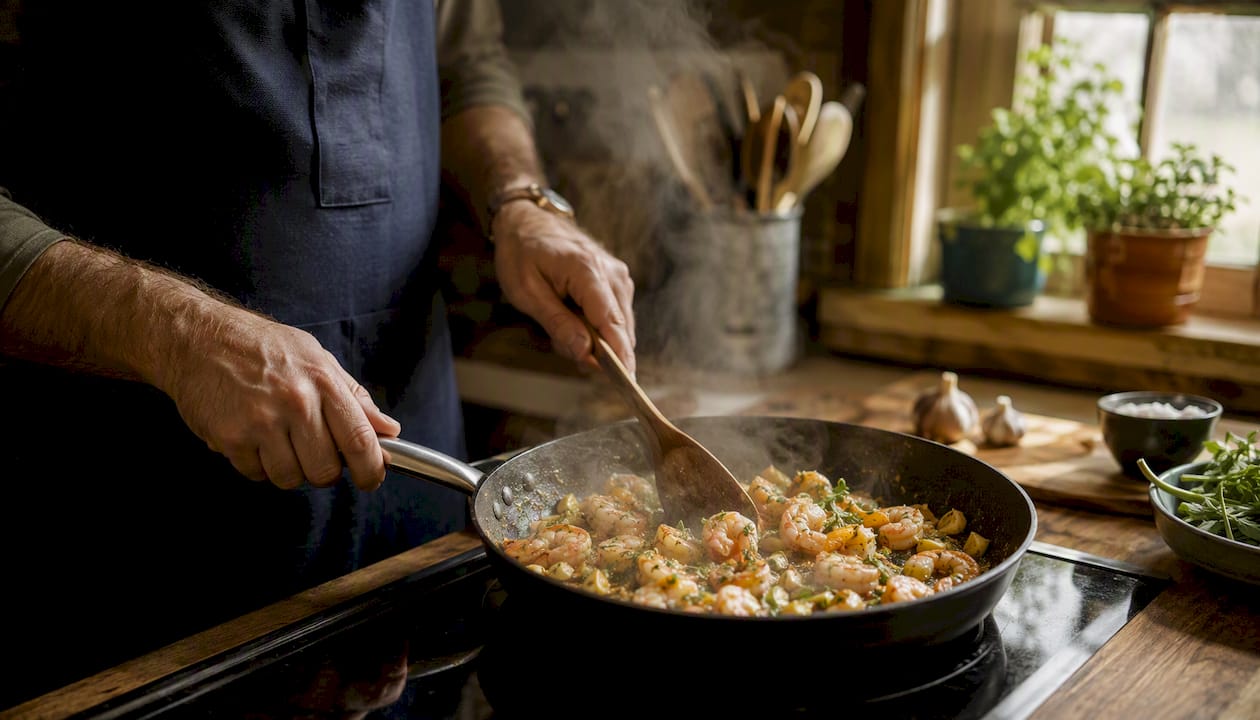
The core rule for cooking shrimp is simple: high heat, short time, and pull them off the moment they are done. Shrimp go from perfectly cooked to rubbery in about 30 seconds, and there is no recovering from overcooked shrimp.
Size-based cook times (sauté or grill, medium-high heat):
- Small (51/60): 1 to 1.5 minutes per side
- Medium (31/40): 1.5 to 2 minutes per side
- Large (21/25): 2 to 2.5 minutes per side
- Jumbo (16/20): 2.5 to 3 minutes per side
Deveining tip: For large shrimp, use a sharp paring knife or the tip of a Damascus steel chef’s knife to make a shallow cut along the back and lift out the dark vein with the knife tip. For medium and small shrimp in a sauce or soup, deveining is optional.
Quick shrimp scampi (weeknight, 20 minutes)
Ingredients (serves 2):
- 1 lb large shrimp (21/25), peeled and deveined
- 4 garlic cloves, minced
- 3 tbsp unsalted butter
- 2 tbsp olive oil
- ¼ cup dry white wine
- Juice of half a lemon
- Red pepper flakes, salt, fresh parsley
- 8 oz linguine, cooked
Method:
- Pat shrimp completely dry and season with salt.
- Heat olive oil in a large skillet over medium-high heat until shimmering.
- Add shrimp in a single layer; cook 1.5 to 2 minutes per side until pink and opaque. Remove and set aside.
- Reduce heat to medium; add butter and garlic. Cook 60 seconds until fragrant.
- Add white wine and lemon juice; simmer 2 minutes to reduce slightly.
- Return shrimp to the pan, toss with pasta, and finish with parsley and red pepper flakes.
Cook time: 20 minutes. Cost estimate: $12–$16 for two servings.
Chipotle shrimp tacos (quick weeknight or casual entertaining)
For a bolder, smoky preparation, the chipotle shrimp tacos recipe on the Wine Drop Cookery site walks you through a full build-your-own taco spread that works equally well for a Tuesday dinner or a casual gathering.
Key technique notes for tacos:
- Marinate shrimp in chipotle, lime, and garlic for no more than 20 minutes; acid in the marinade begins to denature the protein if left longer.
- Cook in a cast-iron skillet or on a grill pan over high heat; you want char marks, not steam.
- Serve immediately; shrimp tacos do not hold well once assembled.
Pro Tip: For the best sear on shrimp, use a cast-iron skillet preheated for at least two minutes before adding oil. The thermal mass of cast iron holds heat when cold shrimp hit the pan, which is exactly what you need for a proper crust.
Tool recommendations for shrimp prep:
- A sharp chef’s knife for deveining and portioning
- A cast-iron skillet or stainless-steel sauté pan for searing
- Long-handled tongs for flipping without piercing the flesh
- A fine-mesh strainer for rinsing and draining
The kitchen essentials collection at Wine Drop Cookery covers the core tools you need for confident shrimp cookery, from knives to sauté pans to tongs.
What I have learned from cooking shrimp at home
Shell-on shrimp are almost always worth the extra prep time. The shell contributes flavor directly to whatever fat or liquid it contacts during cooking, and shrimp cooked shell-on tend to stay juicier because the shell acts as a buffer against the direct heat. When I am making a quick weeknight sauté, I will often cook shell-on and let people peel at the table. For tacos or pasta, peeled and deveined is the practical choice.
On sourcing: U.S. Gulf wild-caught shrimp, when you can find them, have a noticeably sweeter, more complex flavor than most mass-produced pond-raised imports. The difference is real enough that it changes what you need to add to a dish. A good Gulf white shrimp in brown butter with garlic needs almost nothing else. A mild farmed whiteleg shrimp benefits from a more assertive marinade or sauce.
The tools matter more than most home cooks expect. A dull knife makes deveining clumsy and slow. A pan that cannot hold heat gives you steamed shrimp instead of seared shrimp. Wine Drop Cookery’s knife and cookware collections are built for exactly this kind of precision work, and the difference shows up in the finished dish.
Ready to cook shrimp with confidence? The right tools make every step easier, from deveining to the final sear. Explore the kitchen essentials at Wine Drop Cookery and find the knives, pans, and utensils that match how you actually cook.
Sources
This article is general information, not a substitute for advice from a qualified doctor. Consult a qualified healthcare professional about your own circumstances before acting on anything here.
FAQ
Is shrimp healthy for you to eat?
Yes, for most people. A 3-oz cooked serving provides roughly 20 grams of protein at about 84 calories, along with selenium and omega-3 fatty acids. Shrimp are high in dietary cholesterol, but clinical review evidence suggests this does not automatically raise cardiovascular risk for healthy adults, especially given their very low saturated fat content.
What is the best way to cook shrimp?
Pat shrimp dry, season them, and sear in a hot skillet over medium-high heat for 1.5 to 2.5 minutes per side depending on size, pulling them off the moment they turn pink and opaque with a loose C-shape. Overcooking by even 30 seconds produces a rubbery texture that no sauce can fix.
What is the two-hour rule for shrimp?
The USDA advises that raw or cooked shrimp should not sit at room temperature for more than two hours, or one hour when the ambient temperature exceeds 90°F. Beyond that window, bacterial growth reaches levels that can cause foodborne illness even if the shrimp is reheated.
Is shrimp a prawn?
Biologically, no. Shrimp (Caridea) and prawns (Dendrobranchiata) differ in gill structure, egg-brooding behavior, and claw arrangement. In U.S. commerce, however, the two terms are used interchangeably, and “shrimp” is the standard American English word for both regardless of size or species.
0 comments