

Salmon are coldwater fish in the genera Salmo and Oncorhynchus that typically hatch in freshwater, migrate to the ocean to grow, and return to freshwater to spawn. Atlantic salmon (Salmo salar) makes up one species, while Pacific species like Chinook, sockeye, coho, chum, and pink fall under Oncorhynchus. That migratory pattern, called anadromy, is part of what makes salmon ecologically important: their bodies carry ocean nutrients hundreds of miles inland when they die after spawning.
For your kitchen, the short version matters just as much as the biology. Salmon delivers high-quality protein, meaningful amounts of vitamin D, and a concentration of omega-3 fatty acids that few other everyday proteins can match. Here’s what you’ll walk away understanding:
- Which species you’re actually buying at the counter, and how their names map to biology
- How a salmon’s life cycle shapes its flavor, texture, and availability
- Why salmon runs matter far beyond the dinner plate
- The real difference between the USDA safety standard and how chefs actually cook it
Key Takeaways
Salmon’s combination of anadromous biology, dense omega-3 nutrition, and forgiving cooking chemistry makes it one of the most nutritionally efficient and practical proteins available to home cooks.
| Point | Details |
|---|---|
| Two genera, six main species | Atlantic salmon (Salmo salar) stands alone; Chinook, sockeye, coho, chum, and pink fall under Oncorhynchus. |
| Anadromy drives the life cycle | Salmon hatch in freshwater, mature at sea, then return home using olfactory imprinting and magnetic navigation. |
| Runs feed entire ecosystems | Spawning carcasses transfer ocean nitrogen and phosphorus into forests, feeding bears, eagles, and riparian trees. |
| Cook below the USDA mark, safely | Pull at 125°F to 140°F for texture, factoring in carryover heat, while 145°F remains the official safety standard. |
| The right tools remove the guesswork | Wine Drop Cookery’s chef knives and instant-read thermometers help you fillet cleanly and hit target temperatures precisely. |
Table of Contents
- What Are the Main Species and Types of Salmon Fish?
- How Does a Salmon’s Life Cycle Actually Work?
- Where Do Salmon Live, and What Habitat Do They Need?
- Why Do Salmon Matter to the Ecosystems Around Them?
- How Are Salmon Fished, Farmed, and Protected Today?
- What Are the Nutrition Facts and Health Benefits of Salmon?
- How Long Should You Cook Salmon, and What Temperature Is Safe?
- How Do You Pick Out and Store Fresh Salmon?
- Sources
- FAQ
What Are the Main Species and Types of Salmon Fish?
Six species dominate any conversation about salmon, and knowing them changes how you shop, cook, and talk about this fish. Atlantic salmon stands alone as the only member of Salmo in this group; every other commercially significant salmon belongs to Oncorhynchus, the Pacific genus.
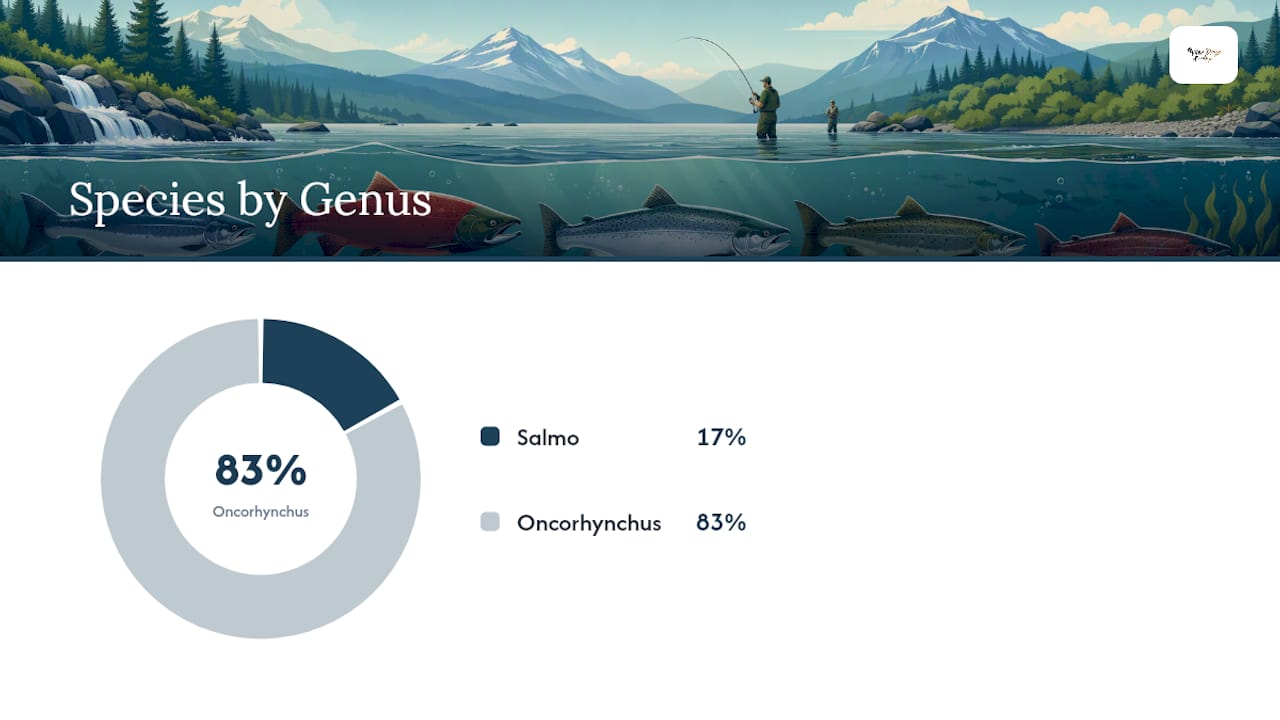
Atlantic salmon (Salmo salar) is the species you’ll most often see labeled “farmed” at the grocery store, since the vast majority of Atlantic salmon sold in the United States comes from aquaculture rather than wild fisheries. It runs pale pink to orange in the flesh and tends to carry a higher fat content than most Pacific varieties, which is part of why it cooks so forgivingly.
The five major Pacific species each have their own personality:
- Chinook (king) salmon is the largest of the group, sometimes topping 30 pounds, with a deep orange to red flesh and the highest fat content of any Pacific species.
- Sockeye salmon delivers the most vivid red flesh in the family, a firmer texture, and a stronger, more assertive flavor that stands up well to grilling.
- Coho salmon falls in the middle on size and fat, with a milder taste that works for readers easing into salmon for the first time.
- Chum salmon runs leaner and paler than the others, historically valued more for its roe than its fillet, though it still grills and bakes well.
- Pink salmon is the smallest and most abundant Pacific species by volume, most often found canned rather than fresh.
A sixth species, masu (cherry) salmon, is native to Japan and parts of the northwestern Pacific and rarely appears in American markets, but it’s worth knowing if you ever see it on a specialty menu or in scientific literature about Pacific salmon diversity.
Steelhead trout deserves a mention here too, because it’s genetically close enough to Pacific salmon that some anglers and biologists group it in the same conversation, even though it’s classified separately as a form of rainbow trout with an anadromous life history.
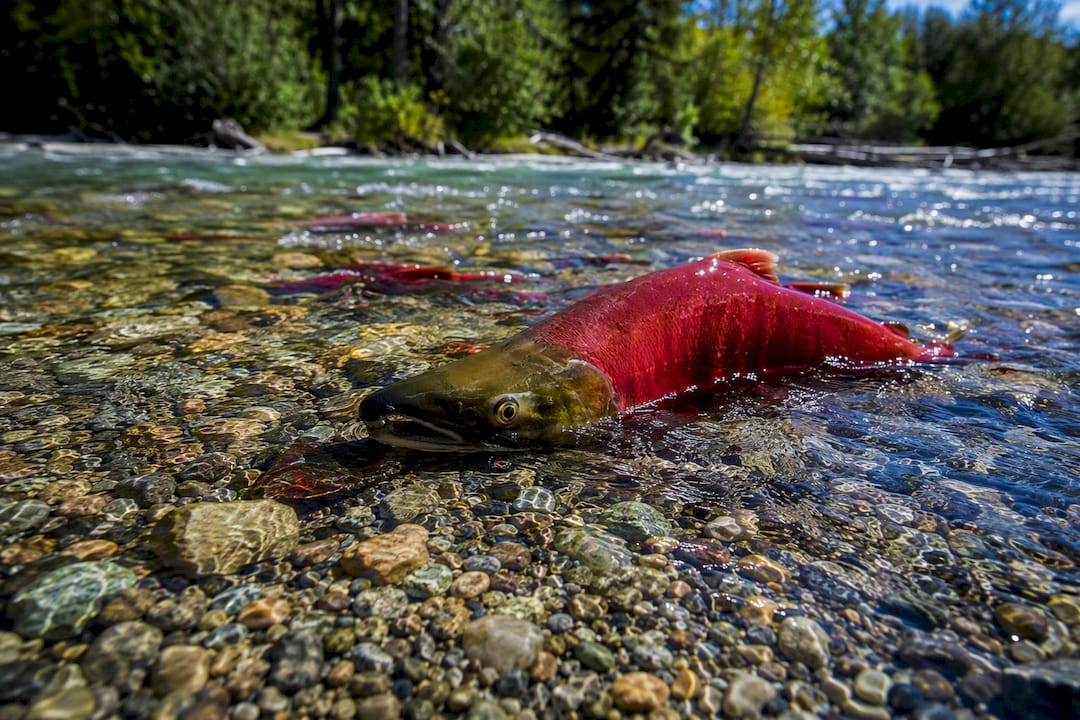
Size and coloration shift dramatically once a salmon starts its spawning run. Males often develop a hooked jaw called a kype, and both sexes can shift color, sometimes dramatically, as their bodies redirect energy from growth to reproduction. Sockeye turning fire red with green heads during a spawning run is one of the more striking transformations in freshwater biology.
One more nuance worth knowing: not every population makes it to the ocean. Landlocked populations of both Atlantic and several Pacific species exist in lakes where a dam, waterfall, or simple geography blocks the route to salt water. These fish still complete a version of the life cycle, just entirely in fresh water, and they tend to stay smaller than their sea-run relatives.
How Does a Salmon’s Life Cycle Actually Work?
A salmon’s life cycle runs through seven distinct stages, and each one leaves a mark on how the fish looks, behaves, and eventually tastes. Understanding this sequence explains a lot about why wild-caught availability follows tight seasonal windows.
- Egg – Fertilized eggs sit in gravel nests called redds, often for months, depending on water temperature and species.
- Alevin – Newly hatched fish stay buried in gravel, living off a yolk sac and avoiding predators before they’re ready to feed.
- Fry – Free-swimming young salmon emerge and begin feeding on small invertebrates in the stream.
- Parr – Juveniles develop camouflage markings called parr marks and spend anywhere from months to a few years in freshwater.
- Smolt – The fish undergoes smoltification, a physiological shift that prepares its body for salt water.
- Ocean adult – Salmon spend one to several years feeding and growing at sea, which is when most of their body mass and fat reserves build up.
- Spawning adult – Mature fish return to freshwater, often to the exact stream where they hatched, to reproduce and, for most Pacific species, die shortly after.
Smoltification is the hinge point of the whole cycle. As a young salmon prepares to leave freshwater, its body changes at a cellular level: gills adjust to regulate salt rather than retain it, skin coloration shifts to a more reflective silver, and behavior flips from territorial to schooling. You can often spot a smolt visually before it ever reaches the ocean.
The return migration is where salmon biology gets genuinely strange. Adults navigate open ocean for years, then find their way back to a specific home stream using a combination of magnetic field sensing for long-distance orientation and olfactory imprinting, meaning they remember the precise chemical signature of the water they hatched in and follow it home.
Not every fish makes it back to the right stream. A small percentage stray into different rivers, and that straying isn’t a failure of the system, it’s a feature. Straying maintains genetic diversity across populations and lets salmon recolonize streams after disturbances like landslides or floods. Fisheries scientists track this closely, because population structure across a river system depends on the balance between precise homing and occasional straying.
Where Do Salmon Live, and What Habitat Do They Need?
Atlantic salmon occupy river systems draining into the North Atlantic, historically from the northeastern United States and eastern Canada across to Western Europe and Russia, though NOAA notes that wild populations in the U.S. now survive in only a handful of Maine rivers. Pacific species range across a much wider arc, from California up through Alaska, across to Russia, and down into Japan and Korea.
Spawning success depends on specific freshwater conditions, and salmon are picky about all of them:
- Gravel substrate free of heavy silt, so eggs can settle into a redd without suffocating
- Cold, oxygen-rich water, generally in the 45 to 55°F range for actively spawning fish
- Stable flow, since flooding or drought during incubation can wipe out an entire year’s eggs
- Unobstructed passage, meaning no dams or culverts blocking the route between ocean and spawning grounds
Temperature sensitivity runs deeper than most people expect. Water above roughly 68°F becomes stressful for most salmon species, and sustained warm spells during a spawning run can trigger die-offs long before fish ever reach their destination. That’s part of why climate-driven river warming is one of the more pressing threats fisheries managers track.
Introduced and landlocked populations complicate the map further. Pacific salmon species were intentionally introduced to the Great Lakes decades ago and now sustain a significant recreational fishery despite living their entire lives in fresh water. Similar landlocked Atlantic salmon populations persist in a scattering of lakes in Maine and eastern Canada, cut off from the sea by natural barriers.
Why Do Salmon Matter to the Ecosystems Around Them?
Salmon runs function as a nutrient pump, moving nitrogen and phosphorus from the ocean into freshwater and forest ecosystems that would otherwise struggle to access marine-derived nutrition. A spawning run’s decomposing carcasses release nutrients directly into the water and soil, and researchers have traced marine nitrogen signatures in streamside trees growing along salmon rivers.
Isotope studies along Pacific Northwest rivers have found marine-derived nitrogen in the needles of streamside conifers, evidence that a single species of fish can measurably shape forest chemistry for generations.
Bristol Bay in Alaska is the clearest large-scale example of this system working at full strength. The sockeye runs there support not just a commercial fishery but grizzly bear populations, bald eagles, and river otters that time their feeding cycles around the annual return. Beavers benefit indirectly too, since the nutrient boost supports the riparian vegetation they depend on for both food and dam material.
This chain of dependency runs in both directions when it breaks down. Dam construction across major rivers has cut off stretches of historical spawning habitat, and the resulting salmon declines have reduced nutrient input for forests and stressed predator populations that had relied on those runs. Fewer fish returning doesn’t just mean fewer fish. It means a thinner nutrient base for an entire watershed’s food web, from insects to apex predators.
How Are Salmon Fished, Farmed, and Protected Today?
Wild salmon reach your table through three parallel systems: commercial fisheries, recreational angling, and subsistence fishing that remains central to many Alaska Native and First Nations communities. Alaska alone produces the bulk of America’s wild salmon harvest, with sockeye and pink runs making up the largest volumes by weight.
Aquaculture tells a very different story. Farmed Atlantic salmon now accounts for the majority of salmon consumed globally, with Norway and Chile standing as the two largest producing countries, followed by significant operations in Scotland and Canada. That scale comes with tradeoffs worth knowing before you buy:
- Disease and parasite management, particularly sea lice, which can spread between farmed pens and nearby wild populations
- Contaminant differences, since farmed salmon’s feed composition can influence levels of certain compounds compared to wild fish
- Escapes, where farmed fish enter open water and can interbreed with or compete against wild stock
- Feed sourcing, an ongoing industry challenge as farms shift away from wild-caught fish meal toward alternative proteins
Conservation status varies enormously by species and region, and this is where the regulatory picture gets specific rather than general. Certain U.S. Atlantic salmon populations, especially the remnant wild runs in Maine, carry federal Endangered Species Act protections, while many Pacific salmon populations face their own patchwork of state and federal listings depending on the specific river system and run timing. NOAA maintains detailed profiles tracking which populations carry protected status and why.
Habitat restoration has produced some genuinely encouraging results. Dam removal projects, including the Elwha River project in Washington State, have reopened dozens of miles of historical spawning habitat and triggered measurable returns of salmon to streams that had been blocked for nearly a century. That’s the conservation story that gives fisheries scientists real optimism: salmon populations can rebound quickly once physical barriers come down and habitat quality improves.
If you’re choosing between wild and farmed at the seafood counter, sustainability certifications and clear “wild caught, Alaska” or equivalent labeling give you the most reliable signal, since sustainable salmon fishing practices vary widely by fishery and region.
What Are the Nutrition Facts and Health Benefits of Salmon?
A 3.5-ounce cooked serving of salmon delivers roughly 20 to 25 grams of protein alongside one of the richest natural sources of long-chain omega-3 fatty acids you’ll find in any food, according to USDA FoodData Central. That combination of lean protein and healthy fat is a big part of why nutritionists consistently point to salmon as a foundational protein choice.
The omega-3 content is doing most of the heavy lifting for salmon’s reputation as a health food. Reviews of long-chain omega-3 research tie EPA and DHA to cardiovascular benefits, including favorable effects on triglyceride levels and blood pressure, though the strength of that evidence varies by study population and existing health status. Healthline’s summary of the research also points to brain health benefits associated with regular omega-3 intake, an area where research continues to evolve rather than offer a single settled verdict.
Contaminants deserve an honest mention rather than a dismissal. Farmed salmon can carry somewhat higher levels of certain compounds like PCBs compared to some wild populations, largely tied to feed composition. That said, peer-reviewed reviews weighing fish consumption benefits against contaminant risks generally find that the cardiovascular and nutritional benefits of regular fish consumption outweigh the contaminant risks for most adults eating salmon at typical recommended frequencies. That’s not a blanket guarantee for every population, particularly pregnant women who often receive more specific serving guidance, but it’s the consensus direction of the evidence for the general population.
How Long Should You Cook Salmon, and What Temperature Is Safe?
The USDA sets 145°F as the safe minimum internal temperature for cooked fish, full stop, and that’s the number to know if food safety is your top priority. Most professional cooks, though, pull salmon off the heat well before that point, because carryover heat, the residual cooking that happens while the fish rests, can raise internal temperature by 5 to 10 degrees on its own.
Here’s how that plays out at the stove:
- Pull at 125°F to 130°F for a medium, still slightly translucent center that most chefs consider the ideal texture.
- Pull at 135°F to 140°F if you prefer a firmer, fully opaque piece of fish without pushing all the way to the USDA’s 145°F mark.
- Rest for 3 to 5 minutes before serving, letting carryover heat finish the job without drying out the flesh.
- Check with an instant-read thermometer inserted into the thickest part of the fillet, since visual cues alone are unreliable once you account for variation in fillet thickness.
Method matters as much as temperature. Low-temperature roasting, around 275°F for a period typical for cooking a standard fillet on a standard fillet, is the most forgiving approach for home cooks because the gentler heat cooks the fish evenly from edge to center, avoiding the dry, overcooked tail ends that plague hotter methods. Grilling and searing deliver a stronger char and flavor contrast but demand closer attention, since the higher heat narrows your window between perfectly cooked and overdone.
Beyond roasting, you’ve got real options depending on what you’re after: pan-searing for a crisp skin, broiling for speed, cedar plank grilling for a smoky finish, or sheet-pan roasting when you’re cooking vegetables alongside the fish. For seasoning ideas, try experimenting with sumac’s vibrant flavor profile to elevate your salmon dishes. Each one suits a different night, and none of them is wrong.
Pro Tip: Leave the skin on while cooking, even if you plan to remove it before serving. Skin-on salmon holds together better on the grill or in a hot pan, and it acts as a buffer that protects the delicate flesh underneath from direct heat.
A sharp knife matters more than most home cooks realize here too. Clean cuts through the fillet, especially when portioning before cooking, keep the flesh intact and cooking evenly instead of ragged and prone to falling apart. If you’re working from a whole fish, Wine Drop Cookery’s step-by-step filleting guide walks through the technique from start to finish.
How Do You Pick Out and Store Fresh Salmon?
Fresh salmon should smell like clean water or a faint sea breeze, never sharp or overtly “fishy.” That smell test is the single fastest indicator you have at the counter, and it rarely steers you wrong.
Beyond smell, a few physical cues confirm quality:
- Firm, springy flesh that bounces back when pressed rather than leaving a lasting indentation
- Vivid, consistent color appropriate to the species, since dull or grayish patches can signal age
- Moist but not slimy surface texture, and no visible drying or browning at the edges
- Frozen can outperform “fresh” at the counter, since flash-frozen salmon is often frozen within hours of catch, locking in quality that a few days of display-case “fresh” fish can’t match
Labels deserve a closer read than most shoppers give them. “Wild caught” and “farm raised” describe genuinely different products, and country-of-origin labeling can reveal whether you’re getting Alaska sockeye or a farmed Atlantic fillet from overseas. “Product of” language sometimes only reflects where the fish was processed rather than where it was actually caught or raised, so a specific region or fishery name on the label tells you more than a generic country stamp.
Once you’re home, refrigerated raw salmon holds safely for one to two days, and frozen salmon keeps well for several months if wrapped tightly to prevent freezer burn. Thaw it in the refrigerator overnight rather than at room temperature, and if you’re in a hurry, a sealed bag submerged in cold water works safely in under an hour.
A Practical Perspective on Cooking Salmon Well
Most cooking advice treats salmon like it’s fragile, something to handle with white gloves and constant anxiety about overcooking it. That framing does readers a disservice. Salmon is actually one of the more forgiving proteins you can cook, provided you respect two things: temperature and the knife work that gets it onto the pan in the first place.
The bigger gap I see is in tools, not technique. Home cooks read plenty of advice about pull temperatures, but far fewer of them own an instant-read thermometer that actually delivers a fast, accurate reading, so they end up guessing and either undercooking out of fear or drying the fish out from overcompensating. A thermometer solves that uncertainty in about two seconds.
The same goes for knife work. A dull knife tears through a fillet instead of slicing it, which ruins texture before the fish ever hits heat. If you’re breaking down a whole salmon at home, pair a proper chef knife with a filleting technique that respects the bones and skin, and the rest of the cooking process gets dramatically easier.
— Alan
Tools That Make Cooking Salmon Easier
Cooking salmon well comes down to two things most recipes gloss over: a knife that can break down a whole fish cleanly, and a thermometer that tells you the truth about doneness instead of leaving you to guess. Wine Drop Cookery built its knife sets and thermometers around exactly that gap, giving home cooks the same reliability that professional kitchens rely on without the professional price tag.
A professional chef knife makes short work of filleting and portioning, keeping the flesh intact instead of ragged. Pair it with a digital instant-read thermometer to hit that 125°F to 140°F window precisely, whether you’re pan-searing, grilling, or slow-roasting. If you’re cooking outdoors, a grilling essentials kit rounds out what you need for a plank or open-flame approach. Browse the full kitchen essentials collection to build a setup that takes the guesswork out of salmon night for good.
Sources
- Foodsafety
- Atlantic Salmon | NOAA Fisheries
- PMC review on fish consumption benefits and contaminants
FAQ
What Is the Best Way to Cook Salmon?
Low-temperature roasting around 275°F gives the most consistent, evenly cooked result for home cooks, while grilling or searing works well if you want a stronger char and don’t mind watching it closely. Pull the fish at 125°F to 140°F depending on your preferred texture, and always verify with an instant-read thermometer.
Is Salmon a Healthy Fish to Eat Regularly?
Yes. Salmon delivers high-quality protein, substantial vitamin D, and one of the richest natural sources of omega-3 fatty acids of any commonly eaten fish, and major reviews find the cardiovascular and nutritional benefits generally outweigh contaminant concerns at typical serving frequencies.
Why Are Some Chefs Cautious About Serving Salmon?
Concerns among some chefs tend to center on sustainability and sourcing rather than the fish itself, including farmed salmon’s disease management challenges, contaminant differences tied to feed, and pressure on wild stocks in certain regions. Choosing clearly labeled wild-caught or certified sustainable salmon addresses most of those concerns directly.
What’s the Best Type of Salmon to Buy?
There’s no single best species, since Chinook offers the richest, fattiest flesh while sockeye delivers a firmer texture and bolder flavor, and pink or farmed Atlantic salmon offer a milder, more budget-friendly option. Checking the label for wild versus farmed origin and specific sourcing region tells you more than any species name alone.
How Long Does It Take to Cook a Salmon Fillet?
A standard one-inch fillet takes a period typical for cooking a standard fillet at a low 275°F roast, while a hot sear or grill can cook the same fillet in under 10 minutes on high heat. Actual timing depends heavily on thickness, so pulling by internal temperature rather than the clock gives more reliable results.
0 comments