

Pour Over vs Drip Which Brewing Method Is Right for You, Pour-over delivers the brightest, most detailed cup for a single serving; drip delivers reliable, hands-off coffee for multiple cups with minimal effort. The reason comes down to control: pour-over puts every variable in your hands, while drip automates the process so you can walk away.
Choose pour-over if you:
- Want to highlight the nuanced notes of a light single-origin bean and enjoy the morning ritual of hands-on brewing
- Typically brew 1–3 cups at a time and have three to five minutes to focus
Choose drip if you:
- Need 2–12 cups ready with minimal attention, or want a consistent pot waiting when you wake up
- Prefer a set-and-forget routine without sacrificing quality
Both methods are well-served by Wine Drop Cookery’s lineup: the Handmade Ceramic Pour Over Coffee Set for ritual-focused single-cup brewing, and the 8-Cup Drip Coffee Brewer for reliable household batches.
Table of Contents
- How do pour-over and drip coffee compare at a glance?
- How do pour-over and drip actually brew your coffee?
- What does each method actually taste like in the cup?
- How do you choose between pour-over and drip for your routine?
- What are the exact brewing parameters for each method?
- Why does your coffee taste off, and how do you fix it?
- When does the ritual actually matter more than the recipe?
- Key Takeaways
- The case for owning both (and knowing when to use each)
- Ready to brew better coffee at home?
- Useful sources
- FAQ
How do pour-over and drip coffee compare at a glance?
| Dimension | Pour-Over | Drip |
|---|---|---|
| Taste profile | Bright, clean, nuanced; highlights origin notes | Fuller-bodied, rounder, more consistent |
| Control / skill required | High — you manage pour rate, pattern, and timing | Low — machine handles saturation and timing |
| Consistency / repeatability | Variable; improves with practice and a scale | High when using a quality machine |
| Time / hands-on effort | a few minutes active brewing | several minutes, mostly unattended |
| Batch size | 1–3 cups | 2–12 cups |
| Equipment cost | Low entry (a low-cost dripper) + accessories | Wider range; quality SCA-certified machines cost more |
| Cleanup | Rinse dripper, discard filter | Rinse carafe, clean basket and showerhead |
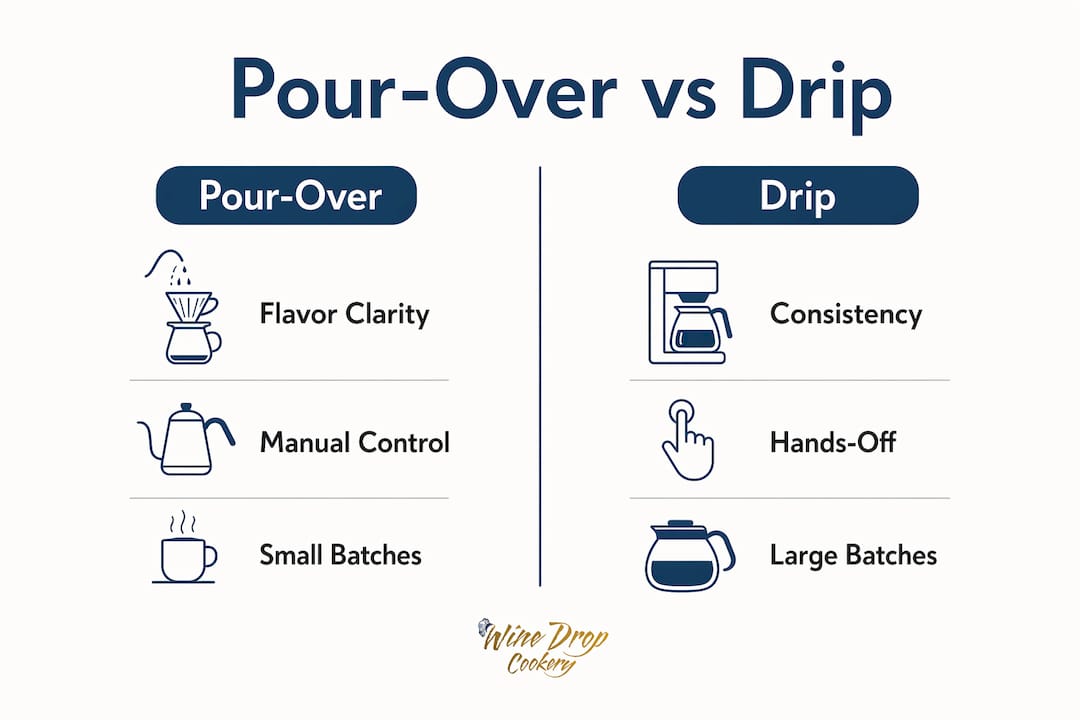
Pour-over’s clearest advantage: unmatched flavor clarity for specialty beans when you have time to brew carefully.
Drip’s clearest advantage: consistent, scalable output with zero active monitoring.
Machine quality narrows the gap considerably. An SCA-certified drip machine that holds standard recommended temperature range throughout the brew cycle can match pour-over extraction quality, though the cup character stays different: brighter and cleaner from pour-over, rounder and more consistent from drip.
How do pour-over and drip actually brew your coffee?
Understanding the mechanics explains why the cups taste so different, and where your control begins and ends.
Pour-over: step by step
- Heat water to 200°F (just off boil works; a gooseneck kettle gives you precise pour control).
- Weigh your coffee at a typical coffee-to-water ratio (for example, 20g coffee to 300g water).
- Rinse the paper filter with hot water to remove papery taste and preheat the dripper.
- Bloom: pour roughly twice the coffee weight in water (about 40g) over the grounds and wait about half a minute. This releases CO₂ trapped in fresh coffee, which would otherwise repel water and cause uneven extraction.
- Pour in slow, steady spirals from the center outward, keeping the water level consistent. Avoid pouring directly on the filter walls.
- Drawdown: let the last water drain fully through the grounds. Total brew time runs about a few minutes.
Recommended accessories: a gooseneck kettle, a digital scale, and a burr grinder. These three tools do more for your cup than any dripper upgrade.
Drip: step by step
- Fill the reservoir with cold, filtered water to your target cup line.
- Add ground coffee to the basket (medium grind, a typical coffee-to-water ratio by weight).
- Start the machine. The heating element warms water and the showerhead disperses it over the grounds.
- Brew cycle runs automatically — water saturates the grounds, extracts through the filter, and drips into the carafe.
- Serve from a thermal carafe when possible; a hotplate degrades flavor within 20–30 minutes.
The key difference in the flow path: with pour-over, you control saturation speed and pattern manually. With drip, the machine’s showerhead design and heating element determine both. A well-engineered showerhead saturates grounds evenly; a poor one creates dry spots that under-extract.
What does each method actually taste like in the cup?
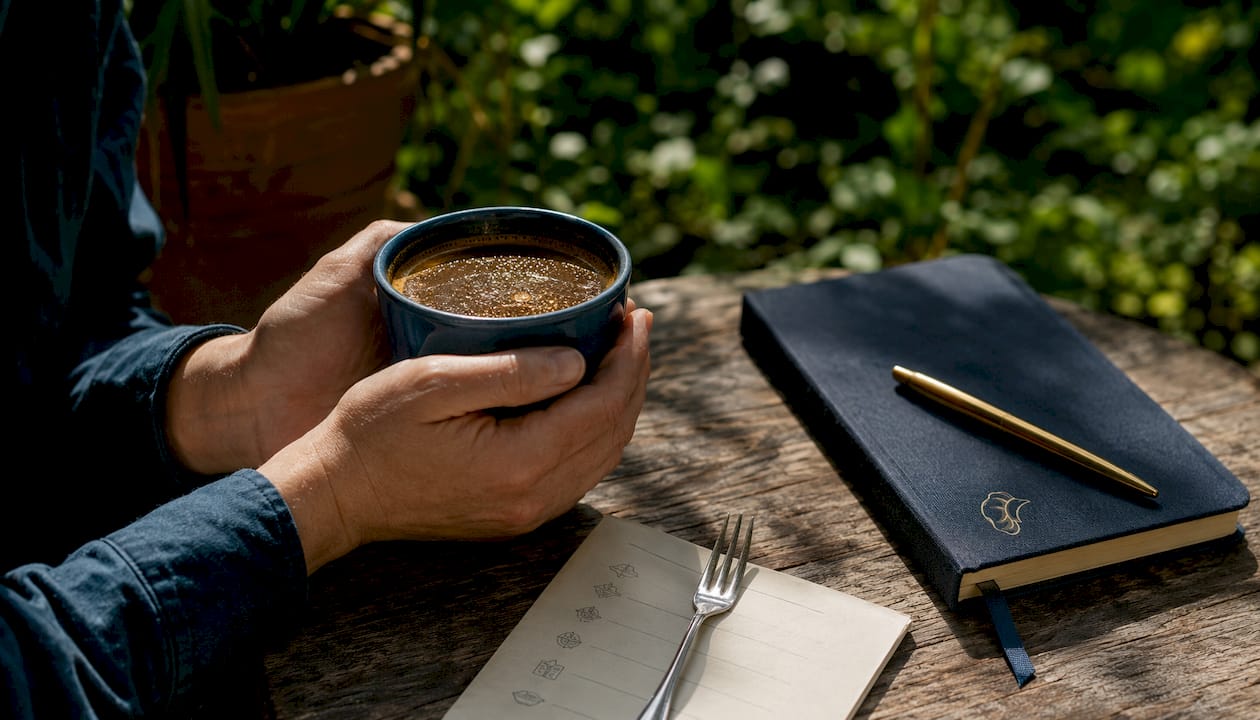
Pour-over produces a bright, clean, and nuanced cup that highlights single-origin tasting notes. Paper filtration removes most oils and fine particles, leaving a lighter-bodied liquid where acidity, florals, and fruit notes come through clearly. The bloom step and controlled pour rate mean each part of the coffee bed extracts at roughly the same rate, which is where that clarity comes from.
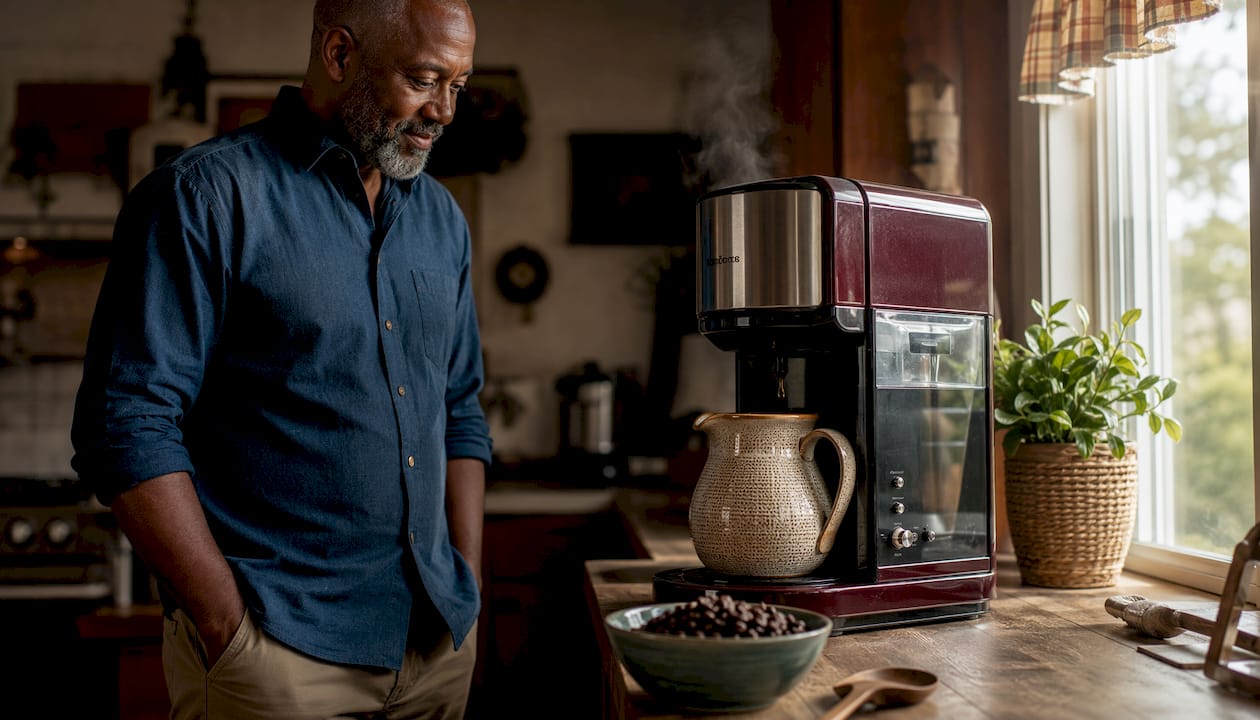
Drip tends toward a fuller, rounder, more consistent cup. The larger contact area, longer saturation time, and automated cycle favor extraction of heavier compounds. The result is a balanced, approachable coffee that works well with medium and dark roasts or blends designed for volume brewing.
Bean and roast matching matters here. Light roasts and single-origin coffees from Ethiopia, Kenya, or Colombia tend to shine in pour-over, where their fruit and floral notes have room to express. Darker roasts, espresso blends, and any coffee you plan to drink with milk or cream hold up better in drip, where the fuller body complements those additions.
Pro Tip:Try a light Ethiopian or Kenyan single-origin in your pour-over before assuming you dislike bright, acidic coffees. The same bean brewed in a standard drip machine often tastes flat or muted, which can give a misleading impression of the bean’s actual flavor.
How do you choose between pour-over and drip for your routine?
The honest answer is that the best method is the one you will actually use well every morning. Ask yourself these questions before deciding.
How many cups do you brew at once? If you brew 1–3 cups for yourself, pour-over wastes nothing. Drip often requires larger quantities (typically 2–12 cups), and leftover coffee sitting on a hotplate loses quality fast. If you brew for two or more people, drip is the practical choice.
Do you want hands-off mornings? Pour-over asks for your full attention for three to five minutes. Drip lets you start the machine and handle something else. If your mornings are rushed, a quality drip machine with a programmable timer is a genuine quality-of-life upgrade.
Do you value the ritual? Many home brewers find the pour-over process meditative and satisfying. If making coffee is part of how you start your day intentionally, that experience has real value beyond the cup.
What is your budget for equipment? A basic dripper costs $20–$40. A gooseneck kettle and burr grinder add a moderate investment more. A quality SCA-certified drip machine starts around quality SCA-certified drip machines cost more. Both paths are accessible, but the drip investment is more consolidated.
Red flags that suggest fixing your setup before switching methods:
- Coffee tastes sour or flat despite good beans — check water temperature first
- Uneven extraction in drip — your showerhead may not be saturating the full coffee bed
- Bitter pour-over despite fresh beans — your grind is likely too fine or your pour too slow
Experts recommend a high-quality, pre-programmed drip machine for daily convenience and pour-over gear for tasting and weekend ritual. Many enthusiasts end up owning both, which is a practical and affordable approach.
What are the exact brewing parameters for each method?
Use these as your starting point, then adjust from there based on taste.
| Parameter | Pour-Over | Drip |
|---|---|---|
| Coffee:water ratio | a typical coffee-to-water ratio | a typical coffee-to-water ratio |
| Grind size | Medium-fine | Medium |
| Water temperature | standard recommended temperature range | standard recommended temperature range (SCA standard) |
| Bloom time | about half a minute | Not applicable (most machines) |
| Total brew time | a few minutes | several minutes |
| Typical yield | 1–3 cups | 2–12 cups |
Executing a pour-over single cup (using the table values):
- Use 20g coffee, 300g water at 200°F
- Bloom with 40g water for 30 seconds, then pour in three to four slow additions
- Target a total drawdown time of a few minutes
Executing a drip full pot:
- Use 60g coffee, 1,000g (roughly 1 liter) water
- Medium grind, clean basket, fresh filter
- Let the machine run its full cycle; move coffee to a thermal carafe immediately after brewing
Adjusting for extraction problems:
- Sour or weak cup: grind finer, raise water temperature, or extend brew time
- Bitter or harsh cup: grind coarser, shorten contact time, or reduce water temperature slightly
- Flat or muted cup: check bean freshness first; stale beans cannot be fixed by technique alone
Why does your coffee taste off, and how do you fix it?
Many home brewers blame beans for poor flavor when the real cause is a brewing variable like temperature or saturation. Before switching methods or buying new gear, run through this diagnostic.
Under-extraction (sour, thin, or weak coffee):
- Grind is too coarse — water passes through too quickly
- Water temperature is too low — entry-level drip machines often hover around 185–190°F, well below the SCA’s recommended standard temperature range
- Pour-over bloom was skipped or too short — CO₂ repels water and creates dry channels
- Fix: grind finer, verify machine temperature, and always bloom fresh coffee for about half a minute
Over-extraction (bitter, harsh, or astringent coffee):
- Grind is too fine — water lingers too long in the grounds
- Brew time ran too long in pour-over due to slow pouring
- Fix: coarsen the grind by one or two steps; speed up your pour-over cadence
Channeling or uneven saturation (inconsistent, patchy flavor):
- Pour-over: water poured too fast or directly onto the filter wall
- Drip: showerhead clogged or not covering the full coffee bed
- Fix: slow your pour and spiral from center outward; clean the showerhead with a soft brush and warm water
Maintenance reminders that directly affect taste:
- Descale your drip machine every one to three months depending on water hardness
- Clean the showerhead and basket after every use to prevent oil buildup
- Replace paper filters every brew; reusable metal filters need a thorough rinse each time
- Store beans in an airtight container away from light and heat; freshness matters more than method
When does the ritual actually matter more than the recipe?
The flavor ceiling for pour-over is genuinely higher, but only when you show up for it. Experts consistently recommend pour-over for people who treat coffee as a ritual and want single-cup precision, and a high-quality pre-programmed drip machine for daily convenience.
The concept worth understanding here is “friction.” Every extra step between you and your first cup of coffee is friction. Pour-over has more of it: you need to boil water, weigh grounds, bloom, pour carefully, and wait. On a Tuesday morning when you are already running late, that friction can turn a pleasurable ritual into a stressor.
Use-case examples:
- Weekday morning: Drip wins. Program it the night before, wake up to a full pot, and spend your attention on breakfast or the commute.
- Weekend tasting session: Pour-over wins. You have time to weigh, bloom, and pour slowly, and a light single-origin Ethiopian will reward that attention with notes you would never catch from a drip machine.
- Hosting guests: Drip wins again. Eight cups brewed consistently beats three cups brewed beautifully when you have four people waiting.
The hybrid approach many enthusiasts settle on: an SCA-certified drip machine for reliable daily pots, plus a gooseneck kettle and dripper for weekend single-cup experiments. You can explore home brewing alternatives beyond these two methods as well, from AeroPress to Moka pot, if you want to keep experimenting. This approach balances daily friction and flavor exploration without forcing a permanent choice.
Key Takeaways
Pour-over delivers higher flavor clarity for single cups and specialty beans, while drip offers reliable, hands-off brewing for households needing multiple cups at once.
| Point | Details |
|---|---|
| Match method to batch size | Pour-over suits 1–3 cups; drip handles 2–12 cups with less waste and effort. |
| Temperature is the hidden variable | SCA-certified machines hold standard recommended temperature range; budget drip machines often fall short, causing under-extraction. |
| Start with a typical coffee-to-water ratio ratio | This is the reliable starting point for pour-over; drip works well at a typical coffee-to-water ratio with a medium grind. |
| Fix the machine before blaming beans | Low temperature, a clogged showerhead, or skipped bloom cause more bad cups than bean quality. |
| Wine Drop Cookery covers both paths | The Handmade Ceramic Pour Over Coffee Set suits ritual-focused solo brewers; the 8-Cup Drip Coffee Brewer suits households wanting consistent multi-cup results. |
The case for owning both (and knowing when to use each)
The pour-over vs drip debate tends to get framed as a permanent choice, but most experienced home brewers eventually realize it is not. The two methods solve genuinely different problems, and the cost of owning both is low enough that treating it as an either/or decision is the only real mistake.
What often gets overlooked is how much the occasion should drive the method, not just the flavor preference. A pour-over brewed carelessly on a rushed morning will taste worse than a well-dialed drip machine running on autopilot. The ritual only pays off when you can actually show up for it. Conversely, using a drip machine for a $25-per-bag single-origin Ethiopian Yirgacheffe is a bit like cooking a great steak in a microwave. The bean deserves better saturation control than most machines provide.
The practical takeaway: if you only own one method right now, choose based on your most common morning scenario, not your ideal one. Then add the second method when you are ready to explore. Wine Drop Cookery’s range makes that progression straightforward, with both a handmade ceramic pour-over set and an 8-cup drip brewer designed to fit real kitchen routines rather than just look good on a shelf.
Ready to brew better coffee at home?
Wine Drop Cookery offers two purpose-built options for home brewers at different points in their coffee routine. If you want to explore single-origin flavors and enjoy the hands-on process, the Handmade Ceramic Pour Over Coffee Set gives you a beautiful, durable dripper that makes the ritual feel intentional. If your household needs consistent, multi-cup results without the morning effort, the 8-cup drip brewer delivers reliable performance in a compact, easy-to-use design.
Both products are part of Wine Drop Cookery’s wider kitchen lineup, built for home cooks who care about quality without overcomplicating their routines. Pair either brewer with a handmade stoneware mug for a complete morning setup that feels as good as it tastes. Browse the full collection at Wine Drop Cookery and find the gear that fits your kitchen and your mornings.
Useful sources
These sources were selected for home brewers who want to verify brewing parameters, understand extraction science, or read deeper on equipment standards.
- Pour-Over vs Drip Coffee: What’s the Difference and Which is Better? — CoffeeScan; covers taste profiles, batch sizes, and bloom mechanics
- Pour-Over or Drip Coffee? 3 Experts Agree This Brewing Method Makes the Best Cup — Real Simple; expert perspectives on ritual vs convenience and hybrid approaches
- Pour-Over vs Drip Coffee: Which Is Best? — YourCoffeeBuzz; brewing ratios, grind guidance, and troubleshooting
- Drip Coffee vs. Pour Over: Full Comparison — CoffeeGearHub; SCA temperature standards and hands-on time data
- How to Brew Coffee — National Coffee Association USA; foundational brewing guidance and water temperature standards
- Coffee and Health — National Institutes of Health / PubMed Central; peer-reviewed background on coffee compounds and filtration
FAQ
Which is better, pour-over or drip coffee?
Neither method is universally better. Pour-over produces a brighter, more nuanced cup ideal for single-origin beans and solo brewing; drip offers consistent, hands-off results for larger batches. The right choice depends on how many cups you brew and how much time you want to spend.
What is the main disadvantage of pour-over coffee?
Pour-over requires active attention for the full 3–5 minute brew, along with a gooseneck kettle, scale, and burr grinder for consistent results. It also only yields a few cups at a time, making it impractical for households or busy mornings.
Is pour-over coffee healthier than drip?
Paper-filtered pour-over removes more coffee oils (including cafestol and kahweol) than unfiltered methods, which may benefit cholesterol levels according to research. Drip machines also use paper filters, so both methods offer similar filtration benefits compared to French press or unfiltered brewing.
Why do people prefer pour-over coffee?
Pour-over gives you direct control over water temperature, pour rate, and saturation, which lets you highlight the specific tasting notes in specialty beans. Many brewers also value the focused, meditative ritual as part of their morning routine.
Can a drip machine match pour-over quality?
An SCA-certified drip machine that maintains standard recommended temperature range can match pour-over in extraction efficiency, but the cup character stays different: drip runs rounder and fuller, pour-over runs brighter and cleaner. Upgrading from a budget machine to an SCA-certified model closes the quality gap significantly.
0 comments