

Lamb is the meat of a domestic sheep under 12 months old, prized for its tender texture and milder flavor compared to older sheep. The single fact worth pinning to your fridge: cook whole lamb cuts to a safe minimum internal temperature of 145°F and let the meat rest for 3 minutes before you slice it. Everything else, from picking the right cut to choosing a grade at the counter, builds on that foundation.
TL;DR:
- Most lamb sold in U.S. stores is from sheep under 12 months old, which cooks tender at a minimum of 145°F with a 3-minute rest.
- USDA grades lamb by marbling and conformation, with Prime and Choice offering the most tender, flavorful options, especially for quick cooking methods.
- Cuts from different parts of the animal suit specific cooking styles, from quick searing for chops to slow braising for shank and shoulder.
- Age impacts meat tenderness and flavor, with older animals developing more connective tissue and stronger flavors, but age alone does not determine grade.
- Proper handling, temperature checking, and tool selection are key to achieving restaurant-quality lamb results at home.
Table of Contents
- What’s the Difference Between Lamb, Hogget, and Mutton?
- How Do USDA Lamb Grades Affect What You’re Buying?
- Which Lamb Cuts Work Best for Which Cooking Method?
- What Internal Temperature Is Safe for Lamb?
- How Should You Store and Buy Lamb Safely?
- Is Lamb a Healthy Source of Protein?
- How Do You Break Down and Sear Lamb Like a Butcher?
- Does Lamb Cause Allergic Reactions or Fit Special Diets?
- What Are the Most Popular Lamb Dishes Around the World?
- Why We Teach Lamb Technique the Way We Do
- Shop the Tools That Make Cooking Lamb Easier
- Sources
- FAQ
What’s the Difference Between Lamb, Hogget, and Mutton?
The word “lamb” isn’t a marketing term. It’s an age classification. A young domestic sheep under about 12 months qualifies as lamb, and that youth is exactly why the meat is tender enough to sear medium-rare without turning into shoe leather.
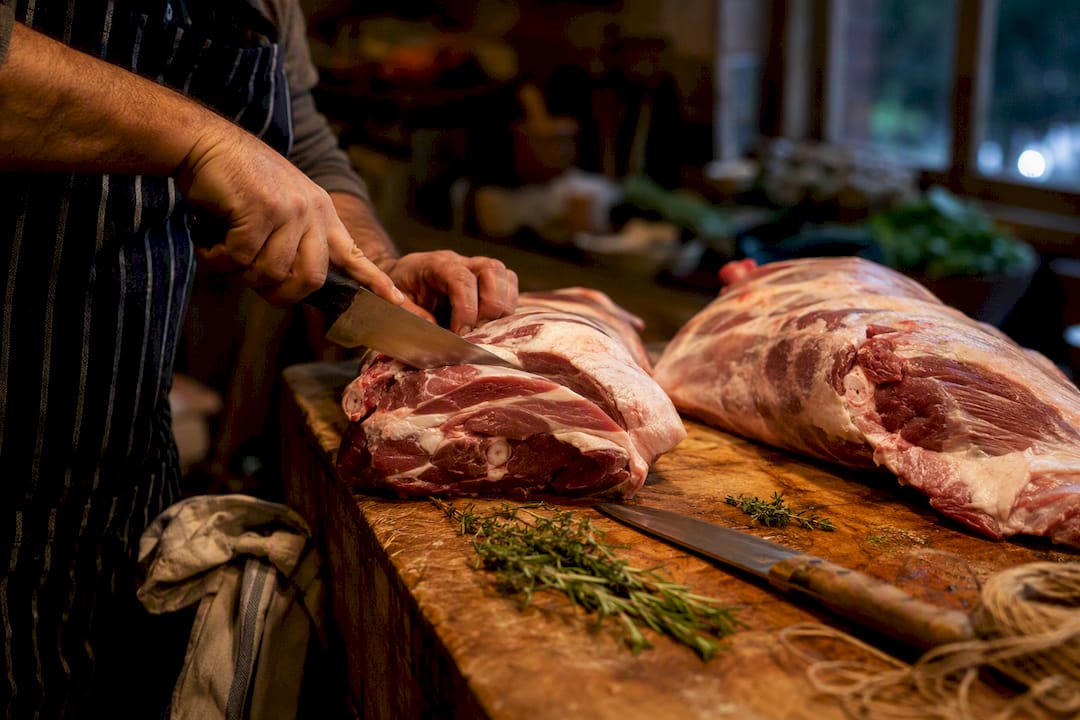
Once a sheep crosses that age threshold, the terminology shifts, at least in theory. Hogget describes a young adult sheep, typically between 12 and 24 months, a term you’ll see far more often in British and Australian butchery than at an American supermarket. Mutton comes from sheep older than two years, and it carries a noticeably stronger, gamier flavor along with tougher muscle fibers that demand long, slow cooking to break down.
Here’s the part that trips people up: age isn’t just a label, it’s a physical reality inside the meat. Older sheep build up more connective tissue (collagen) and develop different fatty acid profiles that intensify flavor. That’s biology, not branding. A rack of lamb from a young animal slices like butter under a sharp knife. The same cut from a two-year-old sheep would fight you the whole way through.
In practice, terminology at the U.S. retail level is fairly loose:
- Almost everything sold as “lamb” in American grocery stores and butcher shops actually meets the under-12-months standard.
- “Hogget” essentially never appears on U.S. packaging, even though the animals it describes sometimes enter the supply chain under the lamb label.
- “Mutton” is rare in mainstream U.S. retail and shows up mostly in specialty markets or specific ethnic cuisines that call for it deliberately.
- Regional and international definitions vary enough that a “spring lamb” label in one country might not match another’s legal age cutoff.
If a package simply says “lamb” at your local store, you’re almost certainly getting young, tender meat. The bigger decision comes down to grade and cut, not age classification.
How Do USDA Lamb Grades Affect What You’re Buying?
USDA quality grades tell you about the carcass itself, not just the animal’s birthday. The USDA Agricultural Marketing Service assigns lamb to three main quality tiers: Prime, Choice, and Good, based on conformation (how well-muscled the carcass is), overall maturity, and the amount of fat streaking, or marbling, within the flank.
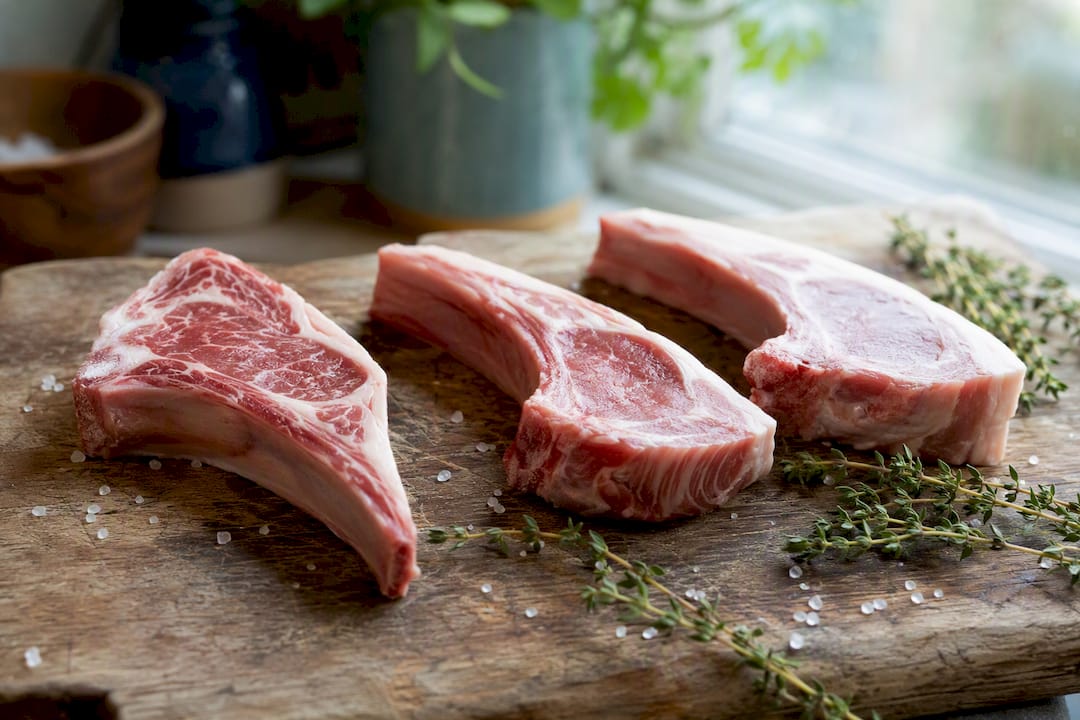
Prime lamb carries the most marbling and the best muscle conformation, which translates into the juiciest, most flavorful eating experience, particularly for roasts and chops you’re cooking to a specific doneness. Choice sits just below that, still reliably tender and well-suited to most home cooking, and it’s what you’ll find most often at mainstream grocery chains. Good grade lamb tends to be leaner with less marbling, which can mean a slightly less forgiving cook if you’re not watching your temperature closely.
Here’s a nuance that surprises a lot of shoppers: age alone doesn’t determine the grade. Muscle conformation and fat streaking matter just as much, and some animals up to 20 months old can still meet Prime standards if the carcass checks the right boxes. Grading is about carcass quality, not a strict birthday cutoff.
For your shopping list:
- Roasting a rack or leg for a dinner party? Prime or Choice gives you the best margin for error and the richest flavor.
- Braising a shoulder or shank for hours? Good grade works fine, since low, slow cooking renders fat and breaks down connective tissue regardless of starting marbling.
- Grilling chops fast and hot? Choice or better helps keep the meat juicy through a quick, high-heat cook.
Most U.S. packaging simply reads “lamb” without a grade stamp unless you’re buying from a butcher counter or specialty retailer, so don’t be afraid to ask.
Which Lamb Cuts Work Best for Which Cooking Method?
Matching the cut to the method is the single biggest lever you have over how a lamb dinner turns out. Different cuts come from different parts of the animal with wildly different amounts of connective tissue, and that determines whether you should sear it fast or cook it low and slow.
- Rack of lamb comes from the rib section and delivers some of the most tender, elegant eating you’ll get from the animal. Roast it hot and fast, and let those individual chops shine at the table.
- Loin chops sit just behind the rack and grill or pan-sear beautifully in under 10 minutes, ideal for a quick weeknight dinner that still feels special.
- Leg of lamb, sold bone-in or boneless, is the classic holiday roast. Bone-in holds moisture better and looks more impressive on the table; boneless carves faster and cooks more evenly.
- Shoulder carries more fat and connective tissue than the leg, which makes it a natural for slow-roasting or braising into something that falls apart with a fork.
- Shank is the lower leg, dense with collagen, and it rewards patience above all else. Braise it low and slow and it turns into one of the most satisfying dishes lamb has to offer.
- Breast is fattier and less common at retail, but it braises or slow-roasts well for anyone chasing rich, unctuous flavor.
- Ground lamb works anywhere ground beef would, from burgers to meatballs to a Mediterranean-style skillet dish, and it cooks fast.
When you’re standing at the counter, bone-in cuts generally cost less per pound but yield less edible meat once you account for the bone; for example, Ontario Lamb — assorted cuts provides a variety of options to consider. Boneless cuts cost more upfront but simplify portioning, a rough rule of thumb is about half a pound of bone-in lamb per person for a standard dinner, closer to a third of a pound if it’s boneless.
What Internal Temperature Is Safe for Lamb?
The USDA’s safe minimum internal temperature for whole lamb cuts is 145°F, followed by a mandatory 3-minute rest before carving or serving. That rest isn’t optional garnish advice, it’s part of the safety standard itself, giving residual heat time to finish the job of eliminating harmful bacteria throughout the cut.
Now here’s where culinary preference and food safety start to diverge a little. Many chefs pull chops, racks, and leg roasts at 125°F to 130°F for a true medium-rare center, relying on carry-over cooking (the temperature climbing another 5 to 10 degrees as the meat rests) to land somewhere in the 135°F to 145°F range by the time you cut into it. If you want a guaranteed safety margin without guesswork, cook to the full 145°F and rest 3 minutes. If you’re comfortable with the culinary judgment call chefs make daily, pulling a few degrees earlier and trusting the rest is standard professional practice, just don’t skip a reliable meat thermometer either way.
Braising temperature note: Shanks, shoulder, and other tough, collagen-rich cuts need to reach roughly 190°F internally to break down connective tissue into something tender. That’s well above the 145°F safety minimum, and it’s the temperature range where collagen actually converts to gelatin, which is what gives braised shank its fall-apart texture.
A few technique notes that separate a good result from a great one:
- Sear chops fat-side down first in a dry, hot pan to render and crisp the fat cap before finishing them flat, a step that pays off in both texture and flavor.
- Insert your thermometer into the thickest part of the cut, away from bone, for the most accurate reading.
- Rest roasts for at least 10 to 15 minutes under loose foil; that’s longer than the 3-minute food-safety minimum, but it lets juices redistribute for a better slice.
- Acidic marinades, think yogurt, wine, or vinegar-based blends, both tenderize tougher cuts and soften lamb’s naturally more pronounced flavor for anyone new to cooking it. A tandoori-style yogurt marinade is a reliable place to start.
- Home cooks consistently get better, more repeatable results by leaning on a thermometer rather than judging doneness by color or touch alone.
Pro Tip: Don’t crowd the pan when searing chops. Give each piece enough space to develop a real crust, otherwise you’re steaming the meat instead of browning it, and you lose that fat-rendering step entirely.
How Should You Store and Buy Lamb Safely?
Fresh lamb keeps in the refrigerator for 3 to 5 days and in the freezer for 6 to 9 months without a significant drop in quality, though vacuum-sealed cuts often last longer in the freezer than butcher-paper-wrapped ones. Thaw frozen lamb in the refrigerator rather than on the counter. It’s the safest method and the one that best preserves texture, typically taking a full day for smaller cuts and up to two days for a whole leg.
At the counter or in the meat case, a few quick checks tell you almost everything you need to know:
- Smell: Fresh lamb has a mild, faintly gamey aroma. A sharp, sour, or ammonia-like smell means it’s past its prime.
- Color and texture: Look for a pinkish-red color with firm, slightly moist (not slimy or sticky) texture.
- Fat appearance: Fat should be white to creamy, never yellow or grayish, which can signal age or improper storage.
- Packaging cues: Vacuum-sealed packaging that holds a tight seal with no excess liquid pooling is a good sign; check the sell-by date and choose the latest one available.
Before you check out, run through a short mental list: What cut do you actually need for this recipe? How many servings, and does that call for bone-in or boneless? What grade is on the label, if any? Is the packaging intact and within date? If you’re at a butcher counter rather than a self-serve case, don’t hesitate to ask where the lamb was sourced and how recently it was cut. A good butcher will answer both questions without hesitation.
Is Lamb a Healthy Source of Protein?
A typical 3-ounce cooked serving of lamb delivers a solid dose of high-quality protein along with meaningful amounts of iron, zinc, and vitamin B12, nutrients that matter for energy metabolism, immune function, and red blood cell production. Lamb also tends to run higher in monounsaturated fat compared to some other red meats, depending on the cut and trim.
That nutritional upside comes with a moderation caveat worth taking seriously. Observational research links high intake of red meat, particularly processed red meat, with elevated long-term health risks, which is why general dietary guidance leans toward limiting processed cuts and balancing red meat with other protein sources like fish, poultry, legumes, and eggs across the week.
Practically speaking, that means:
- A 3 to 4 ounce serving of lamb a few times a week fits comfortably within most balanced eating patterns.
- Leaner cuts like loin chops or trimmed leg keep saturated fat lower than fattier cuts like shoulder or breast.
- Pairing lamb with vegetables and whole grains rounds out the plate rather than relying on it as the sole protein source at every meal.
How Do You Break Down and Sear Lamb Like a Butcher?
Trimming a rack or leg at home is far more approachable than it looks, and Wine Drop Cookery’s butchery guide to lamb walks through frenching a rack and portioning a leg into roast-ready pieces step by step. The single technique that upgrades chops the most is fat-rendering: hold the chop fat-side down in a hot, dry pan for several minutes until the fat crisps and releases, then finish it flat for an even sear on both sides.
A few tools make that workflow noticeably easier:
- An enameled cast-iron roasting pan handles a leg or rack evenly in the oven and browns the exterior properly.
- A sharp chef’s knife makes trimming silver skin and portioning chops far less of a fight than a dull blade ever will.
Pro Tip: Save the trimmed fat and bones from butchering a rack or leg. Simmered with aromatics, they make a stock rich enough to turn your next braise into something memorable.
Does Lamb Cause Allergic Reactions or Fit Special Diets?
True lamb allergy is uncommon compared to allergies to shellfish, peanuts, or dairy, but it does exist, and it falls under the broader category of mammalian meat allergies. People with a documented allergy to beef or other red meats sometimes react to lamb as well, since the proteins involved share some structural similarities across mammalian species. Anyone with a known red meat allergy should treat lamb with the same caution and consult an allergist before introducing it.
Alpha-gal syndrome deserves a specific mention here. It’s a delayed allergic reaction to mammalian meat, including lamb, beef, and pork, triggered by a sugar molecule and typically linked to certain tick bites. Symptoms can appear hours after eating and range from hives to gastrointestinal distress to more serious reactions, so anyone who has experienced unexplained reactions after eating red meat should ask a doctor about alpha-gal testing.
Beyond allergies, lamb fits comfortably into several dietary frameworks. It’s naturally gluten-free and dairy-free in its unseasoned form, which makes it a safe base protein for people managing celiac disease or lactose intolerance, though marinades and sauces can introduce both, so check labels or recipes carefully. Lamb doesn’t fit vegetarian, vegan, or plant-based diets, obviously, and it’s excluded from kosher dietary law unless slaughtered and prepared according to specific religious requirements, a distinction worth knowing if you’re cooking for guests with dietary observance.
What Are the Most Popular Lamb Dishes Around the World?
Few meats travel across global cuisines as gracefully as lamb does, and that range is part of what makes it worth learning to cook well. In the Mediterranean and Middle East, roasted leg of lamb studded with garlic and rosemary shows up at holiday tables from Greece to Lebanon, while slow-braised lamb shoulder anchors Moroccan tagines built on warm spices like cumin, cinnamon, and preserved lemon.
South Asian cooking leans on lamb heavily too. A rogan josh simmers lamb in a rich, red chili and yogurt-based sauce until it’s fork-tender, and kebabs, whether skewered and grilled or ground into seekh kebab, showcase how well lamb takes to bold marinades and open flame. Ireland’s Irish stew builds a whole meal around lamb shoulder or shank simmered with potatoes, carrots, and onions, a dish born from necessity that’s become a genuine comfort-food classic.
Grilled lamb chops and racks show up on menus from American steakhouses to Argentine parrillas, usually with nothing more than salt, pepper, and high heat doing the work. Ground lamb, meanwhile, turns up in everything from Greek gyros and moussaka to spiced meatballs across a dozen different culinary traditions. That versatility, tender enough for a quick sear, sturdy enough for hours of braising, is exactly why lamb has held a permanent spot on tables across so many cultures for so long.
Why We Teach Lamb Technique the Way We Do
Lamb rewards attention to detail more than almost any other meat in the case, and that’s exactly why Alan built out detailed, hands-on guides rather than vague cooking tips. Understanding how a cut behaves, why a shank needs 190°F while a chop is done at 130°F, changes the outcome on your plate every single time. Wine Drop Cookery’s butchery guide and product lineup grew directly out of that belief: give home cooks the same tools and technique knowledge professional kitchens rely on, and the results follow. If this guide answered your first question about lamb, the butchery guide is the natural next stop.
— Alan
Shop the Tools That Make Cooking Lamb Easier
Good technique only gets you halfway there. The right gear closes the gap between a decent roast and one people ask you to make again. Wine Drop Cookery curates the exact kind of equipment this guide keeps coming back to, so you’re not piecing together random pans and hoping for the best.
Start with a professional chef knife set for trimming silver skin, frenching a rack, and portioning a leg cleanly, tasks a dull blade turns into a wrestling match. An enameled cast-iron roasting pan gives you the even heat retention that a proper leg or rack roast depends on, while a heavy sauté pan handles the fat-rendering sear this guide walks through step by step. Round it out with a stainless steel utensil set for plating and serving once the lamb comes off the heat. Browse the full kitchen essentials collection to build out a setup that handles lamb, and everything else on your menu, with the same confidence.
Sources
- Lamb From Farm to Table | Food Safety and Inspection Service
- Lamb Grades and Standards | USDA Agricultural Marketing Service
- Learn About the Different Cuts of Lamb | American Lamb Board
FAQ
Is Lamb the Meat of a Sheep or a Different Animal?
Lamb is sheep meat specifically from a young animal, generally under 12 months old; it’s not a separate species, just an age classification within Ovis aries.
Is a Lamb a Goat or a Sheep?
A lamb is a sheep, not a goat. Sheep and goats are related but distinct species, and lamb refers exclusively to a young sheep.
What’s Another Word for Lamb?
Common synonyms and related terms include “yearling” for slightly older animals, “hogget” for young adult sheep in some markets, and “mutton” once the animal is over two years old, though mutton describes a different flavor and texture, not a true synonym.
Why Do We Eat Lamb but Rarely Mutton in the U.S.?
American retail and restaurant demand strongly favors lamb’s milder flavor and tender texture over mutton’s stronger taste and tougher fibers, so most U.S. supply chains raise and market sheep specifically for the lamb stage rather than letting them mature into mutton.
What’s the Safe Internal Temperature for Cooking Lamb?
The USDA safe minimum is 145°F with a 3-minute rest for whole cuts; tougher cuts like shank or shoulder should reach roughly 190°F when braised to properly break down connective tissue.
0 comments